 Last Updated: Sep 2026
 Best Dehumidifier For Drying Clothes Inside 2024 (save energy & space)
Once winter sets in, finding the best dehumidifier for drying clothes becomes essential as drying laundry outdoors becomes impractical in the UK, typically from October onwards. Many resort to drying their winter laundry on radiators or airers placed in front of them. While this method effectively dries clothes, it can lead to issues.
The issue begins when moisture from drying clothes encounters cold surfaces such as windows and walls. This moisture turns into condensation, causing damp spots and mould. Mould spores are always in the air, and they settle on damp, humid places as it’s their ideal breeding ground.
Those with respiratory issues, including asthma, will generally experience discomfort once mould sets in. The solution for dampness and its effects is a dehumidifier. If you’re considering a dehumidifier, there’s good news: specific models are tailored for drying laundry.
Read on to learn how to choose the right dehumidifier that can make indoor laundry drying not just practical but efficient, protecting your space from dampness while saving on energy costs.
Recommended Laundry Dehumidifiers
Here are our recommended dehumidifiers for drying laundry:
No products found.
How Does A Dehumidifier Dry Laundry?
The dehumidifier’s laundry setting aims to replicate ideal drying conditions by reducing the relative humidity and generating air flow. This makes the moisture from your clothes transfer into the air more quickly. The generated air flow provides the optimal conditions for drying laundry – warmth and a gentle breeze.
What Features Should A Dehumidifier Have To Dry Wet Washing?
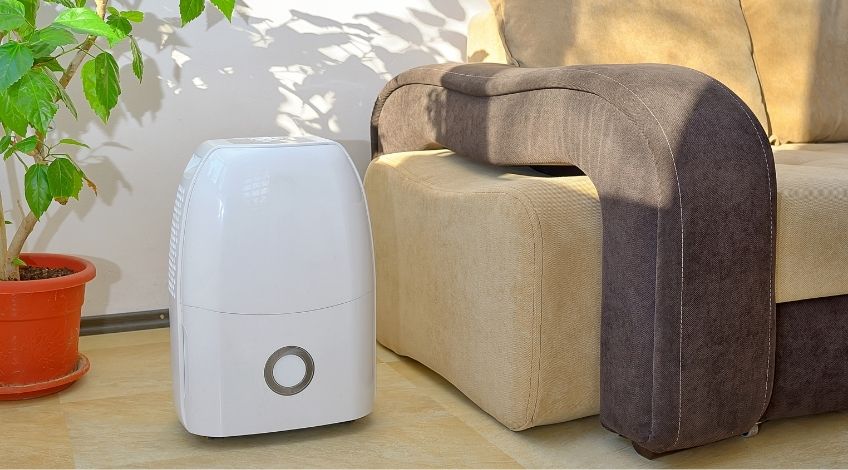
Before you go out and buy the first dehumidifier you see with laundry mode, let’s have a look at the features to consider for the job.
Laundry Mode/Laundry Boost Mode/Laundry Setting Mode
There are numerous dehumidifiers available, all of which will dry clothes over time. However, seek out models with a laundry mode or similar function. These specialised programs are designed exclusively for drying clothes, creating ideal conditions for faster drying.
Noise Level
When choosing a dehumidifier for drying laundry, it’s key to pick one that balances efficiency with quietness. Especially in small homes or for nighttime use, dehumidifiers with a night mode or quiet mode are useful, as they lower noise and won’t disturb sleep or everyday tasks.
Bear in mind that the dehumidifier will be running for a considerable time. If it’s particularly loud, you’ll need to endure its noise for approximately 12 hours.
There are models that claim a quietness of 33 decibels, comparable to someone whispering. Yet, most dehumidifiers emit sound between 40 and 50 decibels, similar to the level of a normal conversation.
The Water Tank
For practical purposes, the dehumidifier’s water tank should be easily removable to clean and should not leak water while being carried for emptying. Also, the water tank’s capacity is crucial.
If you’re using the dehumidifier for 12 hours to dry your laundry, it’s inconvenient if it stops working because the tank is full before your clothes are dry. Certain models are equipped with drainage pipes from the tank to a sink or drain, allowing uninterrupted operation even when the tank is full.
Energy-Efficiency
Choose an energy-efficient dehumidifier model to save money. With an average of 12 hours running time, you don’t want dry washing at the expense of raging electricity costs.
Preset Timer
Many models have a preset timer function, this allows you to get the washing dry even when you’re out of the house. You can even set it to start when the economy 7 electricity rate starts.
Filtration System
Some models have built-in filtration systems, which remove minute dust and other particles from the air. This can be a great feature to have if you have any asthma sufferers at home. Beware though, this feature can cause the dehumidifier to be pricey.
Water Capacity
The water capacity of a dehumidifier indicates the amount of water it can extract over a 24-hour period. For instance, you may notice specifications like “capacity 20 litres, water reservoir 4 litres”. This implies that the dehumidifier can remove 20 litres of water in 24 hours, yet its tank can only hold 4 litres.
Consequently, if the dehumidifier operates non-stop, you’d need to empty the tank 5 times to achieve 20 litres.
What Size Dehumidifier Do You Need
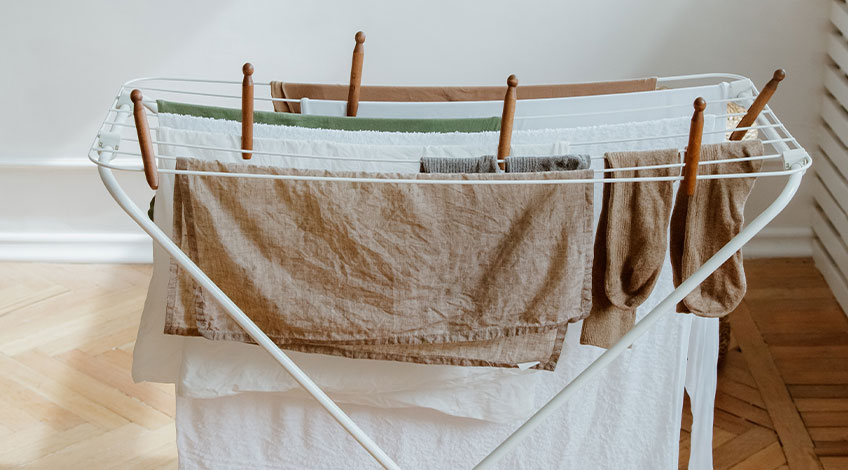
We often get asked this question, and it really is dependent on the size of the room you’re planning to run the dehumidifier in.
To work out the size of your room just multiply the length by the width, the answer will be the size of the room in square metres. So if your room is 5 metres long, and 4 metres wide your total square meterage is 20 square metres
Length x width = square metres, in this case, that would look like this:
5 x 4 = 20
Once you have the area of the room it’s easy to work out what size dehumidifier you need.
| Total area Square metres | Capacity recommended |
|---|---|
| Up to 1500 | 17 litres |
| Up to 2000 | 28 litres |
| Over 2000 | 39 litres |
Most standard rooms will never need a larger capacity than 17 litres and using our example of 20 square metres, you’ll probably get away with a 12-litre capacity.
Now you are armed with all the relevant facts and tips for drying laundry indoors using a dehumidifier, it’s over to you.
SEE ALSO: Are Dehumidifiers Expensive To Run?
How To Dry Clothes Indoors Using A Dehumidifier
The issues linked to dampness, such as condensation, mildew, and mould, signal a serious concern. Drying laundry inside worsens this issue, especially when the humidity level is not controlled.
The ideal fix is a properly vented tumble dryer, but lacking space for one, a dehumidifier with a laundry setting is an excellent alternative.
Manufacturers claim that dehumidifiers are better than tumble dryers for drying clothes. They explain that the absence of heat prevents clothes from shrinking or becoming stiff and overly dry. They aim to mimic ideal drying conditions.
For the best way to prevent dampness when drying laundry indoors follow these tips.
- Keep the room ventilated
When you’re operating a dehumidifier, keep the door to the room it’s in open to allow air to flow freely. But keep windows and outside doors closed. Because you don’t want to let damp air in. - Never dry clothes directly on a radiator
Not only can the intense heat from the radiator damage your clothes, but it can also cause a fire hazard and it prevents heat to spread through the room. Not to mention the humidity wet washing on hot radiators creates. - Use a coat hanger
Hang shirts on hangers and then place the hangers on the airer, this allows airflow that promotes drying, and the shirts won’t get so creased, saving time on ironing. - Situate the clothes airer correctly
Try to put the clothes airer in direct sunlight if possible. But never dry clothes in a room containing soft furnishings, like bedrooms. The moisture can soak into soft furnishings and create more damp problems. - Don’t overfill wardrobes
When clothes are crammed in together in a home with damp issues, the mildew and mould will settle on the clothes and create all kinds of problems. It can be extremely difficult to eradicate mould from a wardrobe full of clothes.
SEE ALSO: What Does A Dehumidifier Do?
Frequently Asked Questions
Dehumidifiers are good for drying clothes especially dehumidifiers with laundry settings.
The size of dehumidifier you need to dry clothes depends on the size of the area you are drying clothes in. If it’s an average-sized utility room a 10 to 12-litre dehumidifier will be perfect.
It takes a dehumidifier around 3 to 5 hours to dry clothes.
A dehumidifier is better than a tumble dryer when it comes down to energy-efficiency.
Also, follow us on Pinterest ...