How To Wash Curtains In The Washing Machine
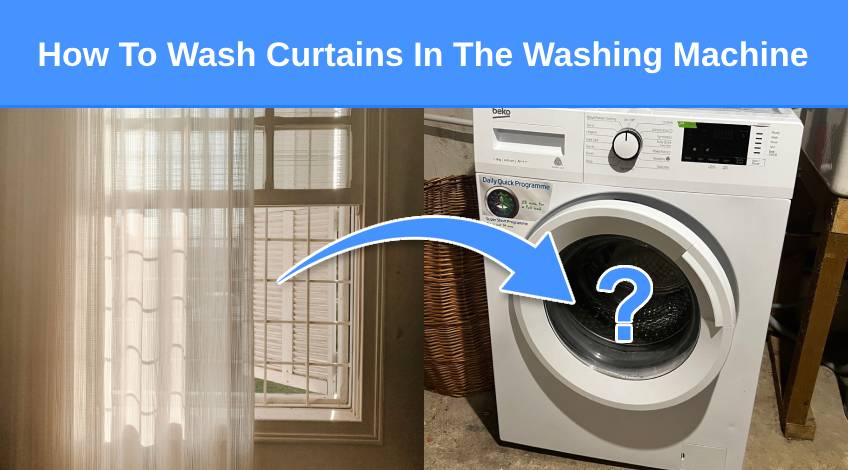
It’s important to first check the care label on your curtains for the manufacturer’s instructions. The label provides details on washing methods, water temperature, and whether the fabric can be machine washed.
Lightweight fabrics such as polyester, linen, nylon, and cotton are generally suitable for machine washing. For delicate fabrics such as velvet, silk, or organza, hand washing or dry cleaning is recommended instead of machine washing.
If you’re unsure about how to clean your curtains, it’s a good idea to take them to a dry cleaner. This is particularly important if the label indicates “dry clean only”. Washing them at home with standard methods might lead to shrinkage or irreversible damage.
This guide will explain everything you need to know about washing curtains in a machine, from pre-washing checks to drying techniques.
How To Machine Wash Wash Curtains
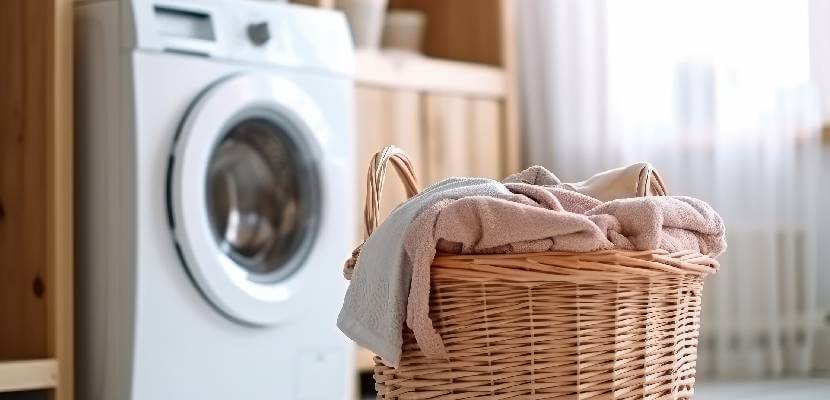
Preparation is key before washing your curtains. Start by reading the care label to ensure the curtains are machine washable. Remove any hooks or accessories to prevent tangling or damage during the wash.
- Set the machine to use lukewarm or cold water, keeping the temperature under 30°C.
- Opt for a gentle or delicate cycle with a slow spin speed.
- Use mild detergent. Avoid harsh detergents, and if concerned about colours running, include a colour catcher in the drum.
- Wash the curtains alone to avoid overloading the drum, as they become heavy when wet.
- Once the wash cycle is complete, take the curtains out to dry.
Pro-tip: Take note of the measurements before taking the curtains down. This will help you identify any shrinkage after washing.
How To Hand Wash Delicate Curtains
For delicate curtains, such as those made of silk, velvet, or organza, or those with intricate details like elaborate box pleats or embroidered stitching, hand washing is a better choice to avoid causing damage or wrinkles.
Using a bath or a large sink lets you clean the whole curtain in one go, ensuring every part is washed. Take care not to over-soak the fabric, and avoid twisting or wringing it after washing. Always follow the washing label for advice on the proper water temperature.
Important: Do not submerge velvet in water. Use a chamois cloth dipped in hot water to lightly brush through the fabric, ensuring the cloth is well wrung out.
How To Dry Curtains After Washing
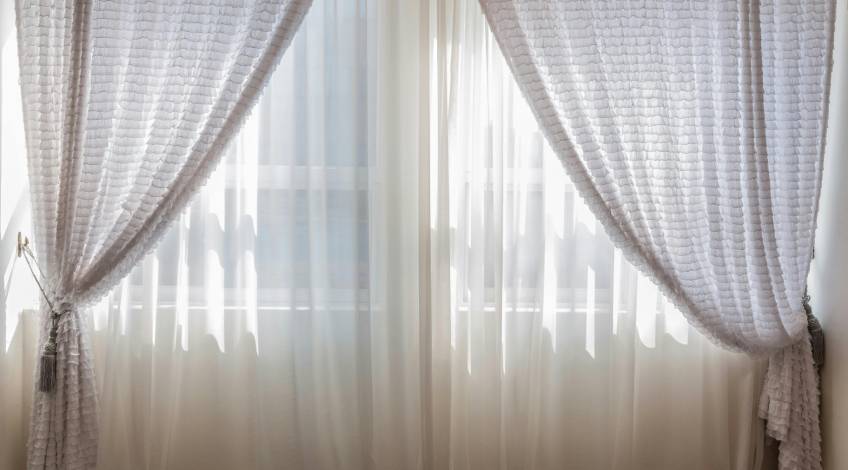
The best way to dry curtains is to hang them on a line outside. This allows them to be exposed to plenty of fresh air, with the breeze helping to dry the fabric. It’s important to avoid direct sunlight to prevent any fading of colours.
Tumble drying is an option for some curtains, but it’s crucial to check the label first. If the care label permits, it’s best to use a low heat setting. Take them out when they are 95% dry and leave them to air dry to avoid creasing.
If the curtains have shrunk, lay them flat on a large surface and gently stretch them back to their original size using your pre-measured dimensions as a reference.
How Often Should You Wash Your Curtains?
It’s generally recommended to give curtains a thorough clean twice a year. However, if your home accumulates dust or strong smells quickly, more frequent washing may be necessary.
It’s a good idea to get into the habit of dusting and vacuuming your curtains weekly to keep dirt away. This is also an easy way to freshen them up between proper cleanings. Just be sure to use the soft brush and, if you can, lower the suction on your vacuum when cleaning your curtains.
SEE ALSO: Can You Put Eyelet Curtains In The Washing Machine?
Frequently Asked Questions
Yes, you can put curtains in the washing machine, but it’s important to first check the care label to ensure they are machine washable.
You should wash curtains on a gentle or delicate cycle with a slow spin speed to prevent damage.
You can wash curtains at 40 degrees, but it’s safer to use lukewarm or cold water, keeping the temperature under 30°C, to avoid potential shrinkage or damage.
Curtains should be washed thoroughly twice a year, but more frequent washing may be necessary if your home accumulates dust or strong smells quickly.
Also, follow us on Pinterest ...