Whirlpool Dishwasher Not Drying Dishes? (here’s what to do)
As the name suggests, the main function of a dishwasher is to wash dishes. However, we also expect the dishwasher to dry those dishes after washing them.
When the dishwasher fails to dry the dishes it can be worrying and annoying. If you own a Whirlpool dishwasher and it’s not drying your dishes, keep reading.
In this article we take a close look at why your dishwasher isn’t drying your dishes and offer solutions to these problems.
Wet Dishwasher Walls Aren’t Usually A Problem
It is possible for the interior walls of the dishwasher to become wet after the drying cycle has completed. This is usually not a problem and is due to condensation. It only becomes a problem if the dishes and other items in the dishwasher remain wet.
Below we have listed all of the reasons why your dishwasher might not dry your dishes, but wet interior walls are not usually problematic.
Why Is My Whirlpool Dishwasher Not Drying Dishes?
There are several reasons why your Whirlpool dishwasher might fail to dry the dishes which include;
| Probable Cause | Solution |
|---|---|
| Incorrectly Loaded Dishes | Ensure dishes are loaded in the correct way |
| Unloading In The Wrong Order | Always unload the lower rack first |
| Drying Plastics | Wash plastics separately |
| Not Enough Rinse Aid | Keep the rinse aid dispenser topped up |
| Not Selecting The Heated Dry Function | Always select the heated dry function before the wash cycle starts |
| Vent Issues | Inspect and replace the vent if necessary |
| Defective Fan Motor | Contact a technician |
| Defective Heating Element | Contact a technician |
Let’s take a closer look at each of these issues;
Incorrectly Loaded Dishes
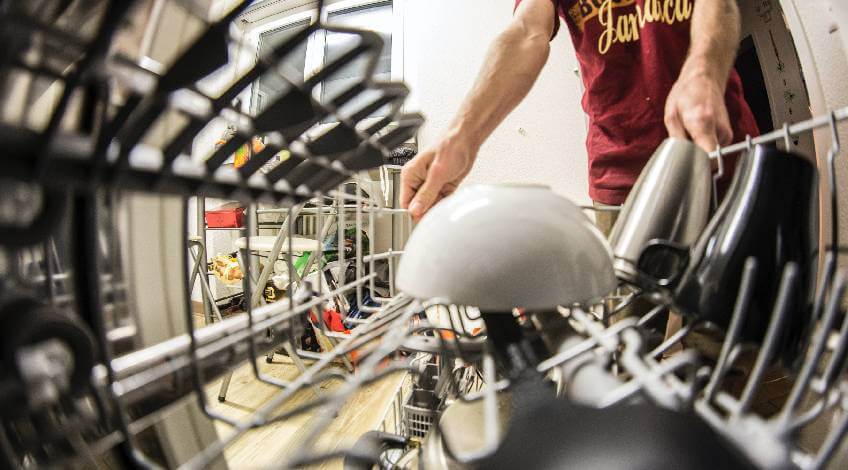
Incorrect loading of dishes is the most common reason why a dishwasher fails to dry dishes. Overloading or allowing dishes to overlap will result in them not getting washed correctly or dried effectively.
You need to provide enough space around each item to allow adequate air flow to get each item to dry. You should also load the racks in the following fashion;
Top Rack
You should place cups, glassware and bowls on the top rack face down to encourage better cleaning and drying. Large utensils like spatulas should also be laid flat on the top rack.
Bottom Rack
Plates should be placed one to each slot facing inwards on the bottom rack ensuring there is a gap between each one. Cookware (saucepans) should also be placed on the bottom rack face down to encourage better cleaning and drying.
Cutlery Rack
You should place knives, forks and spoons alternately in the cutlery rack to prevent nesting. If the cutlery rack in your dishwasher has separate compartments, place one item in each compartment.
Unloading In The Wrong Order
When it comes to drying dishes, the way you unload the dishwasher is just as important as the way you load it. You should always unload the bottom rack first to prevent any water droplets falling from the top rack when removing items.
Drying Plastics

Ceramics, glassware and stainless steel absorb heat which the dishwasher utilises to help dry the contents of the appliance. Plastic items are unable to retain heat as well as these other items which is why a typical dishwasher drying cycle will leave plastic items still wet.
You should wash plastic items separately to prevent this from becoming a problem.
Not Enough Rinse Aid
Rinse aid is well known for making dishes sparkle but its main function is to aid rinsing. It achieves this by changing the structure of the water molecules so that they run off glasses and ceramics easier.
This also helps in the drying process by reducing the amount of water remaining on the items. You should always ensure the rinse aid dispenser is topped up regularly.
Not Selecting The Heated Dry Function
Your Whirlpool dishwasher cannot dry the dishes correctly if you don’t select the heated dry cycle. This needs to be selected before the wash cycle has started.
This allows the heating element to be ready at the correct point in the cycle to dry those clean dishes.
Vent Issues
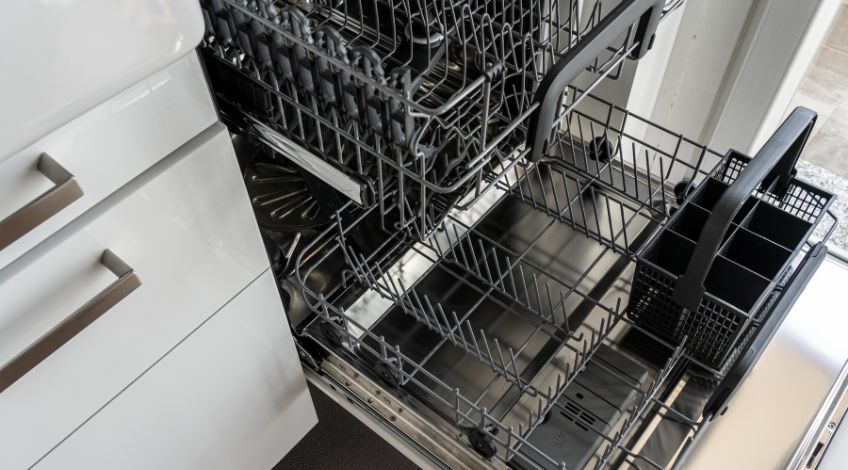
Some models use a vent which opens after the wash cycle has finished to let moist air escape the dishwasher. If this vent doesn’t open properly (or at all), there will be excess moisture in the dishwasher and the dishes will not dry properly.
We recommend contacting a technician to investigate, repair or replace the vent for you.
Defective Fan Motor
The vent system on dishwashers often uses a fan to force moist air out of the dishwasher through the vent. If the fan blades are damaged, or the fan motor is defective in some way, the fan and motor will need some assistance.
We recommend getting a technician to investigate and repair/replace the fan and/or fan motor as necessary.
Defective Heating Element
Dishwashers have a heating element which heats the water that enters the appliance to wash the dishes and heats the air used to dry them. If the heating element is defective or develops a fault, it will need to be replaced.
This is another job best left to a technician to complete.
SEE ALSO: Whirlpool Dishwasher Diagnostic Mode Explained
Frequently Asked Questions
If your Whirlpool dishwasher isn’t drying the dishes it could be because; the dishes have been loaded incorrectly, you are unloading the dishes in the wrong order, you have washed plastic items, there’s not enough rinse aid, you haven’t selected the heated dry option, there’s a problem with the vent, the fan motor is defective or the heating element is defective.
If the interior walls of your Whirlpool dishwasher are wet but the dishes are dry, this is completely normal and is due to condensation. However, if the dishes are also wet, it could be due to overloading the racks, water dripping from the top rack onto the lower rack, the rinse aid dispenser needing topping up, you failed to select heated dry before the wash cycle commenced, or you washed plastic items.
It is normal for dishwashers and washing machines to be wet inside on delivery. This is because they are tested in the factory prior to shipping. It is not a sign of a second hand appliance.
Also, follow us on Pinterest ...