People are slashing their portable A/C bills with these surprisingly easy tips
If you ask anyone about air conditioning, they’ll tell you it’s expensive to run. Let’s face it, who has money to burn when it feels like the economy’s running on fumes? Extra expenses are about as welcome as that fly who’s always trying to share your soup!
What if we could tell you how to save money while using your portable A/C unit? This short article will not only save you money on your energy bills. It will also help you to do your bit for the environment because using less power means less environmental damage right?
So, if you own a portable A/C and you want to save money and help the environment, keep reading.
How Do Portable A/Cs Work?
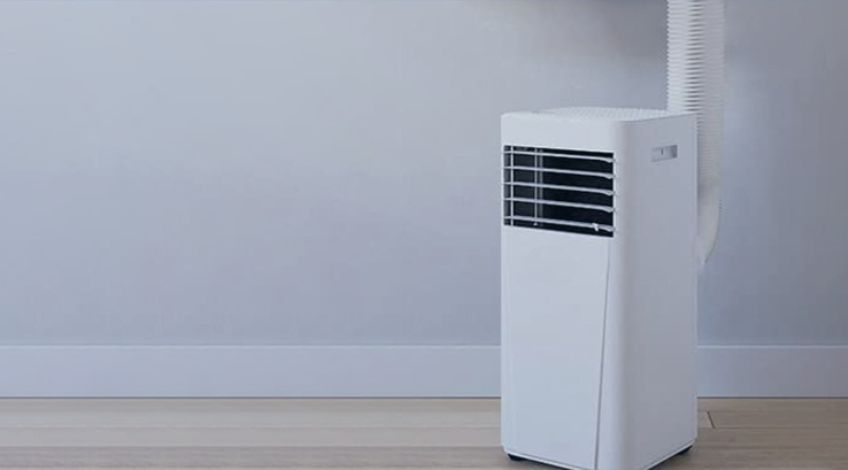
Before we explain how you can save money while using your A/C you need to get your head around how it works. Once you understand the way your A/C works, you’ll be able to comprehend why our suggestions will help you save money (and the planet).
Now, we promise this isn’t going to be a physics lecture. Let’s take a quick (and pain-free!) dive into how your portable A/C pulls off its cooling magic…
- Your portable A/C pulls in warm air from your room which is absorbed by a refrigerant that runs through a series of looped copper pipes.
- That refrigerant then runs through a compressor which makes it hotter still because of an increase in pressure.
- It then gets to a condenser that causes the heat to get ejected by way of the exhaust hose which takes the heat from the room. This also reduces the heat of the refrigerant which gets colder still once it passes through an expansion valve.
- The liquid refrigerant then turns back into a gas before running through the whole process once again.
If you want to know how your portable A/C works in more detail click here.
Here’s How To Save Money When Using Your Portable A/C
Now you have a bit of an understanding as to how your portable A/C works, let’s get into how to make it work better, use less energy, keep you cooler and help save the environment!
Make Sure Your A/C Unit Is In An Optimal Position
Sure, your A/C might not be much of an interior designer, but give it the VIP spot it deserves, close to a window, near a plug socket, and far away from heat-producing party poopers like TVs or ovens. But it also needs to have breathing space all round to allow free flow of air.
You need to give it around 12 inches (30 cm) at the back of the unit and keep the front completely clear. This means no furniture or other obstructions directly in front of it and make sure the air intakes are clear as well.
Don’t place the unit near any heat sources. If it does need to be placed near any electrical items it needs to be at least 10 feet (3 metres) away.
That might mean placing the A/C in the corner of the room and angle it towards the centre to allow more space for the cool air to circulate.
Make Sure The Exhaust Hose Is Straight
Your portable A/C unit will have an exhaust hose which has been made a specific length to suit your individual unit and maintain energy efficiency.
Think of the exhaust hose like a traffic free motorway for hot air, any twists or kinks are like rush hour traffic jams, and nobody wants that! And, you guessed it…that means using extra energy which costs you more money.
Don’t Let The Exhaust Hose Get Damaged
In the same way that twists in the hose can stop the air flow or slow it down and make the unit work harder. So can any splits or tears in the hose. This is because any holes in the hose allow hot air to escape back into the room.
Which makes the unit work twice as hard to remove the same hot air. If you notice any damage to the hose, you should ideally replace it immediately. Or you can do a temporary repair using air conditioner insulating tape.
This special tape is designed to not lose its stickiness when it gets hot so it’s perfect for A/C exhaust hoses.
Add Extra Insulation To The Exhaust Hose
Even if the exhaust hose is perfectly straight and has no leaks in it, it will still push some heat back into the room. This is simple science and is due to the hose not being thick enough to stop some of the heat from seeping back into the room.
You can get an insulated hose cover online which will cover the exhaust hose and help to reduce heat loss.Think of this as giving your exhaust hose a cozy jacket, it keeps the heat inside where it belongs and out of your room where it’s not invited!
All you do is slide it over the exhaust hose and keep it in place using cable ties.
Make Sure The Window Kit Fits Properly
While we’re on the subject of the exhaust hose, let’s talk about the window kit. Most portable A/Cs have a window kit included which is designed to make installing the unit easier.
But many of these kits don’t fit properly and don’t make a tight seal which allows hot air to get back into the room. To add insult to injury, it’s the same hot air that the unit just ejected!
If you notice any gaps around the edges of the window kit, try taping them up. If you have to, you can make your own window kit using plywood or polystyrene. But make sure it fits tightly and seals the gaps completely.
Make Sure You Get The Right A/C Unit
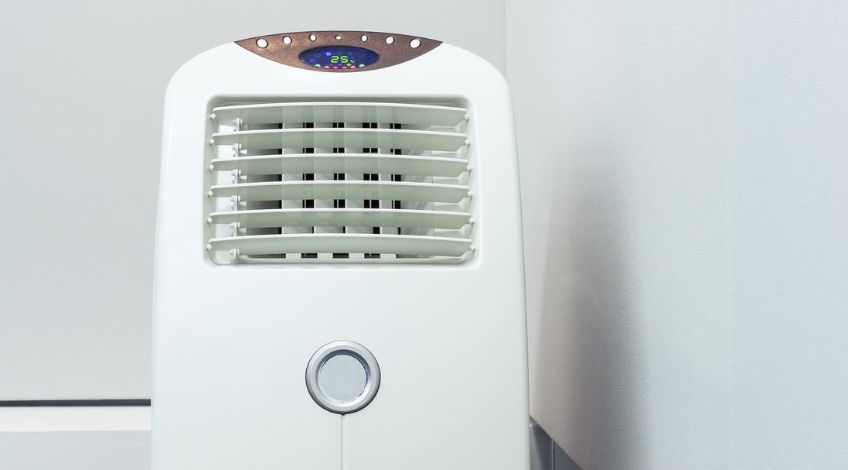
All portable A/Cs are rated in BTUs (British Thermal Units) and to get the best and most efficient performance from yours, it needs to be the correct rating. In case you’re interested 1 BTU is the amount of heat needed to raise ½ a litre of water by 1 degree C.
Which, in case you haven’t worked it out, means the higher the BTU rating of your unit, the better it will be at cooling your room. So before buying a portable A/C, you need to make sure it’s big enough to do what it’s supposed to do, cool your room.
So, How Do You Work Out What BTU You Need?
It’s time to get your tape measure out and measure the width, length and height of your room in feet. Then you can use this natty little formula to work out how many BTUs you need;
Width x length x height x 5 = BTU.
So, let’s imagine your room is 15 ft long, 14 ft wide and 7.5 ft high which when added into the formula is;
15 x 14 x 7.5 x 5 = 7875
Which means we need a portable A/C unit of at least a 7875 BTU rating.
But That’s Not The Whole Picture…
Something that you might not have thought about is that people give off their own heat. So the more people in the room, the more the A/C needs to work to cool the air.
For that reason, you need to add an extra 1000 BTUs for each person in the room. Which means using the same room as before, but accounting for 2 people in the room, you now need a portable A/C unit of at least 9875 BTUs to cool that room efficiently.
Turn The Settings Down
With UK temperatures, there’s usually no need to run the unit at full power all the time. If you do, you’re making it work overtime which uses extra energy and costs more to run.
Trying to turn your room into Antarctica? Trust me, your A/C isn’t auditioning for a climate control miracle. Lowering the temp just a bit will do the trick, and save you cash.
Just by lowering the temperature in the room by a few degrees, it will feel way cooler than the outside temperature.
Don’t Let The Filters Get Dirty
Your A/C can’t breathe with dirty filters, it’s like trying to run a marathon with a pillow over your face. Keep those filters clean and let your A/C work its magic! If the filters get clogged less air can get through to the unit. The filters are there to prevent dust from damaging the internal workings of the A/C.
As all homes accumulate dust, it’s inevitable that the filters will clog quite quickly. It is recommended that you clean the filters every 2 to 4 weeks.
They should be removed and washed in warm water with a little washing up liquid and make sure they’re dry before putting them back in the unit.
Remove All Other Heat Sources
Anything electrical in your room creates extra heat, We’re talking light bulbs, TVs, computers and anything else that has electricity running through it.
If you don’t need it to be powered up, turn it off. It’s as simple as that. You might think it doesn’t use much energy, but any extra heat will make your A/C work harder and cost more to run.
Plan Ahead: Start Cooling The Room Earlier
It makes sense that cooling the room before it gets too hot will mean the unit doesn’t have to work so hard. Think of this as getting a head start in a race against the sun, your A/C will thank you for not making it sprint to catch up!
So, if you know there’s going to be a few people in the room at say 11 am, start to cool the room at around 10 am. That means the room will already be cool(ish) and the unit won’t need to work quite so hard to maintain the lower temperature.
You can also use the naturally cooler air at the start of the day to get the room cooler before you start. Early morning air is often cooler so try opening the windows early in the day to allow cooler air to enter.
Once the temperature starts to warm up outdoors, close the windows again and turn the A/C on.
Don’t Let Extra Heat Enter The Room
To work properly and efficiently, your A/C should only really cool the room it’s in. If you leave the door or window open, hot air from these places will enter the room and make your unit work harder.
Keep the windows and doors shut tight and let your A/C do its job in peace, like a chef working without interruptions in the kitchen!
If You Can, Seal The Doorway
Even if the doors are closed, you will still get some heat seeping into the room from under the door. You can help to prevent this by placing a rolled up towel or blanket under the door.
Don’t worry, you won’t stop oxygen getting in, just hot air so you won’t suffocate.
Keep The Sunlight Out
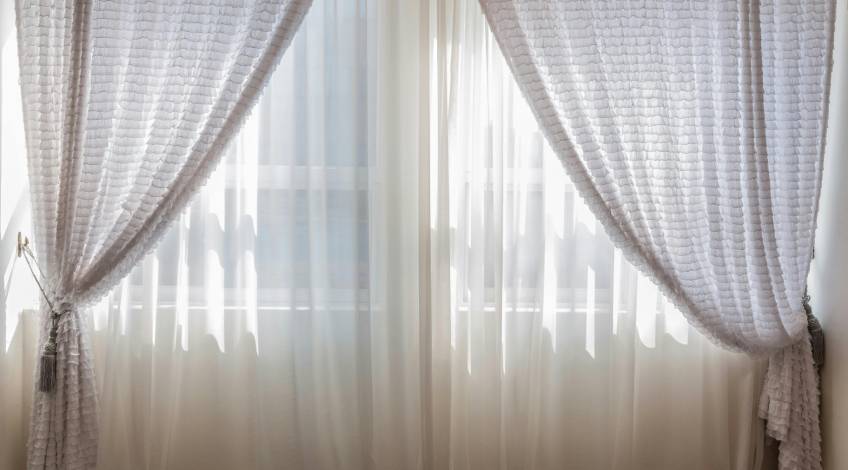
All rooms get warmer if the sunlight is flooding into them. The heat from the sun will make your A/C work harder. In fact, sunlight can raise the temperature in the room by around 10 to 20 degrees.
To make your A/C run more efficiently and use less energy, pull the blinds or shut the curtains to stop sunlight from entering the room.
Make Sure The Water Tank Gets Emptied Regularly
Most portable A/Cs have automatic evaporation systems that remove any moisture that happens to form on the evaporator. But some have a water tank to collect that moisture.
Check the specs on your unit and if it has a water tank, get into the habit of emptying it regularly to keep your unit running efficiently.
Upgrade To A Newer, More Energy Efficient Unit
If you’ve had your unit for a while, it might be time to upgrade to a more recent model. Older units tend to not be as energy efficient as newer models.
Over time, the compressors stop running as efficiently as they did when the unit was new. This can cause multiple problems including decreased efficiency and added heat due to increased friction of the internal components.
Think of it like trading in an old car for a shiny new hybrid, your wallet and the environment will give you a round of applause. Plus, the boffins recommend replacing portable A/Cs every 5 to 8 years.
Look For A More Energy Efficient Replacement Unit
All portable A/Cs work in a similar way, but some are more energy efficient than others. Like, dual hose units are more efficient than those with a single hose.
Single hose units rely on the air in the room to cool the internal components down. Dual hose models draw air from outdoors to cool down internal components. But there’s a catch, dual hose models tend to be far more expensive than single hose units and they take longer to install.
Check For Eco-Settings
Many of the modern range of portable Air Conditioner units are fitted with eco-settings which make them run more efficiently.
These settings allow you to cool your room without costing the earth, literally.
Chill Out Without Breaking the Bank
By following these easy tips, you’ll not only save money on your energy bills but also help the environment by using less power. Who doesn’t love a win-win? Whether it’s keeping your exhaust hose straight, cleaning your filters, or finding the perfect spot for your A/C, these tweaks can make a world of difference.
Ready to take your cooling game to the next level? Start implementing these tricks today and let your portable A/C work smarter, not harder.
Got more tips or tricks? Share them in the comments, we’d love to hear how you’re keeping cool this summer!
SEE ALSO: 12 Washing Mistakes That Make Clothes Look Old Fast
Frequently Asked Questions
Yes, you can run your portable A/C all day and night, but it’s not ideal for energy efficiency. Use eco-settings, adjust the temperature, and turn it off when the room is cool enough to save on energy costs.
The difference between a single hose and a dual hose portable A/C is that single hose units pull air from the room to cool the components, while dual hose models pull air from outside. Dual hose models are generally more efficient but can be pricier.
No, you should only use air conditioner insulating tape to fix a damaged exhaust hose on your portable A/C because it is heat resistant and designed specifically for this purpose.
Also, follow us on Pinterest ...