
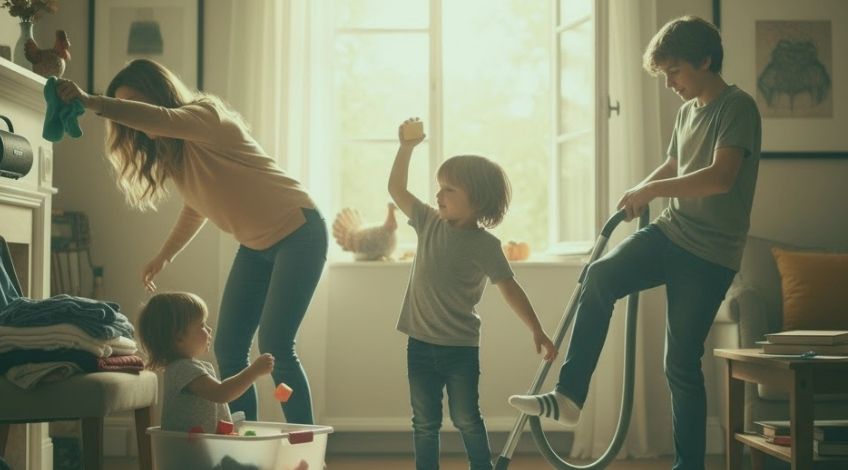
Family-Friendly Thanksgiving Clean-Up Games (Get Kids Helping Without the Fuss)
Let’s be honest: the post Thanksgiving clean up is nobody’s favourite part of the holiday. You’ve just enjoyed a beautiful meal, everyone’s feeling full and sleepy and the last thing anyone wants to do is tackle a mountain of dishes and a dining room that looks like a tornado hit it.
But what if cleaning up could actually be fun? What if your kids actually asked to help instead of mysteriously disappearing the moment you start clearing plates? Sounds impossible, right?
Well, it’s not! By turning clean up into games, you can teach responsibility without the nagging, create bonding moments instead of arguments and maybe even start a new family tradition. Here’s how to make post dinner tidying something your kids will actually want to be part of!
Game #1: Beat The Timer Challenge
Kids love racing against the clock, and this game taps right into that competitive spirit!
Set a timer for 10 minutes and challenge your kids to see how much they can clean before it goes off. Make it exciting by giving each child a specific zone (one gets the dining table, another tackles the living room, the youngest picks up toys). When the timer buzzes, everyone stops and you assess the damage together. The person who made the most visible difference wins a small prize, like choosing tomorrow’s breakfast or picking the evening film.
What makes this work so well is the time pressure. Ten minutes feels manageable, not overwhelming. Kids can see the end in sight, which keeps them motivated. Plus, they’re not thinking about “cleaning” as this massive, boring chore. They’re thinking about winning!
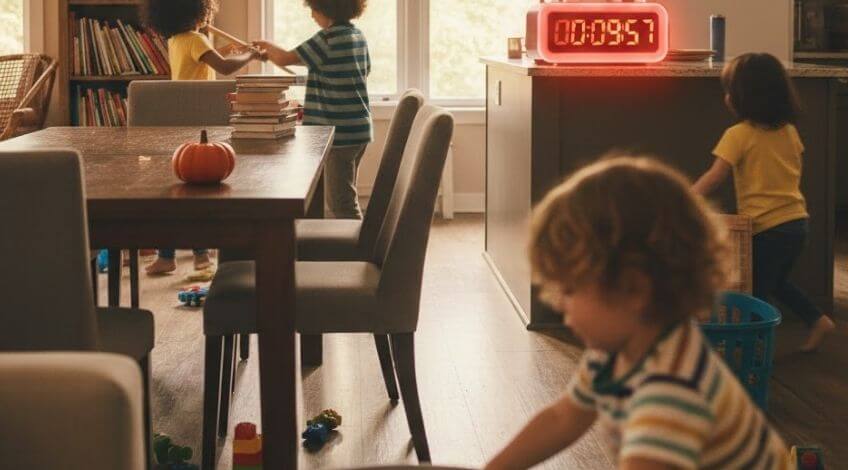
You can do multiple rounds too. After the first 10 minutes, reset and go again with different zones. Before you know it, 30 or 40 minutes have passed and your house looks completely different. The kids barely noticed because they were having too much fun trying to beat their previous time!
Game #2: Thanksgiving Scavenger Hunt
This one works brilliantly for younger children who might not be able to handle complex cleaning tasks yet.
Create a list of items that need to be put away or tasks that need doing. Frame them as treasure hunt clues! For example: “Find five pieces of rubbish in the living room,” “Discover three dirty plates hiding on the coffee table,” “Hunt down all the napkins that escaped from the dining room.” Give each child their own list and send them off on their mission.
The beauty of this approach is that it turns cleaning into an adventure. Kids aren’t “cleaning up,” they’re on a quest! You can make the lists as simple or elaborate as you want depending on your children’s ages. For toddlers, maybe it’s just finding specific coloured items to put in the bin. For older kids, you can create more challenging tasks.
Consider offering a reward system where each completed task earns points, and points can be traded for privileges like staying up 15 minutes later or choosing dessert tomorrow. Kids love working towards a goal!
Game #3: Musical Cleaning
Remember musical chairs? This is the cleaning version, and it’s absolutely fantastic for keeping energy high!
Put on some upbeat music (maybe even Thanksgiving themed songs for a laugh) and have everyone clean while the music plays. When you pause it, everyone has to freeze exactly where they are, no matter what they’re doing. Anyone who moves is “out” for that round but can jump back in when the music starts again.
This game keeps things light and silly. Kids will be giggling when they freeze mid wipe or while holding a stack of plates. The laughter alone makes the whole experience more enjoyable, and before they realise it, they’ve been cleaning for 20 minutes.
You can add variations too. Maybe when the music stops, everyone has to swap tasks with the person nearest to them. Or perhaps they have to do a silly dance before getting back to work. The more ridiculous, the better!
Game #4: Cleaning Relay Race
If you’ve got multiple kids, this competitive game gets everyone moving fast!
Divide your children into teams (or have them race against you if there’s only one or two). Set up relay style challenges where each person has to complete a cleaning task before the next person can start theirs. For example: Person One clears the table, Person Two loads the dishwasher, Person Three wipes down surfaces, Person Four sweeps the floor.
Time each team and see who finishes fastest. The winning team gets to skip one small chore the next day or gets first dibs on leftovers. Kids love the team aspect because they’re working together towards a common goal, and they love the competition because they want to be the fastest.
You can adapt this for different ages by giving harder tasks to older kids and simpler ones to younger children. The key is making sure everyone feels like they’re contributing equally to the team’s success.
Game #5: Point System Bonanza
This is perfect for families who want a longer term approach that works beyond just Thanksgiving!
Assign point values to different cleaning tasks based on difficulty. Wiping the table might be 5 points, loading the dishwasher could be 10 points, sweeping the floor might be 15 points. Let kids choose which tasks they want to tackle to earn points.
At the end of rhe clean up, tally the points and offer rewards based on what they’ve earned. Maybe 50 points equals choosing a family film, 100 points means they can skip one homework session with your approval, 150 points gets them a small toy or treat from the shop.
What’s brilliant about this system is that it gives kids autonomy. They’re not being told what to do, they’re choosing their own path to rewards. It teaches decision making alongside responsibility. Do they go for lots of small easy tasks or tackle one big difficult one?
You can display points on a chart or whiteboard so kids can see their progress in real time. Watching those numbers climb is incredibly motivating!
Game #6: Sorting Olympics
Kids love sorting things, so why not make it official?
Set up different stations around your kitchen and dining area: one for dishes that need washing, one for food that needs storing, one for rubbish, one for items that belong in other rooms. Give each child a specific category and challenge them to sort their items as quickly and accurately as possible.
You can make this more fun by using silly team names (Team Leftover Legends, The Dishwasher Dynamos, Rubbish Removal Royalty) and giving out “medals” (which can be as simple as stickers or hand drawn certificates) for fastest sorter, most accurate sorter and best teamwork.
The competitive element keeps kids engaged, but there’s also an educational component. Younger children learn categorisation skills, while older kids practise organisation and logical thinking. Plus, when multiple people are sorting simultaneously, the job gets done incredibly fast!
Game #7: Hide And Clean Seek
This twist on hide and seek keeps things playful while getting the job done.
One person is the “seeker” who closes their eyes and counts to 30 while everyone else hides. But here’s the twist: while you’re hiding, you have to tidy something in your hiding spot! When the seeker finds someone, they have to guess what that person cleaned before the person reveals it.
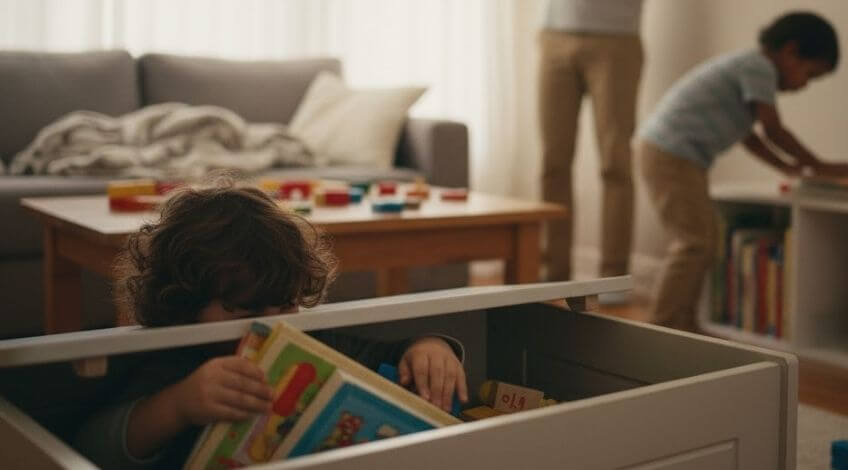
This works especially well with children who might feel overwhelmed by big cleaning tasks. When they’re focused on finding a good hiding spot, they don’t think as much about the fact that they’re also tidying. It’s sneaky and effective!
You can play multiple rounds, with different people being the seeker each time. By the end, your house will be noticeably cleaner and your kids will have had a blast. They might even ask to play it on regular days, which means less nagging about tidying up year round!
Game #8: Mystery Box Challenge
Add an element of surprise to make cleaning feel like a game show!
Write different cleaning tasks on pieces of paper and put them in a box or bowl. Each child takes turns drawing a task and has to complete it before the next person draws. The mystery element makes it exciting because kids never know what they’re going to get!
You can add “bonus cards” that say things like “Swap tasks with someone else” or “Choose a helper for your task” or even “Free pass, draw again!” These special cards keep things interesting and prevent the game from feeling predictable.
For added fun, put a time limit on each task. If someone completes their task before time runs out, they earn bonus points or get to draw two cards next round and choose which task they prefer. Kids love having choices and they love the surprise factor of not knowing what’s coming next!
Tips For Making Clean Up Games Actually Work
Now, here’s the thing: games are fantastic, but you need to set them up properly or they’ll fall flat.
First, make sure you explain the rules clearly before starting. Nothing kills enthusiasm faster than confusion. Demonstrate if needed, especially for younger children. Second, keep your energy high! If you’re excited about the game, your kids will be too. If you seem bored or frustrated, they’ll pick up on that immediately.
Third, actually follow through on rewards. If you promise the winner gets to choose breakfast tomorrow, make sure that happens. Kids need to trust that their effort will be recognised. Fourth, be flexible. If a game isn’t working, switch to a different one. Not every game will appeal to every child or work on every occasion.
Also, remember that the goal is progress, not perfection. If your kids clean up 70% of the mess while having fun, that’s a massive win compared to nagging them for an hour to clean up 100% while everyone’s miserable. You can always tackle the remaining bits yourself once they’re done.
Keep ages in mind too. What works for a 10 year old might not work for a 4 year old. Don’t be afraid to modify games or create different versions for different age groups. And finally, join in! When kids see you participating in the games rather than just directing, they’re much more likely to stay engaged and enthusiastic.
Why This Approach Actually Teaches Responsibility
You might be thinking: “But isn’t this just bribing my kids to clean? Shouldn’t they just do it because it needs doing?”
Here’s the truth: yes, eventually we want our children to help out simply because they’re part of the family. But they’re not born knowing that! Teaching responsibility is a process, not an overnight transformation. These games are stepping stones.
When kids play cleaning games, they’re learning several crucial skills without even realising it. They’re learning that cleaning can be broken down into manageable chunks. They’re discovering that working together makes tasks easier. They’re experiencing the satisfaction of a job well done and seeing the immediate results of their efforts.
Over time, as these games become tradition, the cleaning itself becomes less of a battle. Kids start to associate post meal tidy up with family fun rather than dreaded chores. Eventually, you might find they’re willing to help even without the game structure because the habit has been formed.
Plus, let’s be honest: as adults, don’t we make our own “games” to motivate ourselves? We set timers, we create rewards, we race against our own personal bests. We’re just teaching our kids the same motivation techniques we use, but in a more explicit and playful way!
Turn Clean Up Time Into Quality Time
The absolute best thing about using games for Thanksgiving clean up? You’re creating memories, not just cleaning your house.
Years from now, your kids won’t remember being nagged to help with the dishes. But they might remember the year Dad got “out” in Musical Cleaning for moving during a freeze, or the time the youngest won the Timer Challenge for the first time, or the hilarious moment someone drew “clean the toilet” from the Mystery Box and everyone groaned sympathetically.
These games transform a tedious task into family bonding time. You’re working together, laughing together and accomplishing something together. That’s powerful! It shows your children that even boring, necessary tasks can be made enjoyable with the right attitude.
So this Thanksgiving, instead of dreading the clean up or bracing yourself for the inevitable whining, try out a few of these games. Mix and match, adapt them to your family’s personality and see what works. You might be surprised at how much your kids’ attitudes change when cleaning becomes play.
Which game are you most excited to try this Thanksgiving? Share this with other parents on Facebook who could use some creative clean up strategies!
SEE ALSO: 7 Kitchen Hacks To Make Hosting Thanksgiving Stress Free
Also, follow us on Pinterest ...