Should You Wash Mushrooms? The Answer Might Surprise You
If you’ve ever stood in your kitchen holding a pack of mushrooms, wondering whether you should give them a good scrub or just wipe them clean, you’re not alone. This simple question has sparked countless debates among home cooks, and the answer might just change how you prep your fungi forever.
Here’s the surprising truth: you shouldn’t wash most mushrooms at all. That’s right! Those beautiful button mushrooms, portobellos, and shiitakes you picked up from the supermarket are better off with just a gentle wipe down. But before you panic about all those times you’ve given your mushrooms a thorough rinse, let’s explore why this approach works best and when the rules actually change.
The Truth About That “Dirt” On Your Mushrooms
Let’s clear up the biggest misconception first. That brown, earthy substance you see clinging to your store bought mushrooms isn’t actually dirt at all!
What you’re seeing is growing medium, a specially prepared substrate that mushroom farmers use to cultivate their crops. This medium is completely safe and has been sterilised during the growing process to eliminate any harmful bacteria or mould. It’s essentially the mushroom equivalent of the soil you’d find on freshly dug carrots, except it’s been scientifically prepared for food production.
This growing medium is made from materials like composted organic matter, sawdust, or peat, all of which have been carefully processed and heated to create the perfect environment for mushroom growth. The inoculation process involves introducing mushroom spores into this sterile medium, where they develop into the fungi we know and love.
If a tiny bit of this medium ends up in your dish, it’s perfectly harmless. You might notice your sauces take on a slightly earthier colour, but it won’t affect the taste or safety of your meal. In fact, many chefs argue that leaving a bit of this natural growing medium actually enhances the earthy, umami rich flavour that makes mushrooms so delicious.
This is why kitchen professionals often simply brush off excess growing medium rather than washing it away entirely. It’s not something you need to fear or scrub away with soap and water!
Why Water Is The Enemy Of Perfect Mushrooms
Mushrooms are like tiny sponges, and this characteristic is exactly why washing them can sabotage your cooking efforts. Their cellular structure is designed to absorb moisture rapidly, which has served them well in their natural forest habitats but works against us in the kitchen.
When mushrooms absorb water, several problematic things happen. First, they become waterlogged and lose their ability to develop that gorgeous, golden brown caramelisation that makes them so irresistible. Instead of browning beautifully, they’ll steam in their own moisture, resulting in a grey, soggy mess that lacks the depth of flavour you’re after.
Waterlogged mushrooms also can’t properly absorb the delicious cooking liquids, herbs, and seasonings you’re adding to your dish. Think about it: if your mushrooms are already full of plain water, there’s no room for them to soak up that garlic butter, wine reduction, or aromatic herb oil that would normally make them sing with flavour.
The texture suffers dramatically too. Instead of maintaining their pleasant, meaty bite, wet mushrooms become limp and rubbery. This is particularly disappointing when you’re trying to create substantial, satisfying dishes where mushrooms play a starring role.
Professional chefs understand this principle intimately, which is why you’ll rarely see them rinsing mushrooms in restaurant kitchens. They know that dry mushrooms are the secret to achieving that perfect golden crust and concentrated, intense mushroom flavour that elevates any dish.
How To Clean Store Bought Mushrooms Properly
The correct method for cleaning cultivated mushrooms is surprisingly simple and takes just seconds per mushroom. This technique works brilliantly for all the common varieties you’ll find in British supermarkets.
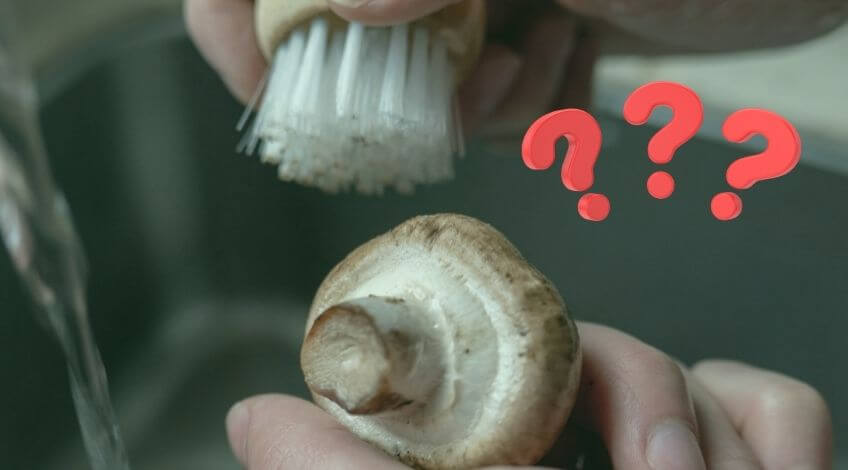
Grab a slightly damp paper towel or a soft mushroom brush and gently wipe each mushroom individually. Start with the cap, brushing away any visible growing medium, then give the stem a quick wipe. The key word here is “gently”: you’re not trying to scrub them clean, just removing any excess debris.
For mushrooms with more intricate surfaces like shiitakes or oyster mushrooms, pay special attention to the gills and any crevices where growing medium might be hiding. A soft brush designed specifically for mushrooms can be incredibly helpful here, as it allows you to clean thoroughly without damaging the delicate structure.
This method works perfectly for:
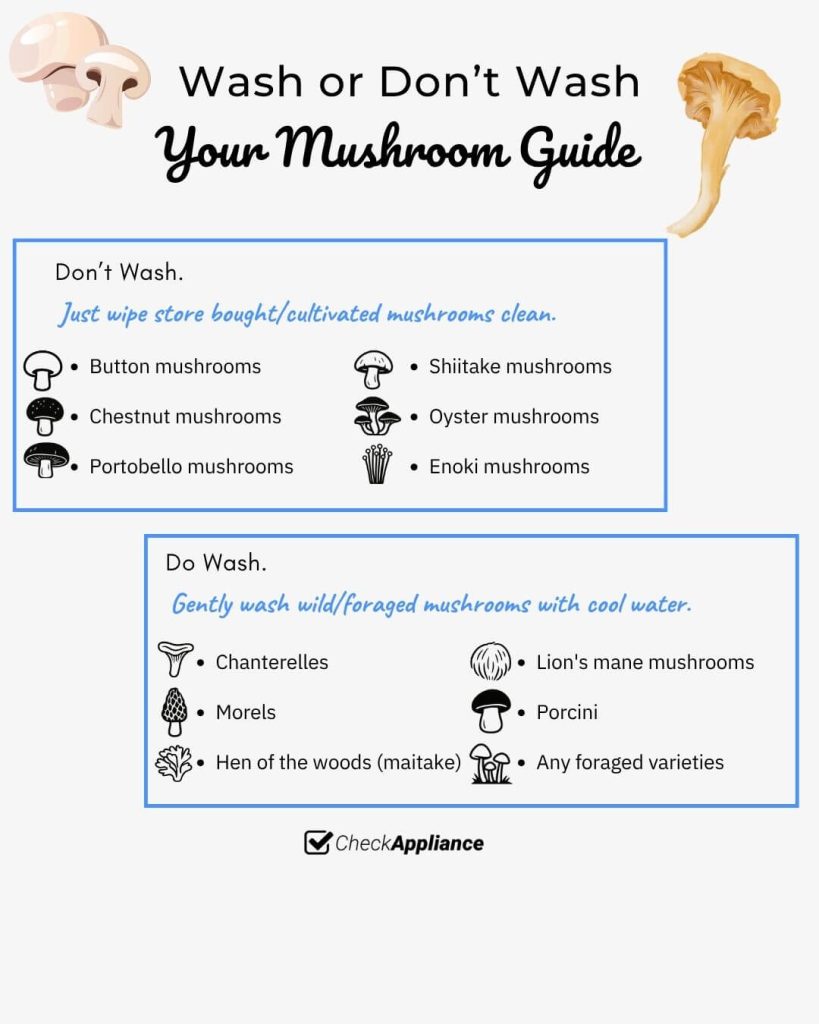
- Button mushrooms
- Chestnut mushrooms
- Portobello mushrooms
- Shiitake mushrooms
- Oyster mushrooms
- Enoki mushrooms
If you encounter mushrooms that seem exceptionally dirty (perhaps from a farmers’ market vendor who specialises in more rustic growing methods), you can give them the quickest possible rinse under cool running water, immediately followed by thorough patting dry with paper towels. But honestly, this should be a last resort rather than your standard practice.
The entire cleaning process should take no more than a few seconds per mushroom. You’ll be amazed at how much time this saves compared to elaborate washing routines, and your cooking results will be infinitely better.
When The Rules Change: Foraging And Wild Mushrooms
While the “don’t wash” rule applies beautifully to commercially grown mushrooms, wild and foraged varieties require a completely different approach. These fungi have grown in actual soil and may harbour everything from dirt and debris to small insects and leaves.
Foraged mushrooms need a proper clean because they’ve been exposed to the real world. Unlike their commercially grown cousins, wild mushrooms like chanterelles, morels, and hen of the woods haven’t been cultivated in controlled, sterile environments. They’ve been growing in forests, fields, and woodlands where they’ve collected all manner of natural debris.
The best method for cleaning wild mushrooms involves a salt water bath. Fill a large bowl with cool water and add a generous pinch of salt (about a tablespoon per litre of water). The salt helps to draw out any hidden creatures and loosens stubborn dirt particles.
Here’s the proper technique: Submerge your foraged mushrooms in the salt water and gently agitate them with your hands. Let them soak for about 5 to 10 minutes, giving any hidden insects time to emerge and dirt to settle to the bottom of the bowl. You might be surprised by what floats to the surface!
After soaking, lift the mushrooms out of the water (don’t drain the bowl, as this would pour the settled dirt back over your clean fungi) and place them on a clean tea towel. Pat them completely dry before cooking: this step is crucial because wild mushrooms are often more delicate than cultivated ones and can become mushy if they retain too much moisture.
This thorough cleaning method is essential for:
- Chanterelles
- Morels
- Hen of the woods (maitake)
- Lion’s mane mushrooms
- Porcini
- Any mushrooms you’ve foraged yourself
Your New Mushroom Cleaning Routine
Now that you understand the science behind proper mushroom care, you can approach your fungi with confidence. The key takeaway is refreshingly simple: less is more when it comes to mushroom preparation.
Remember, that growing medium isn’t your enemy, it’s simply part of the mushroom’s journey from farm to table. A little bit won’t hurt you, and obsessing over removing every last speck will only compromise your final dish.
The next time you’re preparing mushrooms for your favourite pasta, risotto, or Sunday roast, give this method a try. You’ll be amazed at how much better your mushrooms brown, how much more flavour they develop, and how much more efficient your prep time becomes.
Ready to revolutionise someone else’s mushroom game? Share this article with your cooking friends or family group chat, because nothing beats the satisfaction of perfectly golden, flavourful mushrooms that actually taste like mushrooms!
SEE ALSO: Are You Hoarding Junk? Experts Say You Should Ditch These 21 Basement Items
Also, follow us on Pinterest ...