How Long Does Cooked Chicken Really Last In The Fridge?
Let’s be honest: you’ve batch cooked a week’s worth of chicken breasts on Sunday, and now it’s Thursday. You’re staring at that container in the fridge, wondering if it’s still safe to eat or if you’re about to give yourself a nasty case of food poisoning. Sound familiar?
If you’re someone who meal preps to save time and money, knowing exactly how long your cooked chicken stays safe is absolutely crucial. Get it wrong and you’re either wasting perfectly good food or risking a bout of illness that’ll have you regretting that questionable dinner choice.
The good news? We’ve got all the answers you need to keep your meal prep game strong and your stomach happy!
The Quick Answer: Three To Four Days
Here’s the straight truth: cooked chicken will last three to four days in the fridge when stored properly. That’s it. Not a week, not five days if you’re feeling optimistic, just three to four days max.
This timeframe applies whether you’ve roasted a whole bird, grilled some breasts, or slow cooked thighs. Once that chicken is cooked and cooled, you’ve got a narrow window to use it up safely.
Why such a short timeframe? Bacteria multiply rapidly on cooked chicken, even in the fridge. Your refrigerator slows down bacterial growth but doesn’t stop it completely. After four days, the risk of harmful bacteria reaching dangerous levels increases significantly and that’s when food poisoning becomes a real threat.
For meal preppers, this means being strategic about your cooking schedule. If you’re preparing food on Sunday for the week ahead, your chicken based meals need to be eaten by Wednesday or Thursday at the absolute latest.
How To Store Cooked Chicken Properly
Simply chucking your cooked chicken in any old container won’t cut it. Proper storage is essential for maximising freshness and safety.
First things first: let your chicken cool down before refrigerating it. But don’t leave it sitting out for hours! Get cooked chicken into the fridge within two hours of cooking. If it’s a particularly hot day (above 32°C), that window shrinks to just one hour.
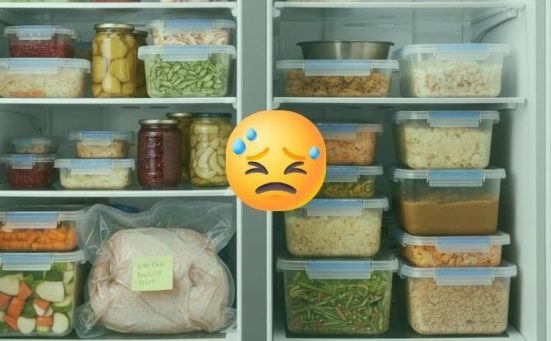
Transfer cooled chicken to airtight containers. This prevents your chicken from drying out and stops it from absorbing odours from other foods in your fridge. Nobody wants chicken that tastes like last night’s curry.
Glass containers with tight fitting lids are brilliant for this. They don’t retain smells, they’re easy to clean and you can see exactly what’s inside without opening them. Heavy duty freezer bags work well too, just squeeze out as much air as possible before sealing.
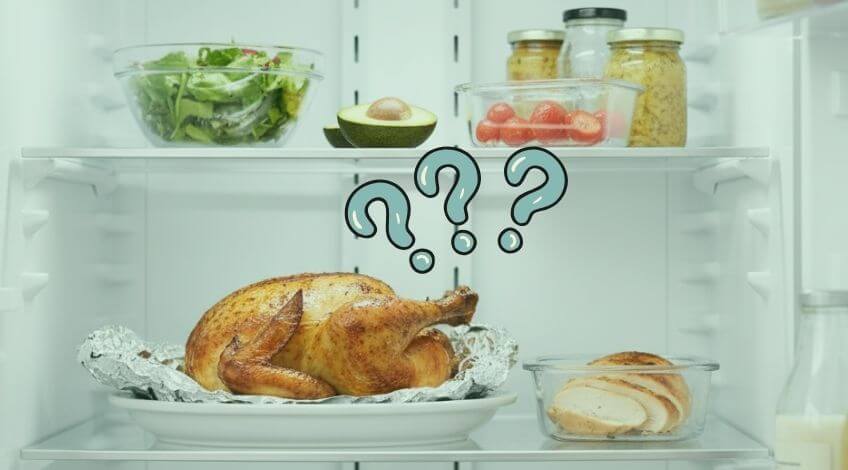
Store your chicken on the bottom shelf of your fridge. If any juices leak out, they won’t drip onto other foods below and cause cross contamination.
Make sure your fridge is set to 4°C or below to keep bacteria growth in check. If you’re not sure, grab a fridge thermometer, they’re cheap and worth every penny for peace of mind.
Signs Your Cooked Chicken Has Gone Bad
Even if you’ve only had your chicken in the fridge for two days, you need to know the warning signs that it’s past its prime.
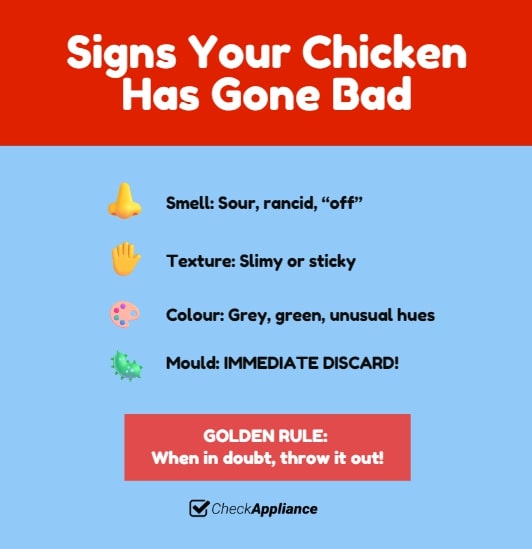
Smell is your first clue. Fresh cooked chicken has a mild, pleasant aroma. If your chicken smells sour, rancid or just generally “off”, bin it immediately. Don’t try to convince yourself it’s fine.
Next up, check the texture. Good cooked chicken should feel slightly moist but not slimy. If your chicken has developed a sticky or slimy coating, that’s bacteria at work. Into the bin it goes!
Look at the colour too. Cooked chicken should be white or light brown, depending on how you cooked it. If you notice any grey, green or other unusual colours, especially around the edges, that’s a red flag.
Finally, if there’s any visible mould, don’t even think about it. Mould means it’s well past safe to eat and no, you can’t just cut off the mouldy bits. The spores have likely spread throughout the meat.
When in doubt, throw it out. Food poisoning from chicken can be absolutely miserable and it’s not worth risking your health to save a few quid’s worth of leftovers.
Freezing Cooked Chicken: Your Secret Weapon
Here’s the game changer for meal preppers: cooked chicken can be frozen for up to four months. This completely transforms how you can approach meal planning!
If you know you won’t eat all your cooked chicken within four days, freeze it immediately. The sooner you freeze it after cooking, the better the quality will be when you defrost it.
Portion your chicken before freezing. This is absolutely key! Freeze individual portions or meal sized amounts so you can defrost exactly what you need. Nobody wants to thaw a week’s worth of chicken when they only need one serving.
Use freezer safe containers or heavy duty freezer bags and label everything with the date you cooked it. Future you will thank present you for this simple step.
When you’re ready to use your frozen chicken, defrost it safely in the fridge overnight. Never defrost chicken on the worktop at room temperature. If you’re in a rush, you can defrost it in cold water (changing the water every 30 minutes) or use your microwave’s defrost setting.
Once defrosted, use your chicken within 24 hours and never refreeze it.
Making Your Meal Prep Safer And Smarter
For those of you who live and breathe meal prep, here are some practical strategies to avoid waste and keep things safe.
Plan your menu strategically. Schedule chicken based meals for the first half of your week. Save meals that freeze better, like soups or stews, for later. This way, you’re eating your chicken at its freshest.
Consider cooking chicken twice a week instead of doing one massive batch. Yes, it means spending a bit more time in the kitchen, but it ensures everything you’re eating is fresh. Cook on Sunday for Monday through Wednesday, then cook again on Wednesday for the rest of the week.
Use your freezer intelligently. When you’re batch cooking, immediately freeze half of what you’ve made. This gives you ready made meals for future weeks without the pressure of eating everything within four days.
Keep a permanent marker in your kitchen and date everything you store. When you’re juggling multiple containers of different meals, this simple habit prevents confusion.
Invest in a good set of portioned containers. Having consistent portion sizes makes it easier to grab exactly what you need and helps you plan meals more accurately.
What About Shop Bought Cooked Chicken?
Grabbed a rotisserie chicken from the supermarket? The same three to four day rule applies once you get it home.
However, pay attention to the use by date on the packaging. If the chicken is already a day or two old when you buy it, that cuts into your storage time at home. Always check the date before purchasing.
Remove shop bought cooked chicken from its original packaging and store it in your own airtight container. Those plastic containers from the shop aren’t designed for longer term storage.
Room Temperature Is The Danger Zone
This bit is crucial: never leave cooked chicken at room temperature for more than two hours. Between 5°C and 60°C is what food safety experts call “the danger zone” where bacteria multiply fastest.
This means if you’ve taken your meal prepped lunch to work, eat it within two hours of taking it out of the fridge. If your workplace doesn’t have a fridge, invest in an insulated lunch bag with ice packs.
Buffets, picnics and parties are particularly risky. That chicken sitting out for hours? Best avoided. If you’re hosting, keep hot food hot (above 60°C) and cold food cold (below 5°C).
Keep Your Meal Prep Safe And Waste Free
Meal prepping with chicken doesn’t have to be a guessing game. Stick to the three to four day rule, store everything properly in airtight containers and use your freezer for anything you won’t eat within that window.
By following these guidelines, you’ll avoid both food waste and food poisoning. You’ll save money by not throwing away spoiled food and you’ll protect yourself and your family from bacterial infections. That’s a win all round!
Remember, when it comes to food safety, it’s always better to be cautious. If you’re ever unsure whether your chicken is still good, trust your instincts and bin it.
If you found this helpful, share it with your fellow meal preppers on Facebook!
SEE ALSO: The Best Way To Store Blankets So They Don’t Go Musty
Also, follow us on Pinterest ...