How to Wash a Bath Mat So It Looks (and Smells) Like New Again
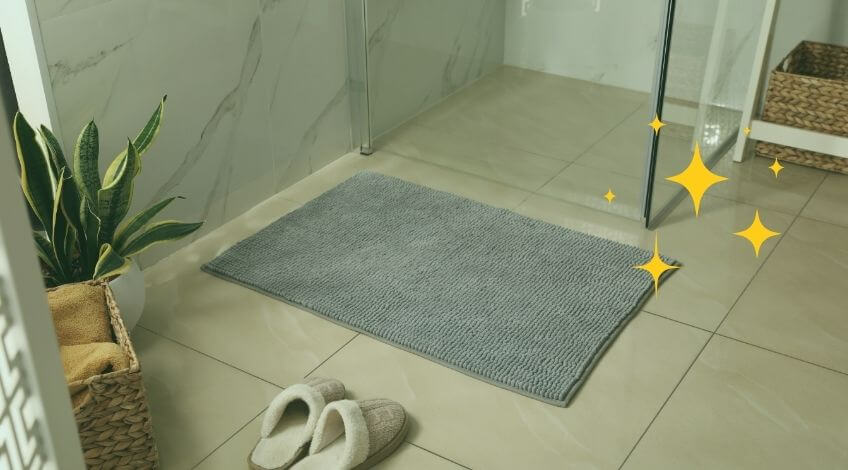
Your bath mat has seen it all: wet feet, soap suds, and probably more than its fair share of family bathroom chaos. If you’re dealing with high traffic bathrooms and trying to keep things clean and odour free, you know that grimy, smelly bath mats can make even the cleanest bathroom feel less than fresh.
Here’s the good news: washing your bath mat properly can make it look and smell like you’ve just brought it home from the shop. Whether you’re tackling stubborn odours, mysterious stains, or just want to keep your family bathroom spotless, these tried and tested methods will transform your tired old mat into something that actually feels clean underfoot.
Check Your Bath Mat’s Care Label First
Before you throw that mat anywhere near your washing machine, take a moment to check the care label. This little tag holds the key to keeping your mat in top condition and avoiding any washing disasters.
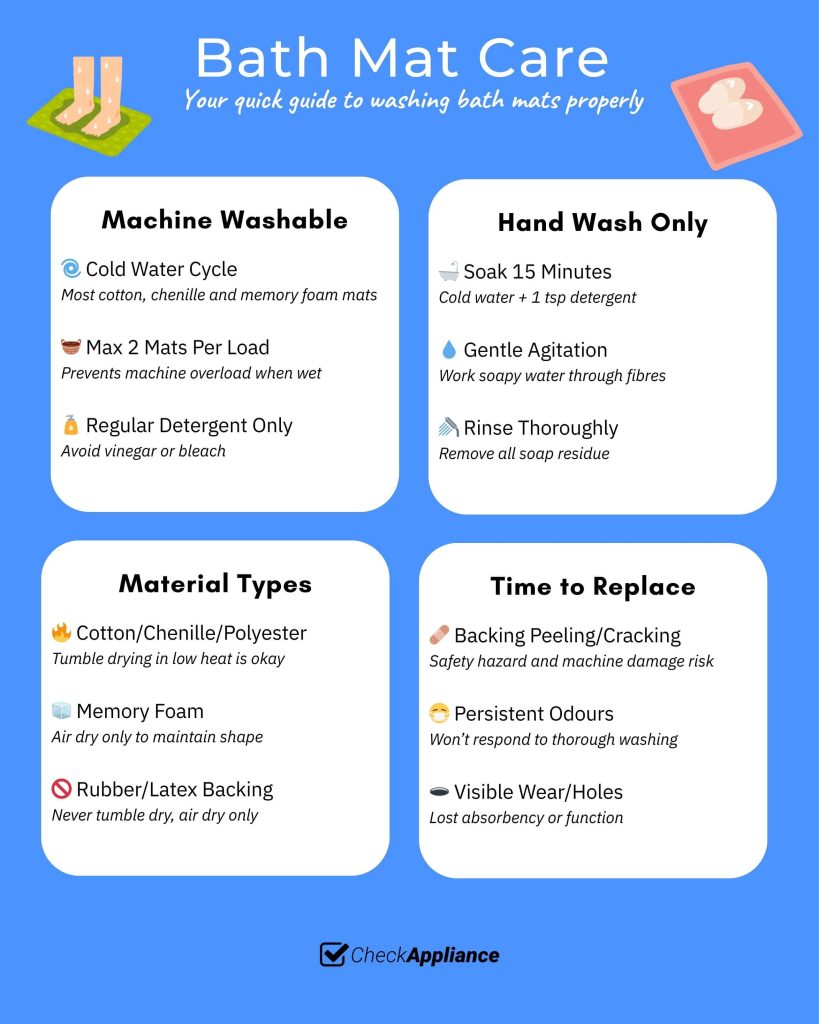
Most cotton, chenille, and memory foam mats can handle machine washing, but mats with rubber or latex backing need a bit more consideration. If the backing is starting to peel or crack, it’s time to replace the mat entirely. Damaged backing can come off in your washing machine, potentially clogging the drain or damaging the appliance.
Even without damaged backing, experts suggest replacing bath mats every two years. Think of it as a small investment in keeping your bathroom hygienic and looking its best.
Machine Washing Your Bath Mat The Right Way
Machine washing is your quickest route to a fresh, bacteria free bath mat. Here’s how to do it properly without damaging your mat or your washing machine.
Prep Your Mat For Washing
Start by giving your mat a good shake outside to remove any loose debris, hair, or dust. This simple step prevents your washing machine from having to work overtime and keeps your drain clear.
Choose The Right Settings
Wash your bath mat on a cold water cycle using your regular laundry detergent. Cold water is gentler on the fibres and helps prevent shrinkage, whilst still getting your mat properly clean.
Avoid using vinegar or bleach, as these can damage certain mat materials and backing. Stick to your tried and trusted detergent for the best results.
Don’t Overload Your Machine
Here’s something many people don’t realise: bath mats get surprisingly heavy when wet. Never wash more than two mats at a time, and if you have a large mat, wash it on its own. This prevents your machine from becoming unbalanced and ensures proper water circulation for a thorough clean.
Drying Your Freshly Washed Mat
Check your care label for specific drying instructions, but here are the general rules:
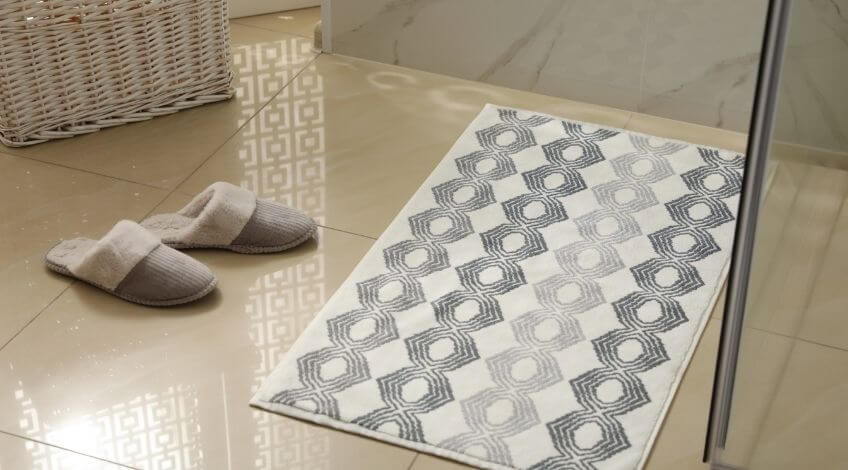
- Cotton, chenille, and polyester mats can go in the tumble dryer on a low heat setting. High heat can damage the fibres and cause shrinkage.
- Memory foam mats should always be hung to air dry. The tumble dryer can break down the foam and ruin the mat’s supportive properties.
- Mats with rubber backing must be air dried. The heat from a tumble dryer can cause the backing to crack, warp, or even melt.
Hand Washing When Machine Washing Isn’t An Option
Sometimes machine washing just isn’t possible, whether you don’t have access to a washing machine or your mat requires hand washing. Don’t worry, you can still get excellent results with a bit of elbow grease.
Set Up Your Washing Station
Fill a large container, your bathtub, or even a clean sink with cold water. Add about a teaspoon of laundry detergent and mix it around to create suds.
The Soaking Method
Place your mat in the soapy water, making sure it’s fully submerged. Let it soak for about 15 minutes to allow the detergent to break down any grime and odours.
After soaking, agitate the water with your hands, gently working the soapy water through the mat’s fibres. This helps lift dirt and bacteria that might be clinging to the material.
Rinse Thoroughly
Drain the soapy water and rinse your mat thoroughly. You can either fill the container with fresh water several times or rinse under a running tap. Make sure all the soap is gone, as leftover detergent can attract dirt and make your mat feel sticky.
Gently squeeze out excess water (don’t wring or twist, as this can damage the fibres) and hang to air dry.
How Often Should You Wash Your Bath Mat?
For families dealing with busy bathroom schedules, washing your bath mat once a week keeps things hygienic and fresh. This timing works well alongside your regular bathroom cleaning routine.
If your bathroom tends to be extra humid or you notice your mat staying damp for long periods, you might need to let it hang dry after each use. Keeping mats as dry as possible between washings prevents mildew and bacteria from taking hold.
For households with young children or anyone with compromised immunity, consider washing mats twice a week during winter months when germs are more prevalent.
Tackling Stubborn Odours And Stains
Sometimes a regular wash just isn’t enough to tackle persistent smells or stains. Here are some targeted solutions for common bath mat problems.
For Musty, Mildew Smells
Add half a cup of white vinegar to your wash cycle along with your regular detergent. The vinegar helps break down mildew and neutralises odours without damaging most mat materials.
Alternatively, sprinkle bicarbonate of soda over your mat before washing. Let it sit for 30 minutes, then wash as normal. The bicarbonate of soda absorbs odours and helps lift stains.
For Yellowing Or Discolouration
Mix equal parts hydrogen peroxide and water in a spray bottle. Spray the affected areas and let sit for 15 minutes before washing. This works particularly well on white or light coloured mats.
For Soap Scum Build Up
Sometimes bath mats can develop a filmy feeling from soap residue. Add an extra rinse cycle to your washing routine, or hand rinse thoroughly after washing to ensure all soap is removed.
When To Replace Rather Than Wash
Even the best washing routine can’t save every bath mat. Here are signs it’s time to invest in a new one:
- The backing is peeling, cracking, or coming away from the mat surface. This is a safety hazard and can damage your washing machine.
- Persistent odours that don’t respond to thorough washing and odour treatment methods.
- Visible mould or mildew stains that won’t come out, especially if they keep returning after washing.
- The mat has lost its absorbency and water just sits on top rather than being absorbed.
- Significant wear, holes, or thinning that affects the mat’s function and appearance.
Keeping Your Bath Mat Fresh Between Washes
A few simple habits can extend the time between washes and keep your bathroom feeling fresh:
- Hang your mat to dry after each use if possible. This prevents moisture from lingering and creating ideal conditions for bacteria growth.
- Shake out your mat regularly to remove hair, dust, and debris before they get ground into the fibres.
- Ensure good bathroom ventilation by using extractor fans and opening windows when possible. This helps everything dry faster and prevents humidity build up.
- Rotate between two mats if you have the space and budget. This allows one to dry thoroughly whilst the other is in use.
Your Bath Mat Deserves Better Than A Quick Rinse
A properly cleaned bath mat isn’t just about appearances; it’s about creating a hygienic space where your family can feel truly clean. Whether you’re dealing with daily chaos from little ones or simply want that fresh, spa like feeling every time you step out of the shower, these washing methods will keep your mats looking and smelling like new.
Remember, the key is consistency. Regular washing prevents problems before they start, making each cleaning session easier and more effective.
Share these tips with other parents in your WhatsApp groups or tag a friend who needs to see this! Because let’s be honest, we’ve all stepped onto a questionably fresh bath mat at some point.
SEE ALSO: Clean Your Suede Shoes Like a Pro Without Damaging the Finish
Also, follow us on Pinterest ...