The 15 Food Safety Rules You’re Probably Breaking Every Day
Most of us never think about food safety when we start cooking a meal, but we should. Because unless we know what we’re doing and concentrate on cleanliness and a few simple rules, we run the risk of making ourselves and our loved ones ill.
In this article we’ll be taking a look at 15 most common food safety rules that you’re probably breaking daily without realising it. Keep reading to find out more.
Why Is It Important To Follow Food Safety Rules?
It’s so easy to introduce and spread harmful germs and bacteria into food while preparing a meal. From not washing your hands or utensils to using the same chopping board to cut meat and vegetables without thoroughly washing it first, you could be endangering your family’s health and well being.
Food can contain harmful bacteria, viruses and parasites that can cause more than 200 different diseases including salmonella, listeria and diarrhea. Depending on the age and health status of individual family members, this could lead to severe illness and even death in some cases.
So it’s vitally important that you follow food safety rules and adhere to best practices when preparing food.
15 Common Food Safety Rules That You’re Probably Breaking

You should be aware that this article is not intended to shock you. The idea is to make you aware of the potential problems and help you to be smarter, cleaner and safer when you’re preparing food. Let’s look at the 15 most common mistakes that are made every day when preparing food. They include;
1. Rinsing Chicken
Many households traditionally rinse their poultry (chicken, turkey and duck), but research has shown that rinsing poultry doesn’t remove any harmful bacteria present. In fact, rinsing poultry only spreads any bacteria all around your kitchen.
The best and only way to remove bacteria from poultry is to cook it and make sure it reaches the correct temperature. You will need a meat thermometer and check that poultry reaches a minimum internal temperature of 74 C (165 F).
Be sure to place the probe into the thickest part of the meat to ensure it has reached the desired heat all the way through.
2. Using The Wrong Chopping Board
If you use the wrong chopping board it can lead to cross contamination because raw meat, poultry or fish can contaminate vegetables or bread. To prevent this from happening you should use different chopping boards for raw and ready to eat foods.
Bacteria from meats, poultry or fish can transfer easily from the chopping board if you only use one board. This can cause illnesses like E.coli, salmonella or worse.
You should have at least three chopping boards, one for meats, one for vegetables and the other for bread. Better still use a colour coded system like:
- A red chopping board for raw meat
- A yellow chopping board for cooked meat
- A blue chopping board for fish
- A green chopping board for vegetables
- A white chopping board for bread
Once you have finished using a chopping board it should be washed and disinfected using hot soapy water after every use. It’s also a good idea to store dirty chopping boards away from each other to prevent cross contamination.
3. Storing Leftovers For Too Long
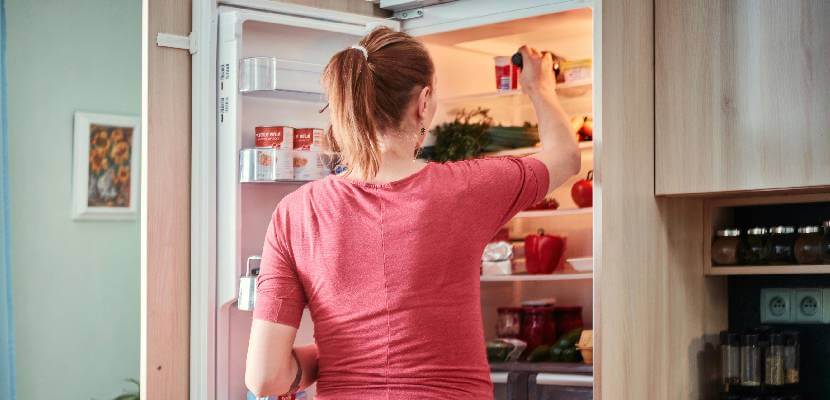
Leftovers can be a great time saver when you need to get a meal in a hurry. However, leftovers can quickly develop bacteria that can cause food poisoning.
Which means that if kept for too long, even in the fridge, leftovers can make you ill. You shouldn’t keep leftover foods for longer than three or four days and you should make sure they’re thoroughly heated all the way through before eating.
On a similar note, the way we handle food delivered to our homes can also be a potential risk…
Handling Food Deliveries & Takeaways
With the rise in home delivery services and takeaways, many of us are enjoying meals brought straight to our doorsteps. But what happens after the food arrives is just as important as how it’s cooked in a restaurant.
Hot food should be eaten while it’s still piping hot and not left sitting out. If you plan on eating it later, it must be refrigerated promptly and reheated thoroughly. Cold items, such as sushi or salads, should go into the fridge immediately if not eaten straight away. Always check the temperature and packaging on delivery, and if anything feels off, it’s better to be cautious and throw it away.
4. Guessing The Temperature Of Your Meat
We already touched on this with the poultry, but it’s important that all meat, poultry and fish items are cooked to the correct temperature to prevent disease and illness. You need a meat thermometer and always probe the thickest part of the meat.
The internal temperature should reach:
| Product | Minimum Internal Temperature |
|---|---|
| Beef, Pork, Veal, Lamb, (chops, steaks or roasts) | 63 C (145 F) |
| Minced Meats | 72 C (160 F) |
| Minced Poultry | 74 C (165 F) |
| Fresh or Smoked Ham (uncooked) | 63 C (145 F) |
| Cooked Ham | 74 C (165 F) |
| Poultry | 74 C (165 F) |
| Fish & Shellfish | 63 C (145 F) |
| Leftovers | 74 C (165 F) |
| Casseroles | 74 C (165 F) |
| Eggs | 72 C (160 F) |
5. Incorrectly Thawing Food
When thawing frozen foods before cooking you run the risk of allowing bacteria to grow in the food. This is particularly true if you’re defrosting food outside of a fridge.
What tends to happen is the middle of the food remains frozen while the outside reaches temperatures that exceed safety guidelines. This can lead to an exponential growth in bacteria. You should either thaw food in the fridge or in cold water that is replaced every thirty minutes or so.
You can also use a microwave on the defrost setting to thaw food.
6. Keeping Frozen Foods Too Long
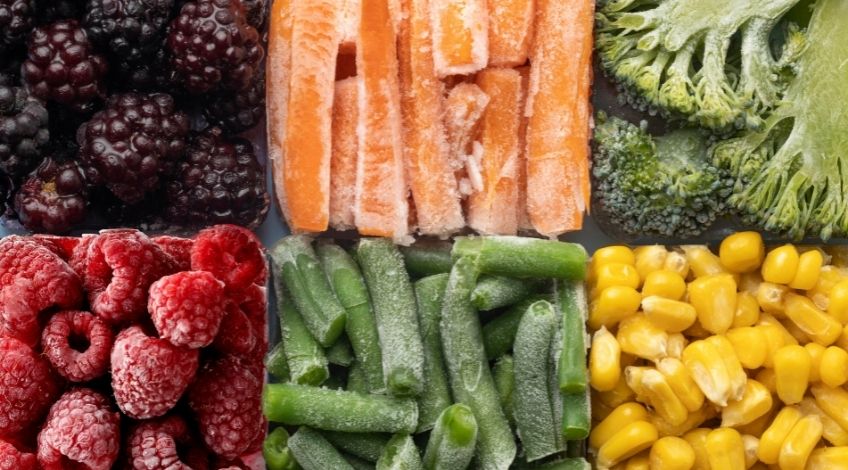
There are some foods that shouldn’t be kept in the freezer for too long. While some foods can remain in the freezer for a year or more, there are others that shouldn’t be kept beyond one month.
For instance, hot dogs, bacon, sausages and lunch meat should only be kept in the freezer for a maximum of two months. Minced meats and soups should only be kept in the freezer for three months.
Leftovers should not be kept for longer than six months and cuts of meat, poultry and fish can last for up to a year in the freezer.
7. Keeping Raw Meat On The Top Shelf Of The Fridge
It makes sense when you stop to think about it, raw meats, poultry or fish have the potential to drip onto foods on lower shelves. This can lead to germs, bacteria and diseases spreading to cooked and raw foods in your fridge.
All raw meats, poultry and fish should be stored on the bottom shelf of your fridge. Not only will this prevent the spreading of any potential germs and bacteria, it’s also the coldest part of the fridge.
Even so, all raw meat, poultry and fish should be stored in sealed containers to reduce the risk of contamination. All spills should be wiped up immediately and the shelves inside your fridge should be thoroughly cleaned at least once a month.
8. Not Checking The Temperature Of The Fridge
If your fridge isn’t cold enough, germs and bacteria can spread like wildfire. Your fridge should be set somewhere between 0 and 5oC (32 to 41 F). Meanwhile your freezer should be set to anywhere between -12 to -18 C (10 to 0 F).
9. Letting Pets On Kitchen Counters
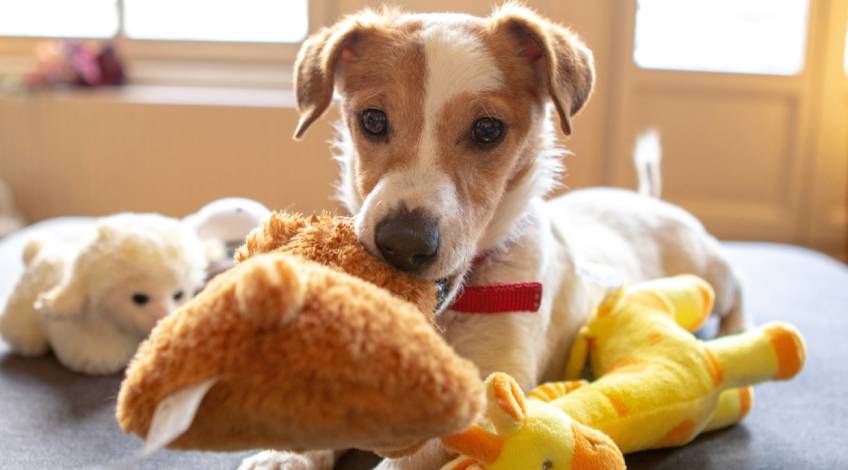
It is advisable to keep pets out of the kitchen altogether because they can spread germs and bacteria. However, for many people it’s not practical to banish pets entirely from the kitchen.
But you should at least prevent them from getting onto your kitchen countertops or dining tables. If your pet is in the habit of climbing on your countertops or tables, you should thoroughly wipe them down with a disinfectant before preparing any food.
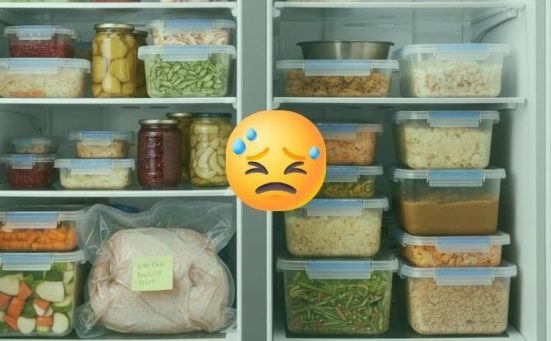
10. Overcrowding The Fridge
If your fridge is crammed full of food, it prevents adequate air flow and causes the internal temperature in the fridge to rise. Which allows bacteria to grow and breed at a faster rate.
11. Ignoring The Use by Date
There are certain food items that are perfectly safe to eat even after the use by date has expired. However, they tend to be dry goods like pasta and not meats or cooked meats.
Just because that out of date ham smells OK it doesn’t mean it’s not contaminated with bacteria like listeria. The idea of the use by date is to give you a guide for when this particular food is safe to consume and when it should be discarded.
12. Applying The 5 Second Rule
Have you ever dropped a piece of meat on the floor and immediately picked it up and ate it? If so you were following the misguided and often dangerous 5 second rule.
This rule states that as the food hasn’t been on the floor for 5 seconds it’s still safe to eat. However, germs and bacteria can transfer from one surface to another almost instantaneously.
That means that simply by picking up that piece of food from the floor and eating it, you could have potentially ingested harmful bacteria and germs and make yourself ill.
13. Repeatedly Reheating Leftovers
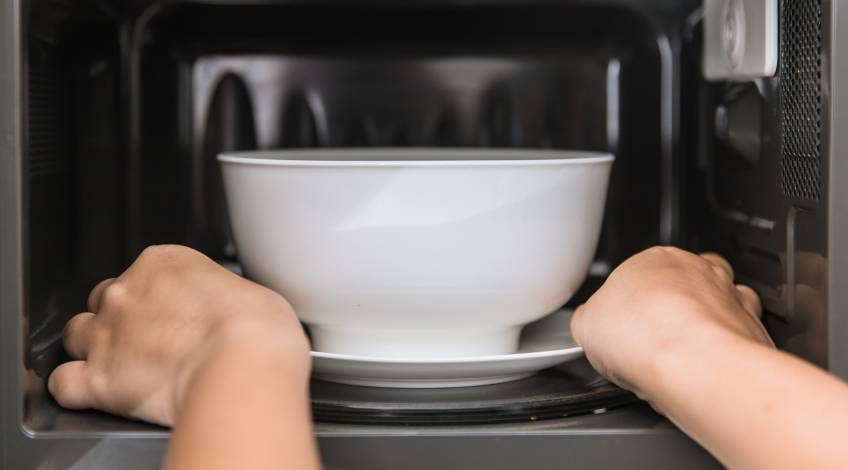
This is a big one, every time you cool and reheat food the more chance there is of bacteria growing. You should never reheat leftover food more than once.
To do so increases the risk of food poisoning by a substantial amount.
14. Leaving Open Tins In The Fridge
Leaving an open can in the fridge exposes the food to harmful bacteria. While in some cases tin from the can can be transferred to the contents.
If you open a can of food and you don’t use it all, you should transfer the remaining contents into a bowl which can be covered with cling film or a container with a lid.
15. Not Washing Cloths & Tea Towels Regularly
Damp dishcloths and tea towels can harbour all manner of germs and bacteria. You should always wash dishcloths in hot soapy water after each use and allow them to dry between uses.
Likewise tea towels should be washed on the highest temperature wash cycle the fabric can withstand (consult the care label) after two to three days of use.
Extra Food Safety Mistakes
As if those 15 mistakes weren’t enough, here are a few more;
16. Not Washing Your Hands
This is a common mistake that many would be chefs make. You might remember to wash your hands before you start your meal prep but do you rewash them after handling meat before moving onto preparing vegetables?
If not you run the risk of transferring any germs or bacteria present in the meat onto the vegetables. This might not be so bad if you’re planning to cook the vegetables, but what about salad items?
17. Leaving party Food Out For Too Long
We’ve all hosted a party and left party food out for too long. When you’re busy entertaining it can be easy to forget food hygiene basics. But leaving party food that should be refrigerated out in a warm room for too long could be a recipe for disaster.
Party food that should be refrigerated shouldn’t be left out at room temperature for more than two hours. You can help alleviate this problem by keeping party food on ice.
18. Not Washing Your Hands When Adding Seasoning
Every time you touch raw meat, fish or poultry you potentially get contaminated with bacteria. Which means you should wash your hands before touching anything else.
While we already touched on this earlier, we never mentioned adding salt, pepper or spices to your meat. This is the most likely time that you’ll forget to wash your hands.
Which means the salt, pepper and spice containers are now potential bacteria carriers. Bacteria like salmonella and campylobacter can survive on surfaces for many hours meaning you could transfer these germs onto anything that you touch including the salt and pepper pot.
19. Using Your Phone While Cooking

If you use your mobile phone while cooking either to listen to music, a podcast or even to look up a recipe, you could be spreading potentially harmful germs. If you need to touch your phone while preparing a meal, you should wash your hands both before and after using it.
Before so that you don’t spread any bacteria from the food and after so that any bacteria already present on your phone doesn’t end up in your food.
20. Not Washing Fruit & Vegetables Properly
It might seem obvious, but washing fruit and vegetables is something many of us either rush through or skip altogether. Even produce marked as “pre-washed” or “ready to eat” can still carry traces of dirt, pesticides or harmful bacteria.
You don’t need expensive vegetable washes, simply rinsing under cold running water while gently rubbing the surface with your hands will help remove most contaminants. For produce with crevices, like lettuce or broccoli, it’s best to soak and rinse thoroughly. Leafy greens can be particularly tricky as they often trap soil and debris close to the stem.
21. Not Cleaning Kitchen Appliances Regularly
When was the last time you properly cleaned your fridge or microwave? Appliances that come into daily contact with food can be breeding grounds for germs if neglected.
Spills inside a fridge, crumbs in the toaster or a forgotten splash of soup in the microwave can all become sources of contamination. Microwaves especially need attention, as reheated splatter left behind can encourage bacteria to grow.
Take a few minutes every week to give these appliances a good clean using a disinfectant or a solution of vinegar and water.
22. Not Keeping Track of Food Storage Times
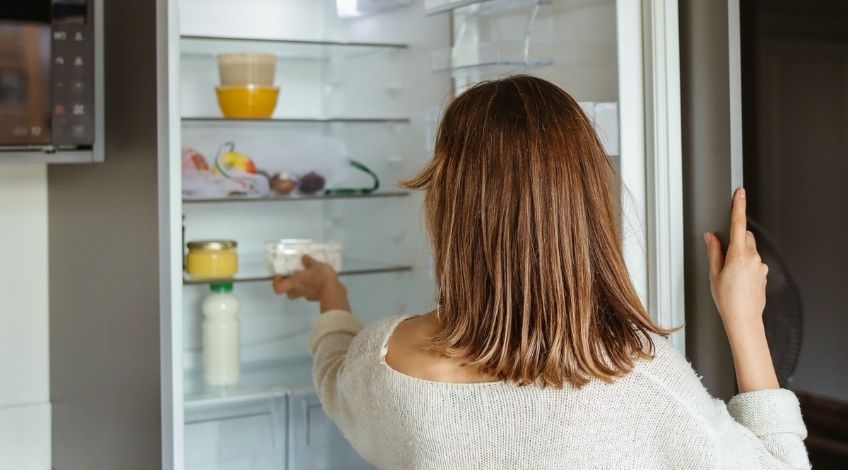
We’re all guilty of losing track of what’s in the freezer or the back of the fridge. Labelling your food with the date it was cooked or frozen can help avoid eating it past its safe window.
Freezer burn or discoloured food are warning signs that something has been stored for too long. Make it a habit to rotate food, use the older items first and bring newer items to the back. This simple practice can significantly cut down your risk of eating spoiled or unsafe food.
23. Not Sanitising Reusable Bags
Reusable shopping bags are an eco-friendly alternative to plastic, but they can also become a hotbed for bacteria if not cleaned regularly. If you’re using the same bags to carry raw meats, vegetables, and ready to eat foods, you could be unknowingly transferring bacteria from one to the other.
Fabric bags should be machine washed frequently, and insulated bags wiped down with a disinfectant after each use. Designating separate bags for meats and produce, and storing them properly, can also go a long way in preventing cross contamination.
24. Not Paying Attention To Food Packaging
Sometimes, we get so focused on the food inside that we forget about the packaging. Damaged packaging, swollen tins or broken seals can all be signs that something’s not quite right.
A bulging tin might indicate the presence of gas produced by bacteria inside, a clear red flag. Likewise, if vacuum sealed packaging seems loose or puffed up, it’s best to throw the contents. Learning to recognise the signs of compromised packaging is an easy way to stay ahead of potential food safety risks.
Small Changes, Big Impact
Food safety might not be the most glamorous part of cooking, but it is undoubtedly one of the most important. A few simple changes in your habits, like washing your hands more often, checking fridge temperatures, and being aware of cross contamination, can dramatically reduce the risk of illness for you and your family.
While it’s easy to fall into comfortable routines, staying informed and making small, consistent improvements in your kitchen practices can lead to a much safer home environment. So the next time you’re preparing a meal, take a moment to think not just about flavour and presentation, but about cleanliness, hygiene and food safety. Your health may well depend on it.
SEE ALSO: If You Own a Home, You NEED to Do These 11 Things Every Month!
Frequently Asked Questions
Yes, it is dangerous to rinse raw chicken because it can actually spread harmful bacteria like salmonella around your kitchen through water droplets. The safest way to kill bacteria is by cooking poultry to the correct internal temperature.
Dishcloths should be washed in hot, soapy water after each use and allowed to dry properly. Tea towels should be washed every two to three days on the hottest cycle their fabric can handle.
Your fridge should be kept between 0°C and 5°C, while your freezer should be between –12°C and –18°C to keep food safe and prevent bacterial growth.
Perishable party food should not be left out for more than two hours. After that, it enters the “danger zone” where bacteria can multiply quickly, especially in warm rooms.
Also, follow us on Pinterest ...