
The Real Reason Onions Make You Cry (And How To Stop It)
Chopping onions is a kitchen task that can turn even the most enthusiastic home cook into a blubbering mess. You’ve probably found yourself standing at the chopping board, tears streaming down your face, wondering why this simple vegetable has to be so cruel.
But here’s the good news: once you understand the science behind those tears, you can actually prevent them! Whether you’re a frustrated home cook tired of watery eyes or someone looking to level up their kitchen skills, this guide will transform the way you prep onions forever. Get ready to chop with confidence and keep those tears at bay!
Why Do Onions Make You Cry?
Let’s get straight to the point: onions make you cry because of a chemical reaction that happens when you slice into them. It’s not personal, it’s just science!
When you cut an onion, you’re breaking open its cells. These cells contain enzymes and sulphur compounds that have been sitting there peacefully. The moment your knife breaks through, these compounds mix together and create a gas called syn-propanethial-S-oxide. This irritating gas floats up towards your face and dissolves on the surface of your eyes, forming a mild sulphuric acid.
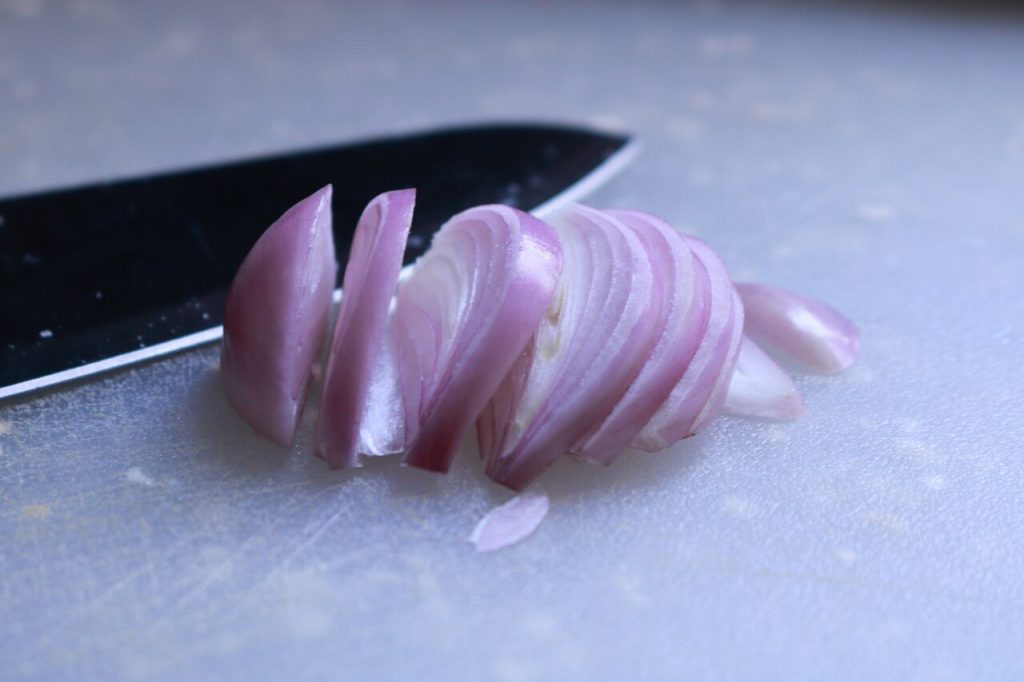
Your eyes, being the clever organs they are, immediately recognise this as a threat. So what do they do? They produce tears to flush out the irritant! It’s actually your body’s natural defence mechanism at work. Pretty clever, right? But not exactly convenient when you’re trying to prepare dinner!
The stronger the onion, the more sulphur compounds it contains, which explains why some onions make you cry more than others. Red onions and white onions tend to be particularly potent, whereas sweeter varieties like Vidalia onions are generally milder.
How To Stop Onions From Making You Cry
Now that you know why it happens, let’s talk about what you really want to know: how to stop it! Here are the most effective methods that actually work.
Chill Your Onions Before Cutting
This is hands down one of the easiest and most effective tricks. Pop your onions in the fridge for about 30 minutes before you need to chop them. You can even store them in the fridge permanently if you’ve got the space!
The cold temperature slows down the enzyme activity inside the onion. When those enzymes are less active, they produce less of that irritating gas. Think of it like this: the enzymes are having a little nap in the cold, so they’re not as quick to cause trouble when you cut into the onion.
For an even faster solution, you can put the onion in the freezer for about 10 to 15 minutes. Just don’t leave it in there too long, or you’ll end up with a frozen onion that’s impossible to chop!
Keep Your Knife Sharp
You might be surprised to learn that a sharp knife can actually help reduce tears. When your knife is dull, it crushes the onion cells rather than cutting cleanly through them. This crushing action releases more of those irritating compounds into the air.
A sharp knife, on the other hand, makes clean cuts through the onion cells, releasing fewer of the tear inducing gases. Plus, sharp knives make the whole chopping process faster and safer. It’s a win all round!
If you’ve been putting off sharpening your kitchen knives, this is your sign to get it done. Your eyes (and your cooking efficiency) will thank you!
Wear Protective Eyewear
This might sound a bit over the top, but it actually works brilliantly! If you wear swimming goggles or even safety glasses when chopping onions, you create a physical barrier between your eyes and the irritating gas.
Yes, you might look a bit silly standing in your kitchen wearing goggles, but who cares when you’re tear free? If you do a lot of cooking and regularly work with onions, it might be worth keeping a pair of cheap swimming goggles in your kitchen drawer.
Some companies even make special onion goggles designed specifically for this purpose. They look less ridiculous than swimming goggles and do the same job!
Use A Fan Or Ventilation
Good air circulation can blow those onion gases away from your face before they have a chance to irritate your eyes. If you’ve got an extractor fan above your cooker, turn it on before you start chopping.
Alternatively, you can set up a small fan near your chopping area to blow the fumes away from you. Position it so it’s blowing across your chopping board, pushing the gases away rather than towards your face.
Opening a window can also help, especially if there’s a nice breeze. Fresh air circulation will disperse the onion gases throughout your kitchen rather than letting them concentrate around your face.
Light A Candle Nearby
This old fashioned trick has been passed down through generations, and many home cooks swear by it! The theory is that the flame from a candle burns up some of the irritating gases before they reach your eyes.
Simply light a candle and place it safely near your chopping board (but not so close that it’s a fire hazard!). The heat from the flame creates an updraft that can help draw the gases upward and away from your face.
Does it work perfectly every time? Perhaps not. But many people find it does help reduce tears, and at the very least, your kitchen will smell nice when you’re cooking!
Cut The Onion Properly
The way you cut your onion can make a real difference. Always leave the root end intact until the very end. The root contains the highest concentration of those tear inducing compounds, so keeping it intact for as long as possible helps minimise the gas release.
Start by cutting the onion in half from top to bottom, leaving the root attached. Peel away the papery skin, then make your cuts from the top towards the root, but don’t cut through the root. This technique keeps the most potent part of the onion sealed up until you absolutely have to deal with it.
When you’re nearly finished, you can either discard the root end or chop it very quickly at the end. By this point, most of your chopping is done, so even if you do shed a tear or two, it won’t last long!
Try A Food Processor
If you’re really sensitive to onions or need to chop a large quantity, a food processor might be your best solution. It does the chopping for you inside a sealed container, keeping all those irritating gases contained.
This method is brilliant for making large batches of soup, chilli or any recipe that requires loads of chopped onions. The onions might not be quite as evenly chopped as they would be by hand, but for many recipes, that doesn’t matter one bit!
Just pulse the food processor rather than running it continuously, so you get chopped onions rather than onion mush. And be prepared for a bit of a pungent whiff when you open the lid!
Choose The Right Onions
Not all onions are created equal when it comes to tear production. If you’re particularly sensitive, choosing milder varieties can make a world of difference.
Sweet onions like Vidalia, Walla Walla, or Maui onions contain fewer sulphur compounds, which means they’re much less likely to make you cry. They’re perfect for eating raw in salads or on burgers, and they’re also gentler on your eyes when chopping.

Spring onions and shallots are also milder alternatives that can work beautifully in many recipes. They still have that lovely onion flavour but with significantly less of the tear inducing drama.
Of course, different recipes call for different types of onions and sometimes you really do need that sharp, pungent flavour of a regular yellow or white onion. But when you have a choice, opting for sweeter varieties can save your eyes a lot of grief!
What Doesn’t Actually Work
Before we wrap up, let’s quickly address some popular onion chopping myths that don’t actually help much, despite what you might have heard.
- Chewing gum or bread during chopping is often suggested, but there’s no real science behind it. The theory is that breathing through your mouth reduces the amount of gas reaching your eyes, but it doesn’t make a significant difference for most people.
- Holding a slice of bread in your mouth or between your teeth is another common suggestion that sounds quite silly and isn’t particularly effective. Save your bread for eating!
- Some people recommend rubbing lemon juice on your knife or chopping board, but again, this doesn’t do much to prevent the gas from forming and reaching your eyes. It might smell nice, though!
The bottom line is to stick with methods that actually address the problem: cooling the onion to slow enzyme activity, using sharp knives to minimise cell damage, using water or air movement to disperse the gases or creating a physical barrier between the gases and your eyes.
Your Tear Free Onion Chopping Future Awaits
There you have it! You now know exactly why onions make you cry and, more importantly, how to stop it from happening. Whether you choose to chill your onions, invest in some kitchen goggles or simply keep a candle burning nearby, you’ve got plenty of proven strategies to choose from.
Don’t let the fear of tears keep you from cooking with onions. They’re far too delicious and versatile to avoid! With these tips in your back pocket, you can chop away confidently, knowing your days of crying over onions are behind you.
Give these methods a try next time you’re prepping dinner and if you found this helpful, share it with your friends on Facebook who are still struggling with watery eyes in the kitchen!
SEE ALSO: Is Your Mattress Really Clean? Here’s How To Tell (And What To Do)
Also, follow us on Pinterest ...