Washer And Dryer In A Closet? Here’s How To Do It Safely
Space is precious in British homes, and cramming a washer and dryer into a closet seems like the perfect solution. But before you start rearranging your home, there’s a burning question: is it actually safe?
The short answer is yes, but only if you do it properly. Installing laundry appliances in closets comes with serious risks including moisture damage, overheating, and even house fires. One wrong move and you could be facing thousands in repairs or worse. But don’t panic! With the right planning and precautions, you can create a safe, functional laundry closet that works brilliantly for years.
Whether you’re a busy parent trying to maximise every square metre or simply tired of trekking to the utility room, this guide will show you exactly how to tackle moisture, heat, and fire hazards before they become costly problems.
Essential Safety Requirements For Closet Laundry Installations
Getting your washer and dryer into a closet isn’t just about measuring the space and shoving them in. There are fundamental safety requirements that absolutely cannot be ignored.
Ventilation Is Your First Priority
Poor ventilation is the quickest way to turn your laundry closet into a disaster zone. Heat and moisture need somewhere to go, and if they can’t escape, they’ll wreak havoc on your home.
Here’s the thing: your dryer produces enormous amounts of hot, humid air with every cycle. Without proper ventilation, this moisture condenses on walls, creates mould, and can even cause structural damage to your property. Plus, the heat buildup can also force your appliances to work harder, which means they’ll break down much sooner than they should.
So, you’ll want to install an exhaust fan rated for at least 100 cubic feet per minute (CFM) for a standard sized closet. Position it at the top of the space to capture rising hot air effectively. Make sure the fan vents directly outside, never into an attic or crawl space where moisture can cause hidden damage.
Now, for the dryer vent itself, use rigid metal ducting rather than flexible plastic or foil. Plastic can melt under high temperatures, and foil ducts are easily crushed and collect lint more readily. Keep the vent run as short and straight as possible, with minimal bends that could restrict airflow.
Electrical Safety Cannot Be Compromised
Combining water and electricity in a confined space requires extra caution. All electrical work should be handled by a qualified electrician, particularly when dealing with the high amperage requirements of modern dryers.
First things first: your electrical panel must have sufficient capacity for both appliances. Most washers need a standard 13 amp circuit, but electric dryers typically require a dedicated 30 amp circuit with appropriate wiring. Gas dryers still need electricity for the control panel and drum motor, though at lower amperage.
Next, install GFCI (Ground Fault Circuit Interrupter) protection for all outlets in the laundry closet. These devices cut power instantly if they detect electrical leakage, preventing electrocution in wet conditions. Position outlets well above potential flood levels and ensure they’re easily accessible for maintenance.
Also, consider adding emergency shutoff switches outside the closet for both appliances. This allows you to cut power quickly without entering a potentially dangerous space during emergencies.
Fire Prevention Measures
Laundry appliances are among the leading causes of house fires, and closet installations amplify these risks due to confined spaces and limited escape routes for heat.
Lint accumulation is your biggest fire hazard. Even tiny amounts of lint combined with heat can ignite rapidly and spread flames throughout your home. That’s why you need to clean your dryer’s lint trap after every single load, and have the entire vent system professionally cleaned annually.
You’ll also want to install smoke detectors inside the closet and in adjacent rooms. Choose heat resistant models rated for high temperature environments. Test batteries monthly and replace detectors according to manufacturer recommendations.
Finally, keep the area around appliances completely clear of combustible materials. This includes cleaning supplies, cardboard boxes, clothing, and even fabric softener sheets. Store these items in a separate location away from heat sources.
Managing Moisture And Humidity Risks
Moisture is the silent destroyer in laundry closets. Left unchecked, it causes mould, mildew, structural damage, and creates perfect conditions for electrical hazards.
Understanding Where Moisture Comes From
Every wash cycle releases moisture into the air through normal operation. Hot water creates steam, washing machines can develop minor leaks over time, and even properly vented dryers release some humidity into the surrounding space.
The problem gets worse in closets because there’s nowhere for this moisture to disperse naturally. Unlike open laundry rooms where air circulation helps evaporate excess humidity, closets trap moisture against walls and ceilings where it condenses and causes damage.
Temperature variations make the situation worse too. When hot appliances shut off, the sudden cooling causes water vapour to condense rapidly on cooler surfaces like walls and shelving.
Proper Drainage Solutions
If possible, install a floor drain positioned to catch water from potential washing machine overflows or minor leaks. Even a small leak can cause significant damage in an enclosed space, so having drainage prevents water from sitting against flooring or seeping into walls.
You’ll also want to use a drain pan under your washing machine, sized generously to catch splashes and minor leaks. Choose metal or heavy duty plastic that won’t crack under the machine’s weight. Connect the pan to your floor drain if one exists, or ensure it’s large enough to contain potential spills until you can address them.
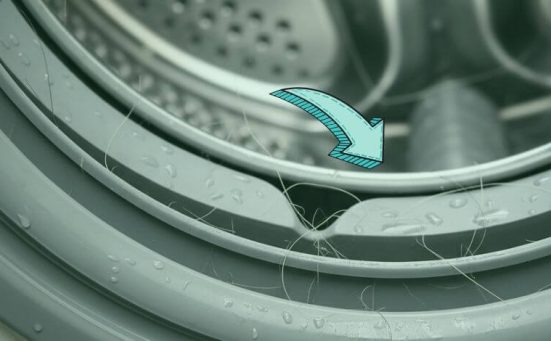
Don’t forget to check and maintain door seals on front loading washers regularly. These rubber gaskets can develop tears or lose their seal over time, allowing water to escape during cycles. Wipe them down after each use and inspect for wear monthly.
Controlling Ambient Humidity
Install a dehumidifier sized appropriately for your closet space. Look for models with automatic humidity controls that maintain levels between 30 and 50 percent. Higher humidity encourages mould growth, and lower levels can cause static and fabric damage.
You can also use moisture absorbing materials strategically throughout the space. Silica gel packets, activated charcoal, or commercial moisture absorbers can help control humidity spikes between appliance cycles. Replace or regenerate these materials according to their instructions.
Another helpful trick is to improve air circulation with strategically placed fans. A small oscillating fan can help prevent stagnant air pockets where moisture tends to accumulate. Position fans to create airflow patterns that move humid air toward your exhaust ventilation.
Heat Management And Fire Safety
Heat buildup in confined spaces creates multiple dangers, from appliance damage to fire risks. Managing temperature effectively protects both your equipment and your home.
Creating Adequate Clearances
Maintain proper clearances around both appliances as specified in their installation manuals. These spaces aren’t suggestions: they’re essential for safe operation and heat dissipation.
Most dryers need at least six inches of clearance on all sides, with some models requiring more. Check your specific model’s requirements, as violating clearances can void warranties and create fire hazards. Measure carefully and account for any protruding components like handles or control knobs.
Also, consider the height of your closet ceiling. Heat rises, and insufficient overhead clearance can cause dangerous temperature buildup near the ceiling. Ensure at least 12 inches between the top of your dryer and the ceiling, more if manufacturer specifications require it.
Installing Heat Resistant Materials
Line closet walls with fire resistant materials rather than standard drywall or paneling. Cement board, metal panels, or specialised fire resistant gypsum board provide much better protection against heat damage and potential fires.
Avoid storing anything combustible near the appliances. This includes wooden shelves directly above the dryer, plastic storage containers, and cleaning supplies. Use metal shelving and store flammable items in a separate location entirely.
You should also install adequate insulation around the closet to prevent heat transfer to adjacent rooms. Proper insulation also helps maintain temperature control, reducing the workload on your ventilation system.
Temperature Monitoring Solutions
Install a thermometer inside the closet to monitor ambient temperatures during operation. If temperatures regularly exceed 85°F (29°C), your ventilation system needs improvement or your clearances may be insufficient.
Consider adding automatic temperature sensors that trigger additional ventilation or shut off appliances if dangerous temperatures are reached. These safety systems can prevent fires and equipment damage by responding faster than human monitoring.
Also, check appliance operating temperatures regularly during the first few months after installation. Touch accessible surfaces (carefully) after cycles to ensure they’re not becoming excessively hot. Unusual heat levels often indicate ventilation problems or mechanical issues that need immediate attention.
Proper Installation Guidelines
Getting the installation right from the start prevents most safety issues before they develop. Taking shortcuts during installation almost always leads to expensive problems later.
Professional Assessment Is Essential
Have a qualified professional assess your closet space before beginning any installation. They can identify potential problems with ventilation, electrical capacity, structural support, and building code compliance that might not be obvious to homeowners.
Building codes vary by location, and what’s acceptable in one area might be prohibited in another. Professional installers know local requirements and can ensure your installation meets all safety standards and legal requirements.
You might want to consider hiring different specialists for different aspects of the job. A plumber should handle water connections and drainage, an electrician should manage all electrical work, and an HVAC professional should design and install ventilation systems.
Water Connection Safety
Use braided steel supply hoses rather than rubber ones for washing machine connections. Braided hoses are much less likely to burst and cause flooding, which is particularly dangerous in confined spaces where water damage can spread quickly.
Install water shut off valves that are easily accessible outside the closet. In an emergency, you need to be able to stop water flow without entering a potentially flooded or electrically dangerous space.
You should also consider installing a water leak detection system that automatically shuts off water supply if leaks are detected. These systems can prevent minor leaks from becoming major floods, especially important when appliances are hidden away in closets where problems might go unnoticed.
Gas Line Considerations For Gas Dryers
If you’re installing a gas dryer, gas line work must be performed by licensed professionals. Gas leaks in confined spaces are extremely dangerous and can lead to explosions or carbon monoxide poisoning.
Install a gas shut off valve within six feet of the dryer and easily accessible for emergency shutoff. Mark the valve clearly so anyone can find and operate it quickly if needed.
Make sure there’s adequate combustion air supply for gas appliances. Gas dryers need fresh air for proper combustion, and insufficient air supply can cause incomplete burning and dangerous carbon monoxide production.
Choosing The Right Appliances For Small Spaces
Not all washers and dryers are suitable for closet installation. Selecting appropriate models makes a significant difference in safety and performance.
Size And Capacity Considerations
Compact or apartment sized appliances often work better in closets than full sized models. They generate less heat, use less water, and require smaller ventilation systems but still handle typical household laundry loads effectively.
Stackable units can maximise your vertical space and maintain proper clearances. Many manufacturers design stackable sets specifically for closet installations, with integrated ventilation and safety features.
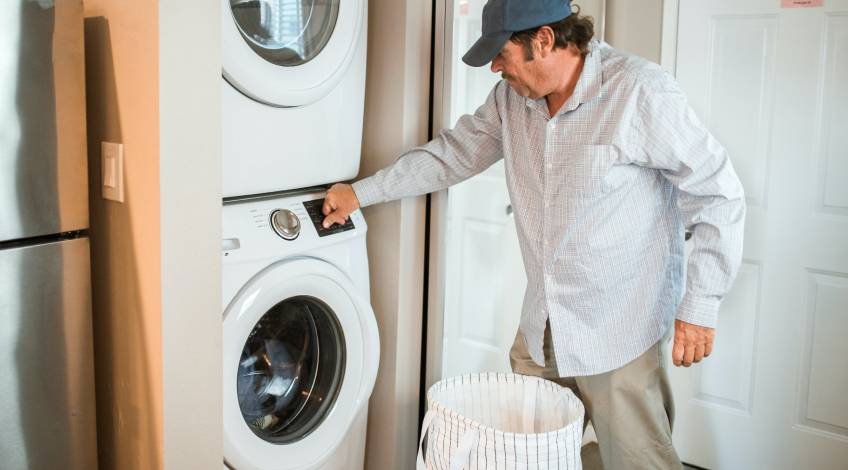
Front loading washers typically work better in tight spaces than top loaders. You don’t need clearance above the machine for the lid, and many front loaders can be stacked with matching dryers to save floor space.
Ventless Dryer Options
Consider ventless dryers for closets where external venting is difficult or impossible. Heat pump dryers and condensing dryers don’t require external vents, eliminating many installation challenges and providing excellent drying performance.
Ventless dryers do produce some moisture and heat, but significantly less than traditional vented models. They’re particularly good options for internal closets or spaces where running ductwork would be expensive or impractical.
Research energy efficiency ratings when choosing ventless models. Heat pump dryers are typically the most efficient option, using much less energy than traditional electric dryers and being gentler on fabrics.
Smart Features For Safety
Look for appliances with built in safety features like automatic shut off, leak detection, and overheating protection. These features are particularly valuable in closet installations where problems might not be immediately noticed.
Wi-Fi enabled appliances can send alerts to your phone if problems develop, allowing you to respond quickly even when you’re away from home. Some models can automatically shut off and alert you to specific problems like blocked vents or water leaks.
Consider models with self cleaning cycles or maintenance reminders. Regular maintenance is crucial for safe operation, and built in reminders help ensure you don’t skip important tasks like cleaning lint traps or checking hoses.
Regular Maintenance For Continued Safety
Proper maintenance keeps your closet laundry setup operating safely for years. Neglecting maintenance is one of the fastest ways to create dangerous conditions.
Monthly Safety Checks
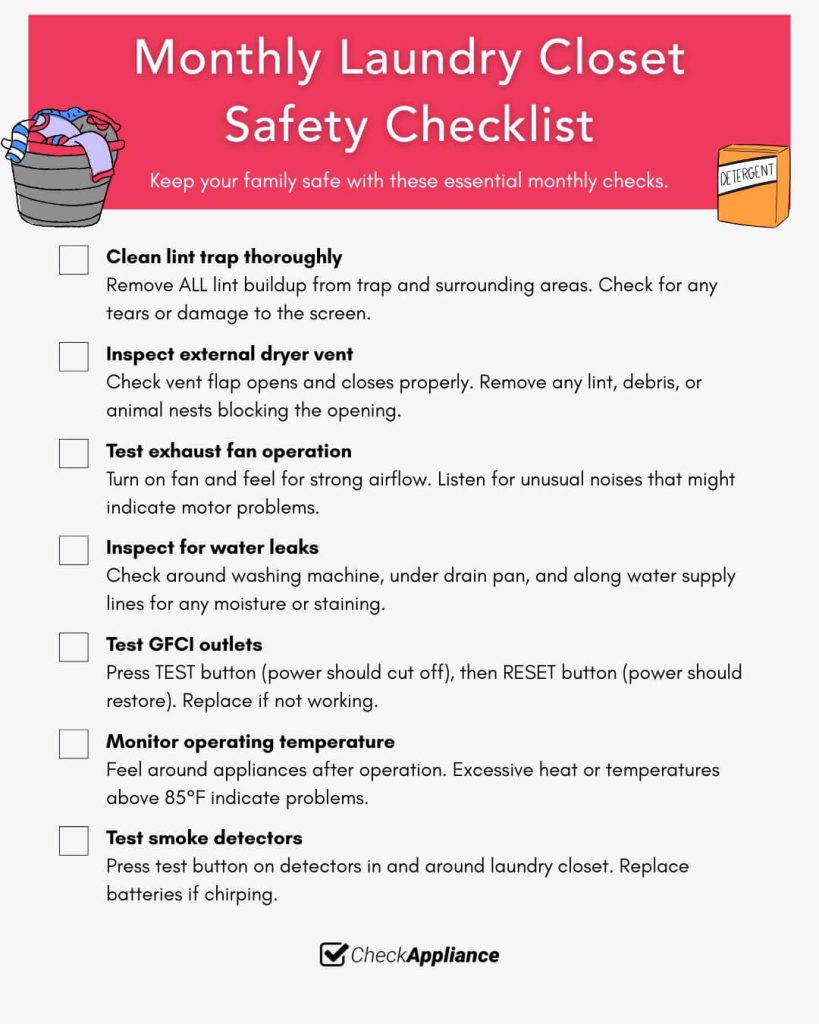
Inspect lint traps and remove all accumulated lint after every load. Check the external dryer vent monthly to ensure it’s not blocked by lint, debris, or small animals that might nest in the opening.
Test your exhaust fan monthly to ensure it’s operating properly and moving adequate air. Clean fan blades and housing quarterly to maintain proper airflow and prevent motor strain.
Check around appliances for any signs of water leaks, unusual odours, or excessive heat. Address any problems immediately rather than waiting for them to worsen.
Annual Professional Maintenance
Have your dryer vent system professionally cleaned annually, more often if you do large amounts of laundry or notice longer drying times. Professional cleaning removes lint buildup that home cleaning can’t reach.
Schedule annual inspections of electrical connections, gas lines (for gas appliances), and ventilation systems. Professional technicians can spot developing problems before they become dangerous or expensive.
Test safety devices like GFCI outlets, smoke detectors, and automatic shutoff systems annually. Replace batteries and components according to manufacturer schedules, not just when they fail.
Upgrading Safety Systems
Technology improves constantly, and newer safety devices often provide better protection than older systems. Consider upgrading smoke detectors, leak sensors, and ventilation controls periodically.
Smart home integration can provide enhanced monitoring and control of your laundry systems. Modern systems can alert you to problems immediately and even automatically shut down equipment when dangerous conditions develop.
Keep maintenance records for all systems and equipment. Good records help you track when maintenance is due and can be valuable for warranty claims or insurance purposes.
Creating Your Safe Laundry Closet
Installing a washer and dryer in a closet can work brilliantly when done properly, but cutting corners on safety measures is never worth the risk. The key is understanding that this isn’t just about fitting appliances into a tight space: it’s about creating a safe, functional system that protects your home and family.
Focus on the three critical areas: ventilation, electrical safety, and fire prevention. Get these right, and your closet laundry setup will serve you well for years. Get them wrong, and you could face thousands in repairs or much worse consequences.
Take the time to plan properly, hire qualified professionals for specialised work, and never compromise on safety requirements. Your future self will thank you when you’re enjoying the convenience of closet laundry without any of the worry.
If you found this guide helpful, share it with friends on Facebook who might be considering similar projects!
SEE ALSO: 7 Clever Kitchen Drawer Organisers That Actually Create Space
Also, follow us on Pinterest ...