The Easy Way To Clean Your Dishwasher (and why you should)
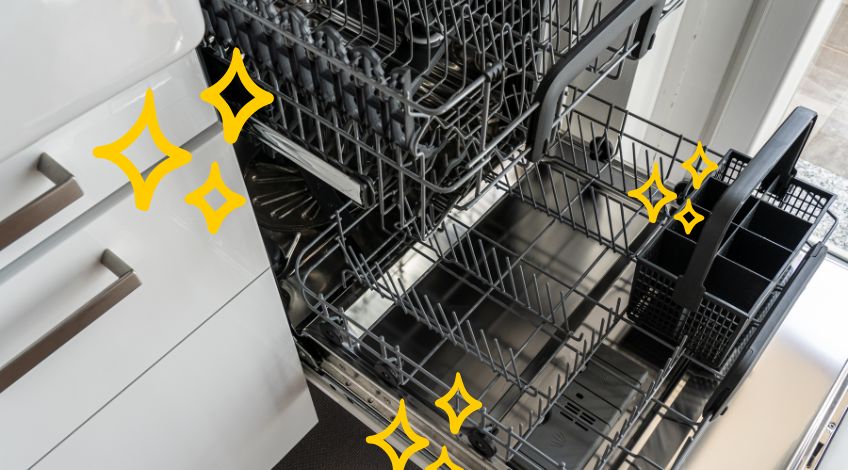
You can’t expect your dishwasher to get your dishes clean if it isn’t clean itself. Let’s face it, you wouldn’t wash in dirty water would you? Well, it’s the same for your dishes.
If your dishwasher isn’t cleaned regularly you’re likely to find the plates, bowls and cutlery still have remnants of food on them and cups and glasses have tide marks and streaks. Doesn’t sound too good does it?
But there’s no need to worry because we’ve got you covered. In this short article we’ll tell you the best way to get your dishwasher as clean as it was when it first arrived in your home.
So, if you want a sparklingly clean dishwasher and incredibly clean dishes, keep reading.
Why Your Dishwasher Gets Dirty (and yes, it’s ironic)

Let’s face it, dishwashers, the heroes of the kitchen cleanup crew, sometimes get embarrassingly gross. You’d think a machine that washes dishes would stay clean, right? Nope! Here’s why your trusty dish scrubber might be harbouring its own filth:
Food Debris (the sneaky leftovers)
Tiny bits of spaghetti sauce, breadcrumbs, and who knows what else, can hide in the nooks and crannies of your dishwasher. They sneak in on unrinsed dishes, set up camp, and before you know it, your dishwasher smells like last week’s dinner or worse!
Hard Water (the unwanted decorator)
If your water has high mineral content (and around 60% of the UK’s water does), it loves to leave little “souvenirs” in your dishwasher. These hard water deposits show up as white or yellow stains, as if your dishwasher decided to dabble in abstract art.
Soap Scum (the sudsy saboteur)
Not all detergent goes down the drain; some sticks around, forming a stubborn, slimy residue. It’s like soap’s revenge for being asked to do too much work.
Clogged Spray Arms (the hidden culprits)
Those magical spinning arms that spray water everywhere? If they get clogged with food bits, they’ll stop doing their job properly. Think of it as a garden sprinkler clogged with mulch, it’s messy and ineffective.
Dirty Filters (the grime traps)
Your dishwasher’s filter is supposed to trap food particles, but if it isn’t cleaned regularly, it turns into a smelly little clog monster. Not cleaning it is like vacuuming your house without ever emptying the bag. Yikes!
Now that you know why your dishwasher might look like it needs a shower of its own, let’s dive into how to fix it. Cleaning it is easier than you think, stay tuned for all you need to know to get your dishwasher sparkling again.
Here’s How To Easily Clean Your Dishwasher
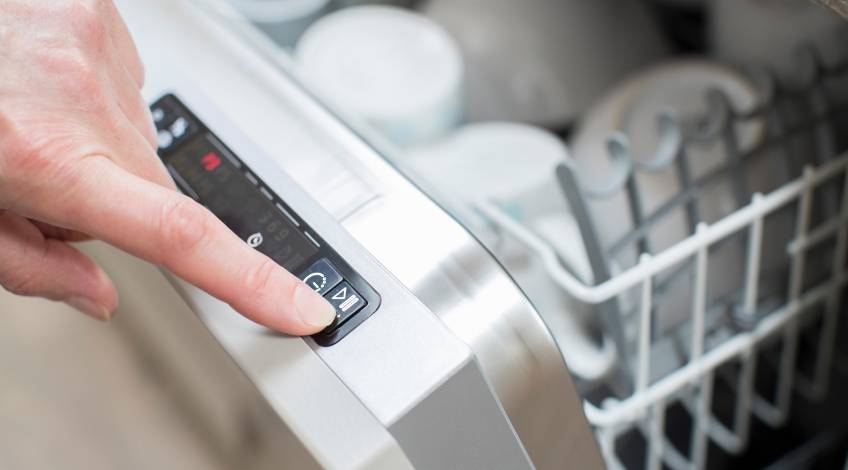
Now you know the likely cause of your dishwasher not cleaning dishes and probably smelling like a farmyard, it’s time to do something about it. Just follow these easy tips;
- Clean The Filter
The filter, located at the bottom of the appliance is designed to trap all of those small pieces of food and other debris to prevent clogging the drain hose and other internal parts of the dishwasher. Find it, remove it and wash it under running water. If it’s really dirty you might need to soak it in warm water and then give it a gentle scrub. - Wipe The Door Seal
Food particles can get trapped around the door seal where it then rots and starts to smell bad. If you use your dishwasher regularly all you need to do is wipe the door seal once a week with a damp cloth. Alternatively clean it with a solution of white vinegar and water in a 50/50 mix. Be sure to rinse thoroughly afterwards because vinegar can rot rubber if left too long. - Clean The Spray Arms
If the spray arms get blocked, the dishes won’t get washed or rinsed properly. Take them out of the appliance and wash them thoroughly. Pay particular attention to the nozzles (or jets) if these are clogged gently prise any blockage out using a toothpick or cocktail stick. - Run A Hot Cleaning Cycle
To remove germs and bacteria from your dishwasher, you need the hottest wash cycle you have. You’re going to be running it without any dishes so you don’t need to worry about damaging your best china. The hot water will remove any lingering food deposits and other debris as well as any germs and bacteria.
What Type Of Dishwasher Cleaner Should You Use?
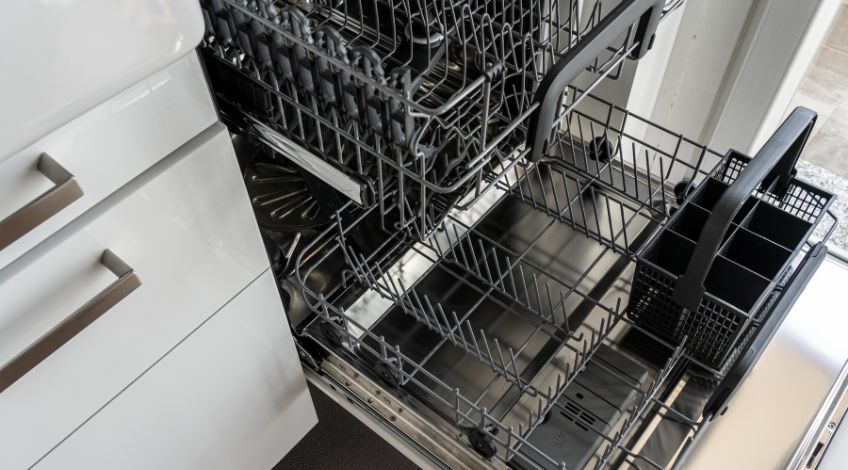
Because we’re looking at the easiest way to clean your dishwasher, there are two ways to look at this.
Using A Commercial Dishwasher Cleaner
Using a commercially produced dishwasher cleaner is easy because all you need to do is place it in the empty dishwasher and run the hottest cycle.
But, if you don’t have a commercially produced dishwasher cleaner at home at the time you need to clean your appliance, it means a trip to the shops. All of a sudden, this easy task has an added step that depending on how far the shops are from your home, might not be so easy.
Using Old Fashioned Household Staples
Most homes will already have distilled white vinegar and bicarbonate of soda (baking soda) in the cupboard. These two wonder products have many cleaning uses around the home and cleaning the dishwasher is one you might not have thought of.
For this method, simply place a dishwasher safe container full of 1 cup of distilled white vinegar on the top rack of the empty dishwasher and run a hot wash cycle. It has to be white vinegar though, because regular vinegar can leave brown stains behind.
Then, once the cycle has completed, sprinkle 1 cup of bicarbonate of soda directly into the bottom of the dishwasher and run a second hot wash cycle.
Obviously, the vinegar and bicarbonate of soda method takes twice as long but as long as you have the ingredients already at home, you’ve saved the time needed to go shopping.
How to Keep Your Dishwasher Sparkling
Now that you know why your dishwasher can turn into a grime magnet, let’s talk about prevention. Think of these as the golden rules of dishwasher hygiene, simple habits to keep your machine happy and your dishes dazzling:
1. Scrape Like A Pro
Before you load your plates, give them a quick scrape. We’re not asking for a full scrub down, just a little “get off, spaghetti!” action.
Large food chunks don’t belong in your dishwasher, they’re freeloaders that clog things up.
2. Show Your Filter Some Love
Your filter works hard trapping all the gunk. Reward its efforts by cleaning it every now and then (translation: after every few washes).
A happy filter equals a happy dishwasher.
3. Rinse Aid: Your Dishwasher’s BFF
Think of rinse aid as the fairy godmother of dishwashing. It helps water glide off your plates and glasses like a charm, leaving no room for water spots or soap residue to crash the party.
Keep your dishwasher’s rinse aid topped up.
4. Give It the Vinegar Spa Treatment
Every so often, treat your dishwasher to a little pampering. Pour some white vinegar into the bottom of the machine and run an empty cycle. The vinegar will zap grease, grime, and hard water buildup like a boss.
5. Let Those Spray Arms Spin Freely
Blocked spray arms = dirty dishes. Every now and then, check that nothing’s jamming them up.
If you find a rogue pea or a chunk of who knows what in there, evict it immediately.
6. Bust Out A Cleaning Tablet Occasionally
Sometimes, your dishwasher needs reinforcements. Pop in a cleaning tablet every so often, and let it dissolve all the stubborn gunk and mineral deposits that regular cycles can’t handle.
By following these tips, your dishwasher will stay cleaner than a whistle (and so will your dishes). Plus, you won’t have to endure the shame of a dirty dishwasher again. Win-win!
And That’s It!
There you have it, the easy way to clean your dishwasher, we told you it was easy! By following this easy to follow guide you can get your dishwasher clean and keep it clean.
Is your dishwasher dirtier than a farmyard? Does it smell like a roadside ditch? How do you keep your dishwasher clean?
Let us know in the comments and share this with whoever you think might benefit from reading it.
SEE ALSO: The 5 Cleaning Fails That Leave Your Kitchen Floor Sticky – Are You Guilty?
Also, follow us on Pinterest ...