If your fridge starts freezing food, you need to do THIS immediately…
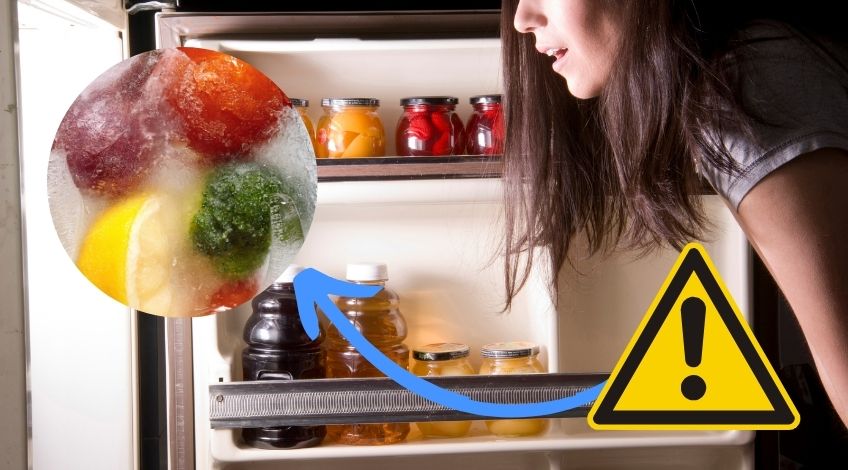
If your fridge has ever frozen your lettuce or turned your milk into an icy block, then this is the article for you. It’s not just a minor inconvenience; it’s a sign your fridge is crying out for help.
In this short article we’ll be looking into exactly what could be causing your fridge to start freezing your produce and, more importantly, what you should do about it.
Keep reading to not only save your groceries but also save your sanity.
Why You Need To Act Fast If Your Fridge Is Freezing Food
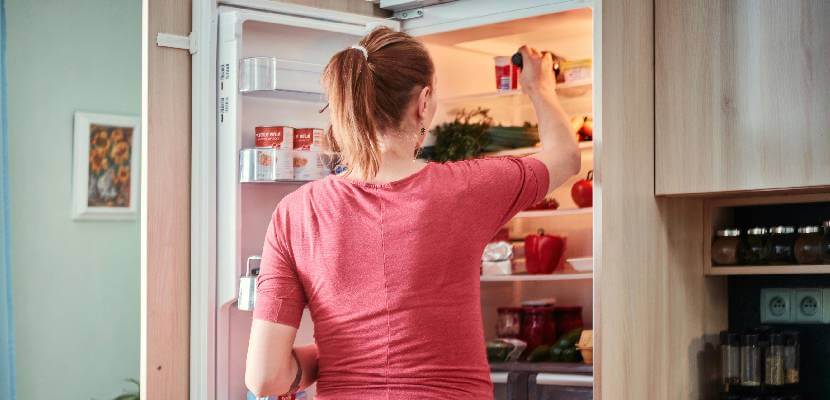
A fridge that’s freezing food isn’t just an inconvenience; it’s a ticking time bomb for your groceries and your health. Ignoring the issue can lead to some serious downsides which include:
Risks Of Illness
Freezing doesn’t kill bacteria; it only pauses their growth. When food thaws, those bacteria can spring back to life, multiplying rapidly and potentially making you sick.
Repeated freezing and thawing can increase the levels of pathogens in your food, making it unsafe to eat.
Loss Of Food Quality
Frozen food often loses its texture and taste, turning once crisp veggies into mush and ruining the flavour of your meals.
Added to which, thawed food can lose vital nutrients, meaning you’re not getting the goodness you paid for.
The faster you address the issue, the better you can protect your groceries and your health. Now, let’s explore what might be causing the problem and how to fix it.
Why Your Fridge Is Freezing Food

Let’s get straight into the list of possible culprits. Most of these have simple solutions that you can handle yourself.
The Fridge Door Isn’t Closing Properly
If your fridge door doesn’t seal tightly, warm air sneaks in. The fridge’s cooling system then goes into overdrive to keep things chilled, creating icy pockets where food freezes.
To prevent this from happening, you need to check for obstructions or misaligned shelves that might stop the door from closing. If the rubber seal looks worn or dirty, clean with soapy water or replace entirely.
Thermostat Trouble
Sometimes, the thermostat gets bumped accidentally, cranking the temperature way too low. Other times, the thermostat itself is faulty and doesn’t read the fridge’s actual temperature correctly.
You need to check and adjust the thermostat setting, the sweet spot is usually around 3°C to 5°C. If it’s still misbehaving, test it with a thermometer. A broken thermostat might need replacing.
Air Vents Blocked
Your fridge needs good airflow to maintain a consistent temperature. Blocked vents force cold air to blast unevenly, which can leave some items icy.
You should clear at least 2 inches around the vents. Rearrange items so nothing blocks them. No Tetris-style stacking, please.
The Power Cool Function Is On
Some fridges have a “power cool” mode for rapid chilling. It’s handy but can turn your fridge into a freezer if left on too long.
Check your fridge’s control panel and turn off the power cool mode if it’s been activated. Your user manual will show you how.
Your Fridge Is Too Empty
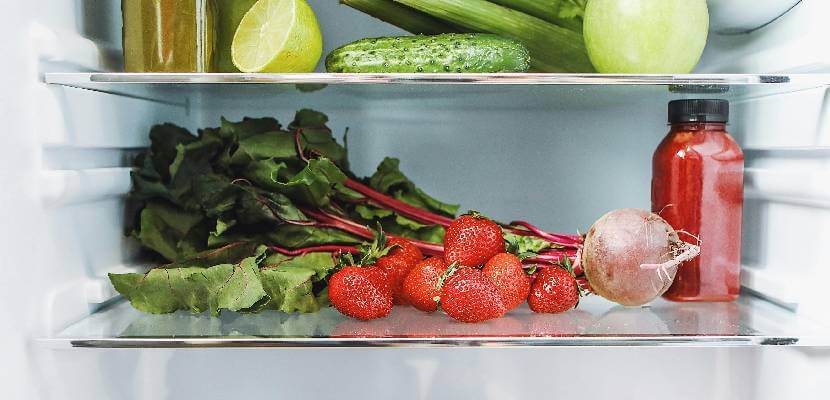
Yes, an empty fridge can be a problem! Cold air has nothing to bounce off, so it settles in spots and freezes food.
If your fridge is fairly empty you should add bottles of water to balance the air circulation. Bonus: you’ll have icy cold drinks ready to go.
Check Where Foods Are Placed In The Fridge
Certain foods, like leafy greens or raw meat, are more likely to freeze because of their high water content. Sticking them near vents or at the back of the fridge makes things worse.
Always store delicate items in the middle or on the door shelves, away from vents.
Condenser Coils Need Cleaning
Dusty condenser coils can’t release heat properly. Your fridge compensates by working harder, which can lead to overcooling.
You need to unplug the fridge, locate the coils (usually at the back or underneath), and give them a good clean with a vacuum or brush.
Faulty Components
Sometimes the problem lies in the hardware. Faulty thermostats, air dampers (the flap controlling air between the fridge and freezer), or thermistors (temperature sensors) can wreak havoc.
If you’re comfortable, test components with a multimeter to check for faults. Otherwise, call in a professional.
Evaporator Iced Up
The evaporator is found at the back of the fridge behind a plastic cover. If you can see a buildup of ice on the plastic cover, it’s probably the evaporator that’s causing the problem.
You need to defrost the fridge and make sure that the drain tube is defrosted and free from any obstruction.
Faulty Defrost System
The defrost system includes the thermostat, defrost control board and defrost heater. If any of these parts becomes faulty, the fridge will ice up.
You can check this yourself if you feel confident, or get an engineer to do it for you.
Quick Safety Note
Before tinkering with anything electrical, always unplug your fridge. And if your fridge is still under warranty, contact the manufacturer for advice before you start playing handyman.
There’s no point voiding your warranty is there?
SEE ALSO: Think Your Washer Cleans Itself? Here’s the Truth That Could Save You Big!
Share This With Someone Else Who Needs It!
A freezing fridge is annoying and can be worrying but it doesn’t usually mean it’s broken beyond repair. Most issues are straightforward and can be sorted in minutes.
If you’ve worked through this list and the problem persists, it might be time to consult an expert. But hey, at least you’ll know you’ve tried everything, and that’s worth a pat on the back!
So, no more frozen lettuce or rock hard milk cartons, okay? Go on, give your fridge the care it deserves and save yourself from unnecessary freezer woes.
And if you know anyone who might benefit from this information, be sure to share it with them too!
Also, follow us on Pinterest ...