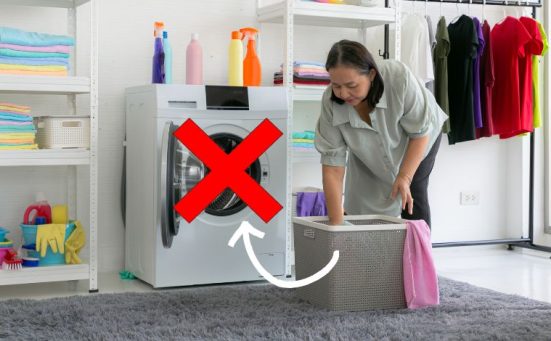
13 Goofy Mistakes Lazy People Make With Their Washing Machine
Doing the laundry should be one of the easiest of all household chores. And yet somehow, we’ve all managed to turn it into a Herculean task involving mysteries, mishaps, and misplaced socks.
In theory all you need to do is throw the dirty laundry into the drum, add detergent, select the correct cycle and hit the start button. But the reality is, it’s much more involved than that. Who knew laundry could be so dramatic? Forget soap operas, this is the real sudsy saga.
Which is why I was able to put this article together, because most of us get it wrong. So, if it’s a common thing, why include “lazy people” in the title?
Well, that’s because with just a little bit of effort and forethought we’d all get it right first time. Which can save your clothes, save your time, save your money and go some way to saving the environment as well.
Keep reading to find out exactly what you’re doing wrong (or not) and let’s get the laundry done properly together.
Common Goofy Washing Machine Mistakes

Nobody’s perfect. We all do things that could be criticised by others in pretty much everything we do. But when it comes to laundry, there seems to be a long list of wrongs.
Let’s get into the wash day mishaps that can cause problems and could have been avoided with just a little more effort. They include;
Using Fabric Softener In Every Wash Load
Fabric softeners can be a good thing for certain laundry items. It makes clothes smell fresh and feel soft. But that’s where the benefits end.
Fabric softeners work by coating the fibres of your fabrics with chemicals. Which is what makes them feel softer. The problem is that chemical coating stays on the fabric which means you’re walking around not in clean items but with clothes full of chemicals.
And it doesn’t stop there; because of the way the chemicals coat fibres, adding fabric softeners to towels actually makes them less absorbent. A towel that’s not absorbent is about as much use as a chocolate teapot!
Worse still, if you use fabric softener on fire retardant clothes, it reduces the efficacy of that fire retardant and in many cases makes the fabric even more likely to catch fire.
And lastly a buildup of fabric softener in your machine causes clogs, encourages mildew and mould growth and shortens the life of your washer.
Instead of using fabric softener in every wash, try adding 1 cup of white vinegar to the rinse cycle instead. It’ll soften your clothes and won’t leave them coated nor smelling like a bag of chips.
Using Too Much Detergent
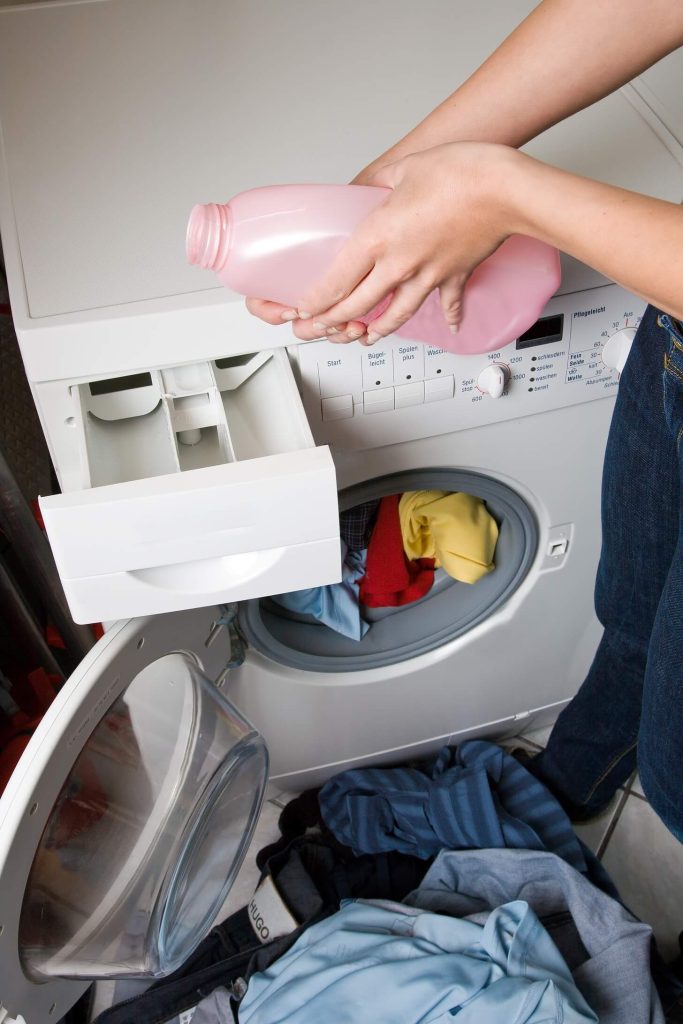
It can be tempting to use extra detergent if your laundry is extra dirty or heavily stained. Because if a little is good, a lot must be better, right? Wrong. That’s laundry logic 101.
Using extra detergent is never a good thing. In fact many laundry experts agree that you don’t even need to use the recommended amount on the packaging.
Try using ½ to ¾ the amount of detergent recommended and see just how little (or zero) difference it makes to the cleanliness of your laundry.
Using too much detergent can cause too many soap suds which can prevent your washer from rinsing your laundry properly. Or it can shut down altogether because it thinks that there’s a leak or some other mechanical problem.
Plus an excess of detergent can leave clothes stained and cause skin irritation. And let’s not forget the effect it has on your washing machine either.
Too much detergent usage can lead to a buildup in the machine which causes blockages and breakdowns as well as the growth of mould and mildew and shortens the life of your appliance. Translation: your washing machine is basically foaming at the mouth in protest.
Not to mention the environmental impact of releasing extra detergents into our waterways.
Neglecting To Pre-Treat Heavily Soiled Items
If you have extremely dirty or stained items in your laundry bin, they will not always get clean in a regular wash cycle. They often need soaking or pre-treating with a spot cleaner.
If the item is very dirty, soak it in a bucket of warm water and detergent or white vinegar or bicarbonate of soda. If it has a small area that’s stained, use a spot cleaner.
Then, once the pre-treatment has had time to work, wash the item in the usual way in your washer. 20 to 30 minutes extra preparation at the start can save you having to re-wash or throw the item away later on. Think of it as foreplay for your laundry, it sets the mood for a happy, stain-free ending.
Any bad stains should be dealt with long before wash day, they should be treated as soon as you notice the problem. By acting fast, it’s possible to remove the stain before it has time to set in. Which means you won’t need to pre-treat it, it can simply be washed as normal.
Using Too Much Bleach
I’m talking about chlorine bleach here which is a great whitening product for cottons and so on. But if you use bleach when washing white socks or underwear, it can actually ruin them!
That’s because bleach degrades elastic which means it won’t just be your socks that need pulling up. Switch to oxygen bleach which is just as effective but way kinder to your garments.
Overloading The Drum
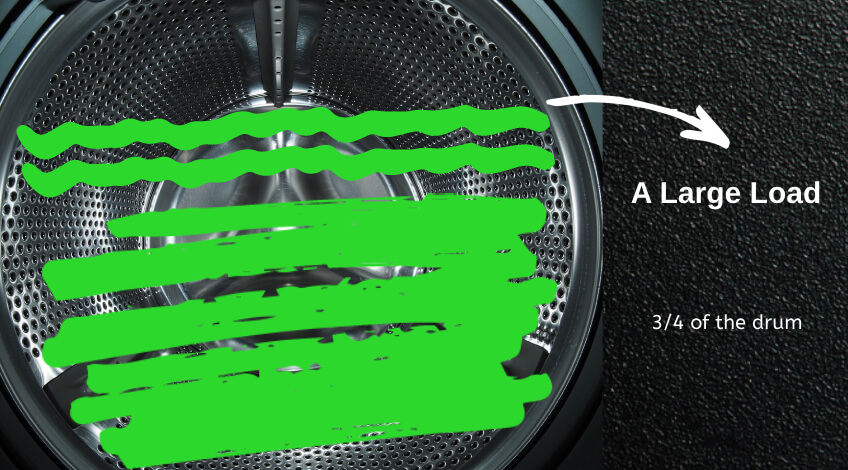
We’ve all been guilty of this one at some point, but that doesn’t make it right. I know how easy it is to get lazy when you’re facing a great big heap of dirty laundry.
The washer door is open and the laundry pile is practically shouting “cram us all in at once!” But that way leads to disaster. Firstly, your washer will have a weight limit that should not be exceeded unless you’re wanting to fork out for repairs or replacement. Overloading your washing machine is like overeating at a buffet, it won’t end well for anyone involved.
If your washer has a capacity of 8 kg that’s the absolute maximum amount of dry laundry you can put in the drum. However, for your machine to run at its optimum best and to last for longer, you shouldn’t fill it more than ¾ full.
So, for an 8 kg capacity that’s 6 kg of dry laundry for safety’s sake. Secondly, cramming the drum as full as it can get often means some items don’t even get wet, let alone cleaned.
Washing machines have sensors that detect when the laundry is wet enough. If the drum is crammed full, the items on the top of the bundle will be absolutely soaked. But the items in the middle will be dry and not get touched at all.
Thirdly, too much weight in the drum can cause damage to the machine. The drum bearings, shock absorbers and multiple other internal parts can become stressed and break down.
If you want your washer to work properly and remain working properly for years to come, never overload the drum!
Not Separating Your Laundry
Time is tight I know that, but not sorting your laundry properly can waste a whole lot more than just time! Sure, your time is precious, but is it worth risking a wardrobe full of accidental tie-dye?
If your clothes get ruined in the wash because you were too lazy or too pressed for time to sort them properly, you’re going to have to buy new clothes.
That’s extra time and money you’ll need to find. All because you couldn’t be bothered to spend 5 minutes sorting before loading the washer.
You need to separate whites, lights, darks and colours into piles to be washed with like for like. And it’s not just colours that need sorting, it’s fabric types as well.
And you should never wash bedding or towels with anything other than their own kind. Sheets can get damaged by other harsh fabrics like denims or towels. While towels can transfer germs and bacteria to other items and should ideally be washed on a hot wash.
Plus you need to check the wash care label (I know more work!) it’s there for a reason and that reason is to keep your laundry in the condition it was in when you bought it.
Always Using The Same Wash Programme

This is the ultimate lazy choice but one we’ve all been guilty of at some point. Let’s face it your laundry usually comes out looking clean and smelling fresh on that same programme so why change it? Using the same setting for everything is like trying to cook every meal on high heat, chaotic, and definitely not recommended.
Sometimes all you need is a quick wash to get lightly soiled or dusty clothes refreshed. But at other times things like towels for example, need a longer hotter wash to get rid of germs and bacteria.
Also the quick wash might not be enough for full loads, not if you want your laundry really clean and germ free. And it’s not only the timing of the wash, the temperature makes a difference as well.
Some laundry items like towels need a hotter wash to get them hygienically clean. The quick wash cycle is often too cool to remove germs and bacteria.
Take the time to read your washer’s manual and get the best from your machine. Your laundry will be cleaner, healthier and fresher.
Washing Delicates In With Other Stuff
If you want your delicate items like bras or swimwear to remain damage free, they need separating from harsher items like denims. Pro tip: your lace bras and your husband’s muddy football socks should never meet. It’s not a rom-com; it’s a horror story.
Ideally they should be washed in a delicate wash, but if that’s too much of a stretch, at least use a mesh laundry bag.
Mesh laundry bags protect your delicate items preventing them from stretching or getting damaged as they tumble around the drum with other items. And let’s face it, it’ll take no more than 60 seconds to put that pretty swimsuit into a mesh bag.
Which is far less time than you’d need to go out and buy a new one. Save time, money and energy by simply using a mesh bag for your delicate laundry items.
Not Opening The Machine’s Door After Use
If anything, this one takes more energy to not do! I’m talking about after the wash cycle has finished and you’ve got the laundry out of the drum.
Instead of using extra energy to close the door, leave it open and open the detergent drawer as well. Because nothing says ‘clean laundry’ like a machine that smells like a swamp.
This allows fresh air to circulate around your washer preventing any damp areas from forming which would encourage mould and mildew growth. That means your washer will smell fresher which means your laundry will smell fresher too.
Over Washing Your Clothes
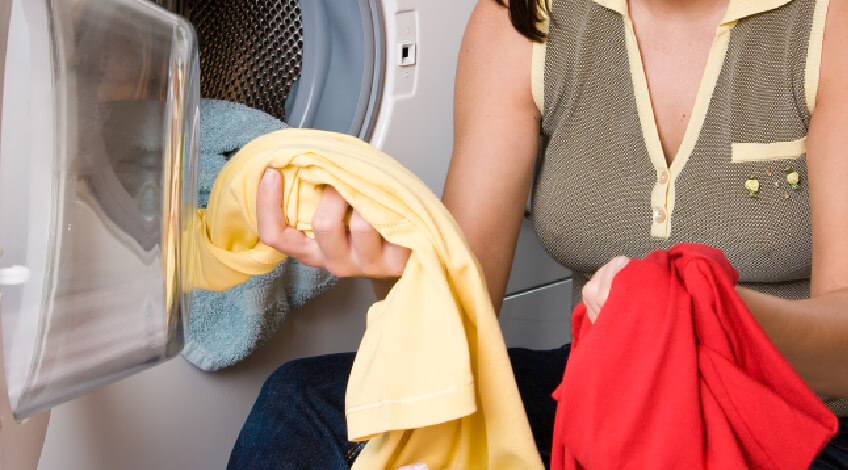
Just because you wore that sweater once, it doesn’t necessarily need a wash. If it doesn’t smell, and it doesn’t have a stain, congratulations, it’s still good to go!
Washing clothes after just a few hours wear is a recipe for disaster in many cases. It wastes time, energy, detergent and wears your clothes out prematurely.
Granted, some things like underwear should be washed after a single wear. But jumpers and the like often don’t even need washing after 2 or 3 wears.
The more you wash clothes, the faster they’re likely to wear out so if you don’t want the bother of buying more clothes too soon, don’t wash after every wear.
Leaving Wet Laundry In The Drum
As soon as the wash cycle ends, you need to remove that damp laundry and get it dry. Unless you’re a fan of Eau de Mildew, in which case, by all means, let it sit.
If you leave it in the machine, it’s going to start smelling of mould and mildew. You might think that not removing damp items from the wash is time saving, but once it starts to smell, it’ll need re-washing which takes more time and energy.
Not Cleaning Your Washer
I know, you have a thousand and one things to do every day but not cleaning your washing machine once a month can cause more problems than you might think. If your washer is dirty how can you expect it to clean your laundry?
Most washing machines have a cleaning cycle or service wash setting. If yours does, you need to use it! Think of it like taking your washer to the spa. A little self care goes a long way.
If it doesn’t, just run the hottest wash available on your appliance (usually 90oC). You can either use a proprietary washing machine cleaner or 1 cup of white vinegar or bleach (but don’t mix them, it’s one or the other unless you want a science experiment gone wrong).
Then run the hot wash cycle or service wash. After it’s finished, clean around the door seal with a solution of white vinegar and water (don’t forget to rinse with fresh water because vinegar can rot rubber if left too long). You should also clean the detergent dispenser drawer as well to prevent a buildup of detergent residue.
A Lack Of Routine

Every task you have to do is easier if you have a routine or set way to do it. This will ensure that you always have access to a selection of clean, fresh clothes no matter the occasion.
What’s needed here is PMA-Positive Mental Attitude. There are two ways you can approach doing the laundry; You can either say “urgh, I have to do the laundry” which will mean that before you even start, you’re making it into a boring chore.
Or you can say to yourself “yay, it’s laundry day” and set yourself up with a nice cuppa and a biscuit or three once the machine starts running through its programme. Try making a washday playlist of your favourite tracks to get you through the sorting and loading phase.
Knowing that there’s a thirty minute break coming up with a cuppa and a few treats. Laundry is your excuse for guilt free snacking and playlist binging. Who knew it was self care all along? Soon you’ll be looking forward to washday not dreading it.
Don’t Work Harder, Work Clever
So there you have it: 13 goofy mistakes lazy people make with their washing machine. As you can see I’m not saying you have to stop being lazy, all I’m saying is sometimes, you might need to do more at first to do less later on.
Wash day doesn’t need to be a chore, it can be a fun hour or so if you approach it in the right frame of mind and follow the hints and tips in this article. If nothing else, it’s an excuse to avoid that other chore you’ve been putting off. Enjoy your cuppa and save us a biscuit.
Do you have any laundry hints or tips to help save time? Had any wash day disasters? Let me know in the comments and don’t forget to share this with anyone you think might need it.
SEE ALSO: Washing at 60°C? Here’s what you’ll wish you knew sooner
Also, follow us on Pinterest ...