20 Surprising Things You Should Never Put in the Washing Machine
Laundry, if you have a family you’ll no doubt know all about laundry. From kids sports kits to family workwear and on to summer clothes and evening wear.
But did you know that there are some items that should never be put in a washing machine. Doing so could cause untold damage to your laundry and your washing machine.
It can be hard enough keeping up with the never ending pile of dirty laundry without causing problems with items that shouldn’t be put in the machine in the first place. Not to mention the added expense and inconvenience of getting your appliance repaired or replaced.
In this article I’ll take you through 20 things that you should never put in a washing machine. Some are pretty obvious but some will surprise you. Keep reading to find out more.
What You Should Never Put In A Washing Machine
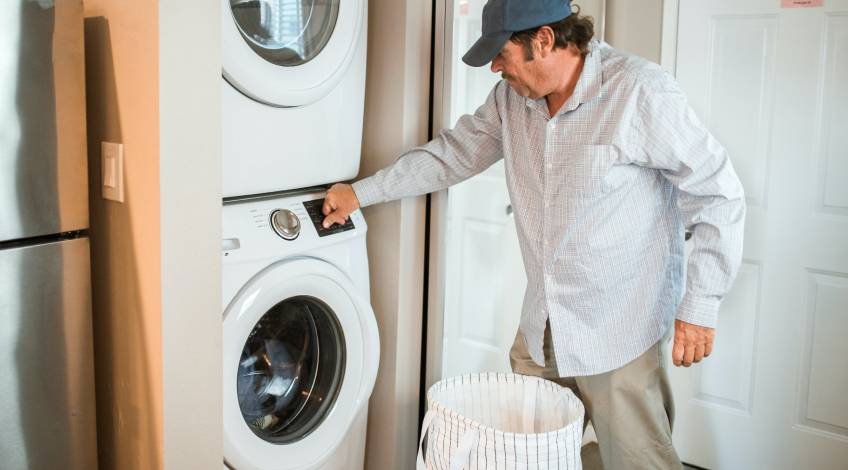
In the 21st century we all rely on our washing machines because who has time to stand and wash clothes like our great grandmothers did? We simply chuck everything into the drum, select the cycle, add detergent and hit the start button.
We then walk away and forget all about the laundry until the cycle ends. If you’re anything like me, when you return to the washer, you don’t give it a second thought.
You simply open the door and remove the laundry and think about where to dry it. And let’s face it, why not? The machine works well enough at cleaning clothes so why worry?
But there are certain items that should never be put in the machine because they can get ruined, damage other items or damage the washing machine. Where would we be then? Without the convenience of our trusty washer.
So let’s get into those troublesome items that should never get put in the washer. They include;
Items Covered In Pet Hair
As a whole, in the UK, we’re a nation of pet owners, most homes have a pet dog or cat ruling the roost. If you own a dog or a cat, you’ll already know all about the way they shed their fur.
Literally everything gets covered in pet hair from your top, your jeans and for some reason even your towel!
You might be tempted to just chuck your hair covered clothes in the wash and let the machine deal with it. But that’s a really bad idea because even if all of that pet hair comes off of your clothes, it has to go somewhere.
You’ll find it either sticks to the side of the drum waiting to stick onto the next wash load or, and this is even worse, clog up the drain filter which could lead to soaking wet laundry or a flooded home.
You should always remove pet hair from every item before it finds its way into the washer. Use a brush or lint roller to remove the pet hair and prevent any unnecessary stress from a faulty machine.
Swimwear
Most swimwear will say it can be machine washed on the care label, but you’ll be better off washing it by hand. Especially if you want it to keep its shape and last longer.
The problem with machine washing is that the material the swimwear is made from (usually nylon or spandex) will stretch or sag when put through the rigours of the rough and tumble in a washing machine.
Plus it’s likely to get caught on zippers or clasps from other items and get damaged. So to prevent any damage or disappointment, wash your swimwear by hand and treat it gently.
Uncovered Bras
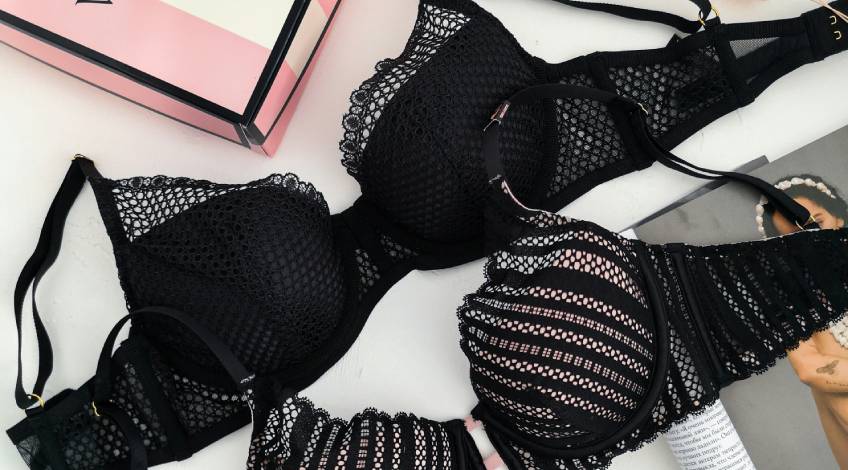
Most bras are machine washable but that doesn’t mean they can’t get damaged or cause damage to other items in the drum. The action in the drum can ruin the shape of the bra and damage the underwire.
Plus the metal clasps and exposed underwire can snag on other items and cause damage as they spin around the drum.
The solution is simple, just invest in a few mesh laundry bags and put your bras inside the bag to protect it and the rest of the wash load. Or hand wash them to be sure of no damage at all.
Unzipped Zippers
Once your laundry is tumbling around in the washer’s drum it’s all fair game. Anything sharp or catchy is likely to damage anything that’s vulnerable to damage.
It’s fine to wash jeans and shorts etc in your washer (as long as the care label agrees), but any open zips can potentially cause problems for other items. In fact, just run your finger along an open zip and notice how some (or all) of the teeth catch on your skin.
That’s what will happen to your favourite T-shirts if they’re in the same wash. But all of that heartache can be avoided by simply ensuring that every zipper that goes into the wash is done up.
Memory Foam Pillows
Most pillows can go in the washing machine. From cotton, synthetic and even down pillows are OK to be washed in a washing machine. But the exception to this unwritten rule are memory foam pillows.
This is because the actual foam part is usually too delicate and is likely to get torn by the rough action of the washer. Now, some people advise that it’s OK to wash memory foam pillows in the washer but not to spin them.
But I don’t agree because having tried that myself, I was left with a heavy, soaking wet damaged pillow that was only fit for the bin. You can wash the covers in the machine, that’s fine.
But the actual memory foam pillow should be cleaned using the upholstery nozzle on your vacuum cleaner. Or spot clean any stains using a microfibre cloth and a mild washing up liquid and then rinse it with a damp cloth.
However, before you do any cleaning at all to a memory foam pillow, you should always consult the wash care label.
Lace Or Embellished Items
Lace items and anything covered in any embellishments are likely to get damaged during the rough action of a washing machine. Even using the old trick of turning them inside out won’t be enough to save them.
Plus any embellishments that have been glued on are liable to fall off during the wash. You should always follow the wash care label and either hand wash or dry clean only.
Delicates
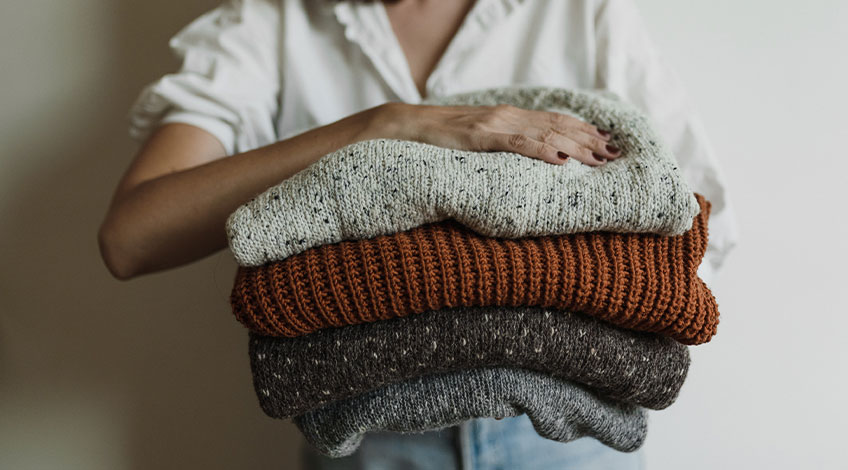
This one might surprise you because your washer probably has a delicate setting. But there are certain items like wool, velvet or cashmere that can get damaged or shrink if washed in the washer.
Check the care label and hand wash delicate items or dry clean them. Even if the care label says it’s OK to wash in the machine, I recommend using a mesh laundry bag to protect them from any damage.
Suits
Washing a suit in a washer is not something I’d recommend. Not only is the suit likely to be made from a delicate fabric, but it will also have interfacing to give it its shape.
The interfacing is likely to dissolve at worst or bend at best leaving your suit completely out of shape and looking like an old sack. Always dry clean suits if you want them to last.
That includes suits made from cotton or polyester too!
Ties
In the normal course of events, we don’t usually wash ties. But accidents happen which can leave a spill or other stain on your favourite tie.
But as they are often made from silk or wool and have delicate stitching, putting them through the wash is likely to damage them. It’s usually fine to hand wash ties or you can even take them to the dry cleaners, but don’t put them in your washing machine.
Dry Clean Only Items
While we’re on the subject of suits and ties, let’s talk about other dry clean only items. If the care label says dry clean only, it’s not there for fun.
If it says dry clean only, it means the item should only be dry cleaned! If you were to put that particular item in the washing machine it’s likely to get damaged beyond repair.
Don’t take the risk, if it says dry clean only then get it dry cleaned. However, if the item says hand wash only, there’s a chance that it could be washed in the washer using the hand wash setting.
Single Items
There are two different problems here, washing a single item in a washing machine is wasteful. It wastes energy, detergent, water and time. Always wait until you have at least a half load before using the washing machine.
Then there’s the problem of washing single large, heavy items. This can be more problematic because it can cause damage to your machine.
You see, washing a single pillow or a large quilt or weighted blanket often results in the item sticking to one side of the drum. This means the load is imbalanced and the washer’s drum will not be able to spin as it should.
This can result in the washer making a load of noise, vibrating, moving across the floor and damage to the appliance. Alternatively the washer will cut out as a safety precaution and leave you with an extremely wet, heavy mess.
The best way to prevent this is to add a few other items in the wash to even out the load.
Shoes
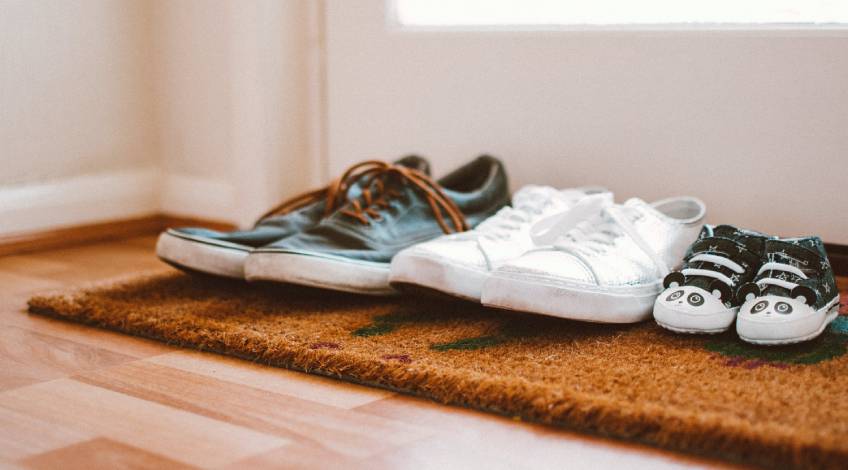
I’m not talking about all shoes here, just specific types of shoes. For instance, it can be OK to wash certain types of sports shoes in the washer (consult the care label).
But any shoes made from leather or suede should never be put in the washing machine. Not only will the finish get ruined, but the actual leather will crack and split rendering the shoes not fit for wearing anymore.
But the list doesn’t stop with leather and suede shoes, there are many other shoes that should never be put in the washer. They include;
- Velvet Shoes
- Silk Slippers
- Wool Slippers
- Cork Soled Shoes
- Embellished Shoes
- Specialised Running Shoes
Any of these can get damaged beyond repair in the rough and tumble of the washing machine.
Baseball Caps
Baseball caps can get dirty or sweat stained over time. If you want to preserve their colour and shape, they should never be put in the washing machine.
They need to be hand washed and air dried to keep their shape and colour.
Excessively Dirty Items
Any clothes or other items covered in dirt or sand should be shaken to remove as much as possible before placing them in the washer’s drum. If not, the dirt could transfer onto other items leaving them dirty after the wash has finished or the rough soil or sand could damage other items as they rub together in the drum.
If your clothes are covered in fine dust like flour, milk powder or lime dust, it could build up in the machine and damage the internal workings. Your best course of action is often to pre-soak any really dirty or dusty items to remove as much of the offending dirt or dust before washing in the machine.
Flammable Liquids
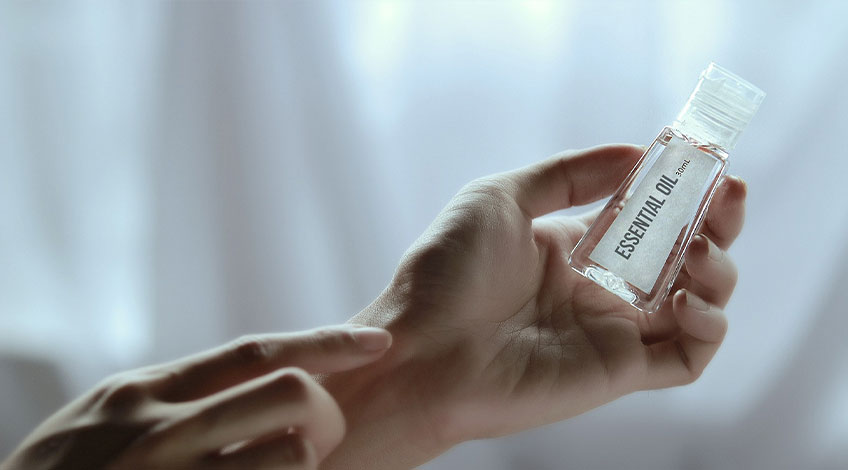
If any of your laundry has been soaked in any flammable liquid it can cause a fire or explosion in the drum of your washer. This means any flammable liquid like;
- Cooking Oil
- Essential Oils
- Alcohol
- Petrol
- Oil
- Spirits
- Cleaning Fluids
Always pre-soak any items that have been subjected to any flammable liquids in a solvent-based stain remover before washing in the machine.
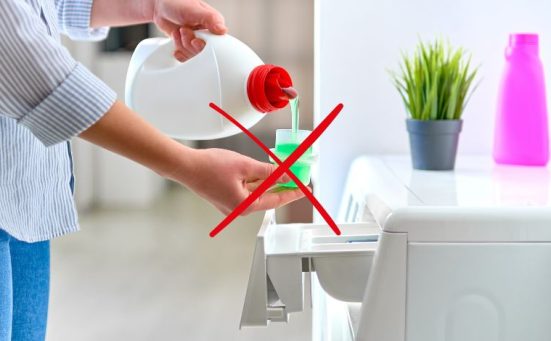
Too Much Detergent
If you want your laundry to get clean, don’t be tempted to use extra detergent. I know what you’re thinking, more detergent equals more cleaning power right?
Wrong! Using too much detergent just means extra soap suds which can be extremely difficult for your machine to remove during the rinse cycle. This will leave your laundry with a residue of detergent which can make them feel sticky, make them smell, create mildew and irritate sensitive skin.
Added to which you’re wasting money by using more detergent than the wash load needs.
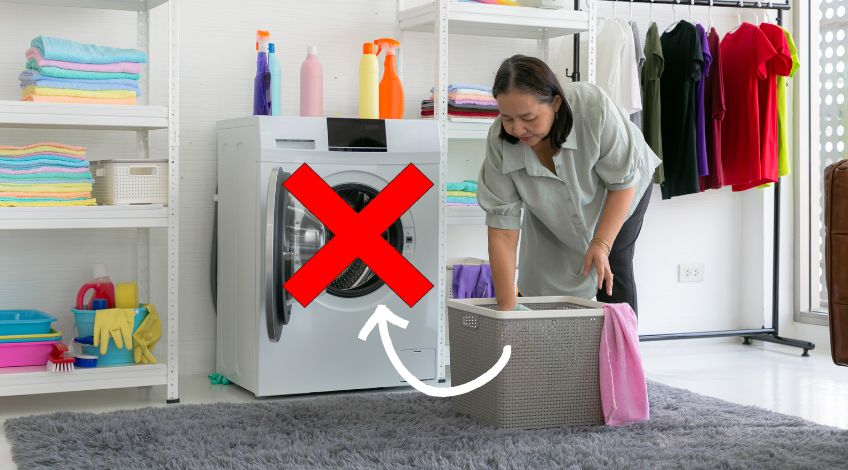
Too Much Landry
While we’re on the subject of too much, let’s talk about cramming too much laundry into the drum. It might seem like a good idea to cram as much laundry into the drum as possible to save time, detergent and energy usage.
Unfortunately the reality is that the laundry won’t get cleaned properly because many items won’t get washed or even wet! Plus to wash correctly, the laundry needs to rub together in the drum which is impossible if too much is packed tightly in the drum.
Not forgetting the fate of the washing machine itself, if the drum is too full the load is likely to be imbalanced. This can lead to the machine vibrating and getting damaged.
You should only fill the drum with no less than ½ and no more than ¾ its maximum capacity.
Cleaning Cloths (with clothes)
While it’s perfectly fine to wash cleaning cloths in the washer (as long as they’re not covered in too much dirt or flammable liquids), you shouldn’t wash them alongside your everyday laundry. This is because any germs or bacteria captured in the cloths as you clean, can get transferred to your clothes.
Plus many cleaning cloths are lint based which can shed and cover your clothes. Always wash your cleaning cloths separately from your clothes to prevent cross contamination.
This includes tea towels and bathroom mats that could also be harbouring germs and bacteria. Always wash these items on their own and never in with your clothes.
Foreign Bodies
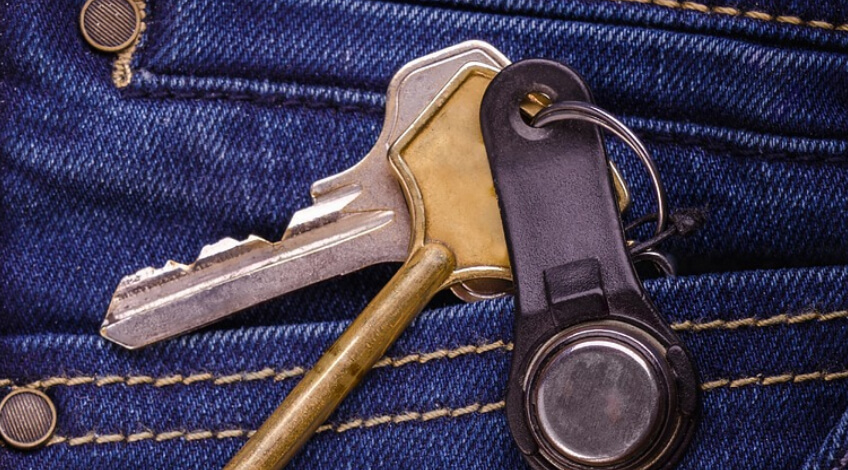
This is a common problem that we’ve all faced at some point in our laundry life. Anything left in pockets can cause problems in your washing machine. Items like;
- Keys
- Coins
- Hair Pins
- Pens
- Crayons
- Nails
- Screws
- And So On
Any metallic items can damage the drum of the machine or snag on clothes. While pens and crayons can leak and stain clothes.
Make sure you always check every pocket before any item goes into the wash.
Stuffed Animals
If your kids have stuffed animals they can often get dirty and grimy and it can be tempting to wash them in your machine. But this often leads to disastrous results.
Why? Because the colours often run, the stuffing collapses or, and this is the kicker, many stuffed animals have sound effects or lights which are powered by batteries. Washing these toys in the washer not only damages the toy, but it can also cause a safety risk because of leaking batteries.
Were You Surprised?
So, that’s my 20 surprising things you should never put in a washing machine. How many surprised you? Can you think of any more that I haven’t mentioned?
Let me know in the comments and don’t forget to share this with anyone you think might benefit from reading it. You might even want to share it on social media or bookmark it for future use.
SEE ALSO: You’ll ALWAYS Have a Clean House If You Do These 16 Things Daily (Easy!)
Also, follow us on Pinterest ...