The Vinegar Hack That Makes Your Shower Head Spray Like It’s Brand New
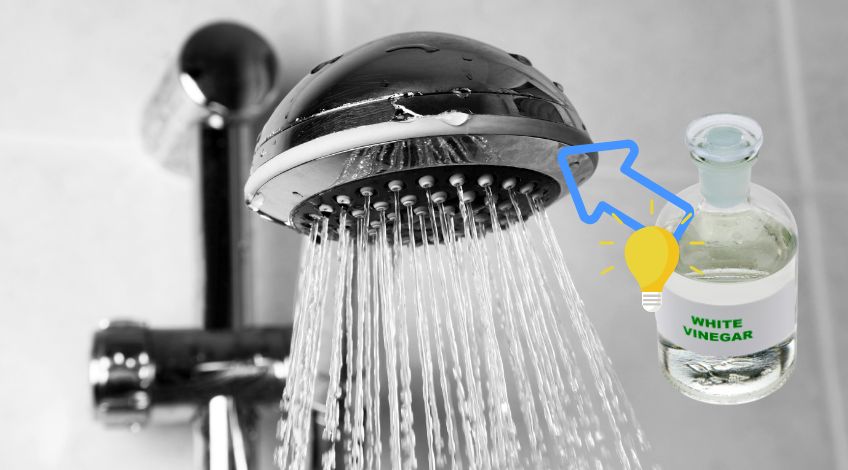
If your shower’s gone from a refreshing spray to a weak dribble, don’t panic! You probably don’t need a plumber or a new shower head.
In most UK homes, especially in hard water areas like London, Essex or Kent, the culprit is limescale. That white, chalky build up blocks the tiny holes in your shower head, leaving you with poor water pressure and unpredictable spray.
Luckily, there’s an easy fix using something most of us already have in the kitchen cupboard: white vinegar.
This simple vinegar trick can clear the build up and restore your shower to full power in less than an hour.
Why Shower Heads Get Clogged In The UK
The UK has some of the hardest water in Europe. Hard water contains minerals like calcium and magnesium, which collect on surfaces when the water dries.
Over time, this leads to limescale, the same stuff you find in kettles, taps and around the base of your loo.
Your shower head is especially prone to this. Each time you shower, a bit of mineral rich water stays behind and dries in the holes.
As this builds up, it blocks the spray pattern, reduces pressure and makes your shower less effective.
Why White Vinegar Works So Well On Limescale
White vinegar is mildly acidic, which makes it brilliant for breaking down alkaline deposits like limescale. It softens the build up so it can be wiped or rinsed away easily without scrubbing or harsh chemicals.
Unlike strong bathroom cleaners, vinegar is non toxic, cheap and eco-friendly. It’s safe to use on metal and plastic shower heads and won’t damage the finish as long as it’s not left soaking for hours.
How To Clean Your Shower Head With Vinegar (Step By Step)
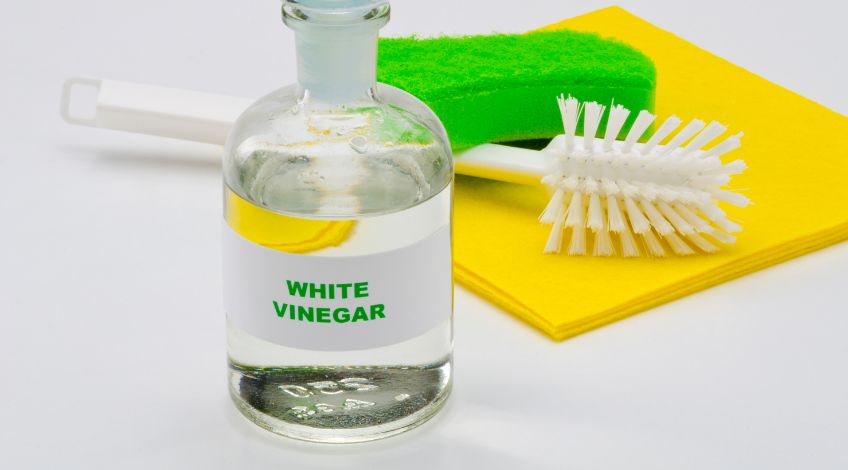
Whether your shower head is fixed or detachable, this easy method works for both. Here’s what to do:
If Your Shower Head Is Removable:
- Unscrew the shower head from the hose or wall fitting.
- Place it in a bowl or basin filled with white vinegar. Make sure it’s fully submerged.
- Leave it to soak for 30 to 60 minutes. For stubborn build up, leave it a bit longer.
- Use an old toothbrush to scrub around the nozzles gently.
- Rinse thoroughly with warm water and reattach it.
If Your Shower Head Is Fixed:
- Fill a strong sandwich bag with white vinegar.
- Lift it up around the shower head, making sure it covers the nozzles.
- Secure it tightly with an elastic band or string.
- Let it soak for 30 to 60 minutes.
- Remove the bag, scrub gently if needed and run hot water to rinse.
For the best results, always rinse your shower head thoroughly after soaking to remove any lingering vinegar smell.
If you live in a hard water area, it’s worth repeating this cleaning method every couple of months to prevent limescale from building up again.
For an extra boost, you can add a teaspoon of bicarbonate of soda to the vinegar before soaking. The fizzing reaction helps lift stubborn grime even faster.
If your shower head has rubber nozzles, gently rub them with your fingertip to dislodge trapped debris.
This simple maintenance step keeps your water flowing evenly and extends the life of your shower head without any need for harsh chemicals.
Use Vinegar To Remove Mould Around Shower Head Seals
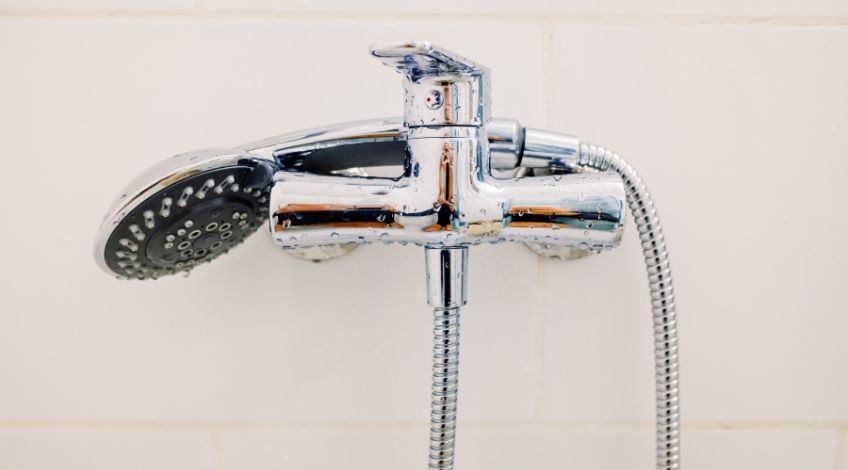
If you’ve noticed black marks or mildew around the base of your shower head or where it connects to the wall or hose, it could be mould or fungal build up.
White vinegar can help break down and remove these marks without the need for bleach. Here’s how to do it:
- Mix equal parts white vinegar and warm water in a spray bottle.
- Spray the solution generously around the shower head base, seals and hose connection.
- Let it sit for 10 to 15 minutes to break down mould and bacteria.
- Scrub gently using an old toothbrush or soft cloth, especially in grooves or rubber seals.
- Rinse with clean water and wipe dry with a cloth.
Vinegar has antifungal and antibacterial properties, making it effective against mild mould and mildew. It’s also safer to use in tight spaces than harsh chemicals and is far less irritating to the lungs.
Can This Hack Damage Your Shower Head?
No, white vinegar is safe for most modern shower heads, including those made from chrome, stainless steel and plastic.
However, don’t leave it soaking for hours or overnight, especially with gold, nickel or brass finishes, as vinegar can be corrosive to certain metals over time.
If you’re unsure, test a small area first or check the manufacturer’s cleaning advice.
Tell Your Friends About This Simple Vinegar Hack!
This quick, no fuss method is great for anyone short on time. Share it online to help others make their shower head spray like it’s brand new with almost no effort!
SEE ALSO: 7 Things You’ll Damage If You Clean With Vinegar
Also, follow us on Pinterest ...