If you see this foam problem in your washer, don’t ignore it…
Spotting foam in your washer might feel like a win, like your detergent’s putting on a Broadway performance for your laundry. But here’s the twist: too much of a good thing is… not so good.
The trouble is that too many soap suds can be problematic and even prevent your clothes from getting washed properly! And even if they do get fully washed, they might be left with a soapy residue and that’s not so good.
But don’t worry, we’ve got your back and by the time you’ve finished reading this brief article, you’ll be armed with all you need to know about foaming washing machine drums as well as how to prevent this phenomenon from occurring and why it’s a bad thing.
Keep reading to find out more.
Why Would Foam In The Washing Machine Be A Bad Thing?

Soap suds galore might look like your laundry is getting the VIP spa treatment, but don’t be fooled, this isn’t the luxury experience your clothes deserve.
It might seem like seeing soap suds is a good thing and to be fair, a moderate amount of soap suds is a good thing. But, if there are too many soap suds (or foam) it can actually cause problems.
It’s a natural part of washing clothes to see some soap suds in the machine. It’s a result of the detergents being agitated with the water. The soap suds are what gets the laundry clean and ideally they get washed away during the rinse cycle.
The problem is that too many soap suds can actually stop the laundry from getting clean.
How Can Too Much Foam Stop The Laundry From Getting Clean?
Your washing machine is basically a modern-day version of how it was done in grandad’s day, minus the sore knuckles and wet socks.The laundry is agitated in a mixture of detergent and water in the drum of the washer which copies the action of rubbing clothes together by hand.
But, if there’s too many soap suds or foam, it can prevent the clothes from rubbing together properly during the wash cycle. This means the clothes don’t get washed properly and too much soap means the clothes don’t get rinsed properly either. Which means they will take longer to dry and the soap suds left behind don’t smell too good either.
And just like that, you’re back at square one, rewashing your laundry like a detergent déjà vu.
And That’s Not All…
Oh, but wait, there’s more! Too much foam can turn your laundry room into a slip-and-slide, complete with a flood to rival Noah’s Ark. Not the vibe you want.
In really extreme cases, too many soap suds can cause the machine to start leaking and create a huge wet mess all over your floor in your kitchen, laundry or utility room!
So, What Causes Too Much Foam In Washing Machines?
There can be a number of possible causes for too much foam in the washer which include;
| Possible Reason | Way To Prevent |
|---|---|
| Using Too Much Detergent | Check the packaging and always use the correct amount of detergent based on the hardness of the water in your area. |
| You Live In A Soft Water Area | Adjust your detergent usage to suit the water hardness in your area. |
| Not Using Enough Detergent | Be sure to use the correct amount of detergent to maintain an anti-foam ratio. |
| Cramming Too Much Laundry Into The Drum | Never overload the washer. |
| A Buildup Of Old Detergent | Be sure to use the correct amount of detergent and run a regular cleaning cycle to remove any residue. |
| Adding Anti-Limescale Products | Remember to adjust the detergent quantity if you’re using any of these types of product. |
| Using A Water Softener System In Your Home | Remember to adjust detergent quantities if you have a water softener in your home. |
Using Too Much Detergent
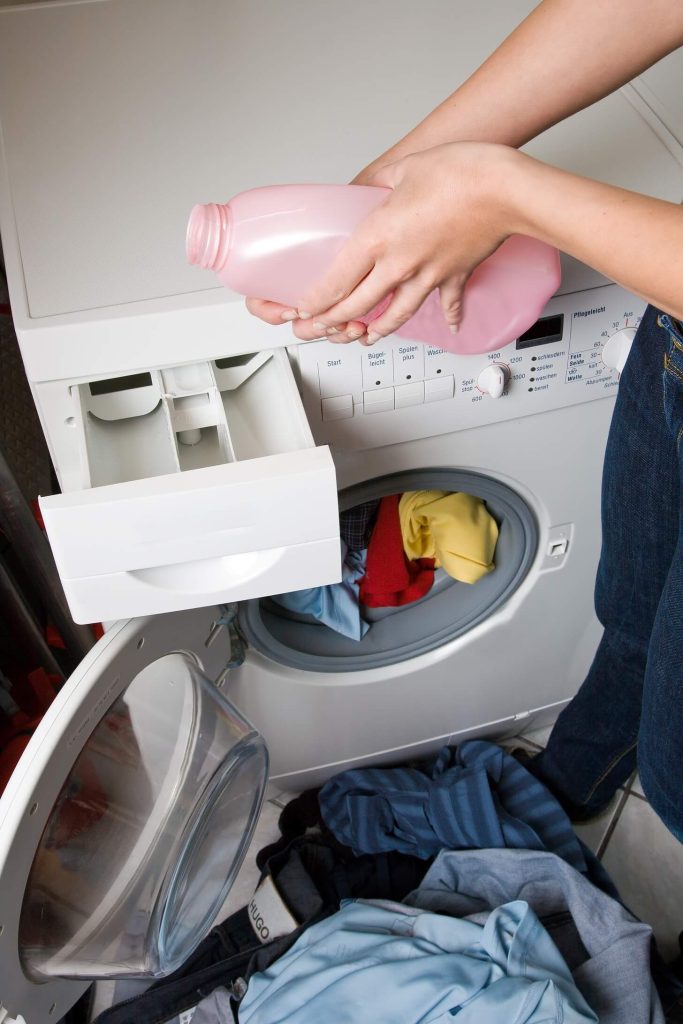
Overenthusiastic with the detergent? We get it, you’re just trying to be thorough. But your washer isn’t a bubble bath, so dial it back a notch. It’s time to face the music (or the label): less is more when it comes to detergent. Trust us, your washer will thank you.
If you’re really struggling to get to grips with detergent dosing, you might find using pods works better for you. Pods contain the correct amount of detergent for a regular sized wash load without causing a foam drama.
You Live In A Soft Water Area
If you live in a soft water area, lucky you! You’re in a minority in the UK but in a good way. One of the downsides is that using too much detergent can lead to a foam party.
Check out the hardness of the water in your area by clicking this link. Then only use the amount of detergent needed for soft water areas according to the packaging.
Not Using Enough Detergent
OK, we know this sounds batty. But detergents contain anti-foaming agents which help prevent too many soap suds.
If you’re not using enough detergent it could cause the soap suds to make too much foam.
Cramming Too Much Laundry Into The Drum

It can be tempting to cram in as much dirty laundry as possible. You’re thinking it will save you time and money because you can get it all done in one go.
But, the opposite is true because overloading the drum means that not all of the laundry gets washed or rinsed. Which in turn means not all of the soap suds get washed away properly.
A Buildup Of Old Detergent
If you make a habit of using too much detergent it can cause a buildup in the machine. This can lead to your machine creating too many soap suds.
You need to give your washer a regular service wash to eliminate excess detergent. And only use the correct amount of detergent in every wash.
Adding Anti-Limescale Products
If you’re using anti-limescale products like Calgon or soda crystals to protect your washer from the damage that limescale can cause, well done! But you need to remember to use less detergent because anti-limescale products actually make the water softer.
If you use your regular amount of detergent in a hard water area while using an anti-limescale product you’re using too much detergent. Which means foam central!
Using A Water Softener System In Your Home
If you have a water softener system installed in your home, you are now in a soft water area even if the rest of your street has hard water. Change your detergent dosage to fit in with your new found soft washing water.
How To Get Rid Of Excess Foam From Your Washer

Fabric softener to the rescue! It’s like the superhero of the rinse cycle, swooping in to tame those unruly suds. Pour it into the machine at the start of the rinse cycle. If there’s still too many suds, repeat the fabric softener hack and add another rinse cycle.
Think of it this way: your washer’s having a tantrum, and fabric softener is the comforting ‘there, there’ it needs. But remember to only add softener with the rinse cycle because fabric softener could damage clothes if used neat.
Running a monthly service wash to remove any buildup of detergent is another effective way to get rid of excess foaming. Plus it helps prevent mould growth and musty smells too.
Only Too Many Soap Suds During The Rinse & Spin Cycle?

If the only time too much foam is visible is during the rinse & spin cycles, it could be a blockage or partial blockage that’s causing it. The blockage could cause a buildup of foam from the wash cycle that would remain in the machine and get reactivated during the rinse cycle.
It should be noted that this sort of thing is quite rare because the blockage needs to be small enough not to prevent the water from leaving the machine but big enough to stop the soap suds from leaving.
If this is the problem you’re having, it’s most likely caused by a partial blockage in the pump filter.
Checking The Pump Filter For Blockages
Anyone can check the pump filter on a modern washer. But first, you have to find it. The pump filter is usually found on the front of the washer at the bottom. It’s usually hiding behind a flap which can be lifted up or pulled down depending on the make and model of your machine.
Brace yourself, things are about to get messy. Think wet socks and questionable gunk, but hey, it’s all part of the fun, right? So lay a towel on the floor to catch any water and then place a bowl directly under the filter.
The filter is removed by twisting it anti-clockwise and pulling it out. Wash the filter under a fast running tap to remove any gunk that might be causing a blockage. Then look inside the housing and remove any stray objects like coins, buttons, fabric, screws or nails.
While you’ve got the filter out, check that the impeller is working properly by flicking it with a finger, if it moves freely, the pump should be OK. Once you’re happy that everything is clean and as it should be, replace the filter and turn it clockwise to seal it in.
Twisted Waste Pipe
If the filter was clear but the problem remains, you should check out the waste pipe. If it gets twisted or kinked even slightly, it could be enough to cause the soap suds to get trapped in the machine.
Check How Far The Waste Pipe Goes Into The Standpipe
Your washing machine’s waste pipe should be pushed into the standpipe that’s attached to the wall. The problem is that if the waste pipe is pushed too far into the standpipe it can cause it to not drain properly.
The end of the waste pipe should be pushed into the standpipe no further than 6 inches (15 cm).
A Buildup Of Detergent
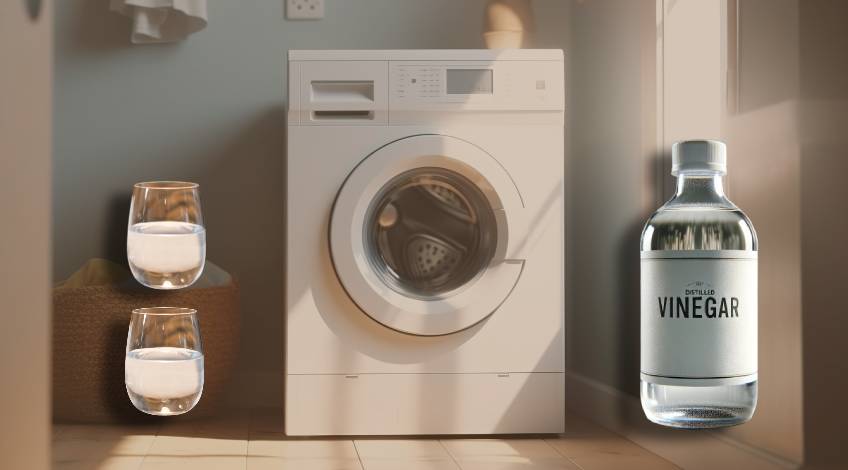
Got suds sticking around like an unwanted houseguest? Blame detergent buildup, it loves to crash your laundry party, especially in towels. To help prevent this we turn to our trusty white vinegar.
Just add 1 cup (284 ml) of white vinegar to the rinse cycle in place of fabric softener. Fabric softener is not good for towels as it can cause them to be less absorbent. White vinegar not only helps prevent detergent buildup, it also softens towels without making them lose their absorbency.
And That’s It
Foam parties might be fun at the club, but your washing machine didn’t sign up for that lifestyle. Keeping your washer foam-free is key to making sure your clothes get properly cleaned and your laundry room doesn’t turn into a soap opera (literally).
From tweaking your detergent dose to running regular service washes, you’ve now got all the tricks to keep your washer in tip top shape. So go forth, laundry warrior, and conquer the sudsy chaos!
Have you been battling foam drama in your washer? Share your soapy tales or questions in the comments below, we love a good laundry story!
And if you found these tips helpful, give this article a share. Let’s save washing machines everywhere, one rinse cycle at a time!
SEE ALSO: Stop Overdrying Your Clothes! The Damage You Can’t See (Until It’s Too Late)
Also, follow us on Pinterest ...