If your washing machine ever jumps, stop everything and do this
If you notice that your washing machine is moving around the room or just jumping up and down. It’s not auditioning for a trampoline competition or trying to lead a conga line in your laundry room!
In fact, it often means you’ve got a problem that needs to be dealt with. And the sooner you deal with it, the least amount of damage will be done.
Unless you want a big problem and an even bigger dent in your wallet, you’d better read this short article so that you’ll know what to do if your washer starts bouncing around.
What Causes Washing Machines To Jump?
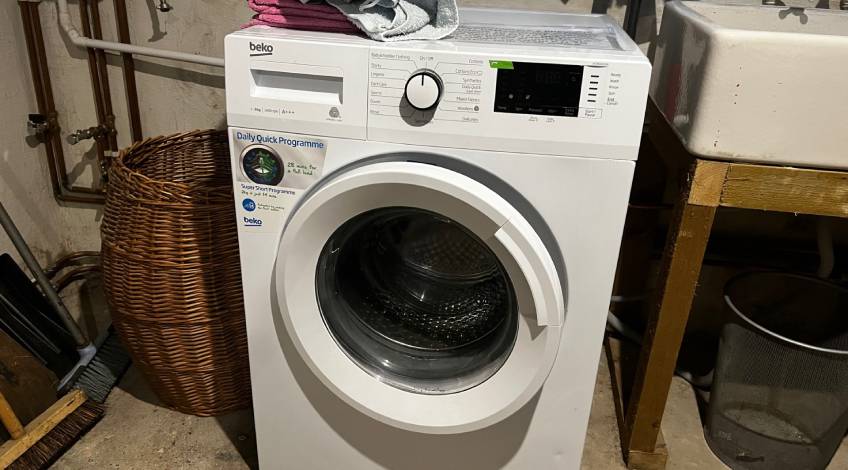
There can be any number of causes for this strange phenomena, but whatever has caused it needs to be dealt with immediately. Otherwise your washing machine might end up on the scrap heap. Let’s look at the most probable causes;
The Wash Load Is Uneven
If you’re sure the feet are all levelled up right, and your machine is still doing the pogo, it could be that the load is uneven. This is actually the most common cause of jumping washers and can even affect machines that have been working fine for years.
Even though it might be common, it can still cause major problems if it’s not dealt with straight away. If not, your machine is likely to get damaged and your wallet will take the hit.
When it comes to uneven loads, there are two main culprits which are;
- Overloading
It can be tempting to cram as much laundry into the drum as you can fit. But that can cause the machine to jump around leading to all sorts of expensive problems. - Underloading
If you don’t put enough laundry in the drum, it’ll all cling to one side of the drum and make the washer jump. And, as we now know, a jumping washer is a one way ticket to empty wallet ville.
Most modern washers have an array of sensors which can detect if you’ve put too much or not enough laundry into the machine and shut it down before it can do any damage. Which is great for the washer, but not so good for the laundry as it will still be dirty!
You can check how level the load is by doing some machine watching (it’s often more entertaining than TV). Check out the drum once the washer starts a spin cycle.
If the load is uneven for any reason, the inner drum will start wobbling from side to side. If the wobble takes on a violent attitude, the sensors will cut in and stop the cycle.
Blocked Drain Pump
If the jumping around is accompanied by excessive noise and it happens during the drain cycle, it might just be a simple case of a blocked drain pump filter. This is an easy fix which can be performed by anyone.
You start by taking a good look at the drain pump filter which is located at the front of your machine at the bottom. Look for a plastic twist screw (it might be hidden behind a small flap).
Place a bowl under the area where the screw is and then undo the screw and wait for the gentle flow of water to stop. You can then inspect the filter and remove any gunge or dirt by washing it under running water.
While you’ve got the filter out, have a nose around inside the filter housing and clean out anything that shouldn’t be there. You could discover a treasure trove of laundry relics, buttons, screws, or even that sock you swore had vanished into another dimension. Anything that could block the filter needs to be removed.
You can also access the impeller and turn it using your finger to make sure that the pump is working properly. Once you’ve finished with your cleaning and checking, you just have to replace the filter and make sure it’s fitted in tightly with no chance of a leak (we don’t want to cause any more problems do we?)
Washing Machine Making Loud Banging Noises As Well As Jumping?
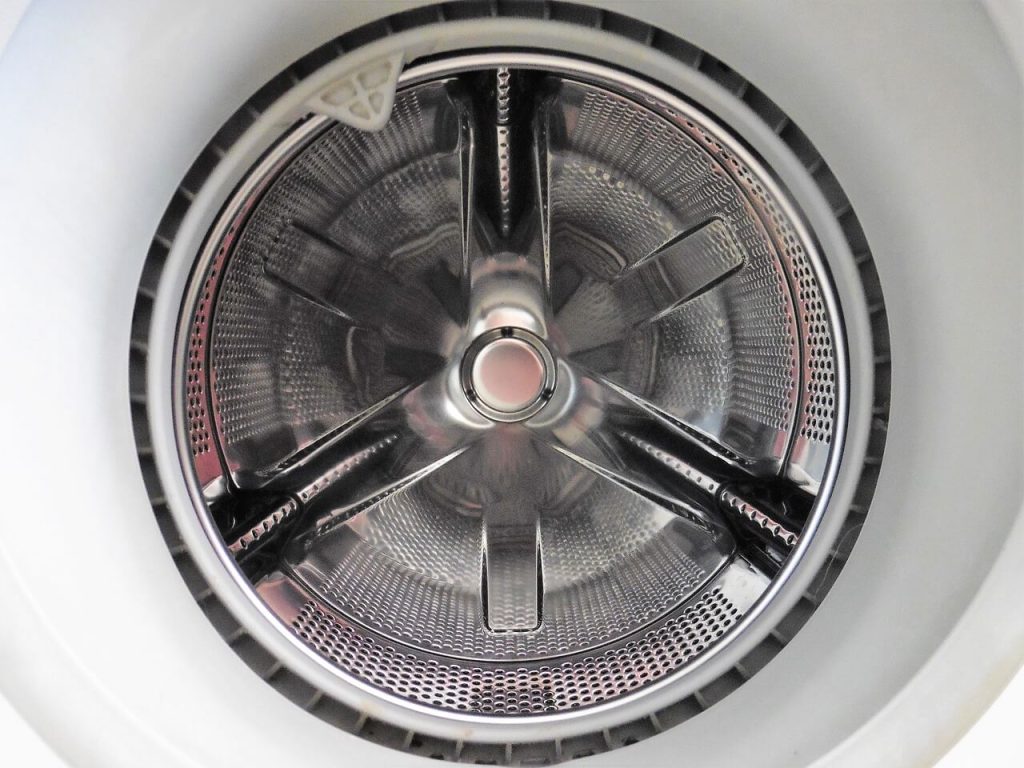
This could mean your washer is dealing with an existential crisis, or just one of these pesky faults that love to masquerade as each other. If you’re absolutely sure that you’ve checked all that we’ve mentioned so far, it could be caused by;
- Faulty Drum Bearing
- Faulty Motor
- Faulty Shock Absorber
- Faulty Control Board
- Faulty Suspension Spring
- Or Something Else
If you’ve checked all the other common causes and you’re still none the wiser it’s probably down to one of these bad boys. At this point, it’s best to call in a washing machine whisperer (aka a professional engineer) to diagnose the problem and save your machine from an untimely demise.
You Never Removed The Transit Bolts
If we’re talking about a new washer here, it could be that the transit bolts are still in place. Transit bolts are installed in new washers to prevent any damage occurring while the machine is being transported from the factory to your home.
These bolts stop the drum from moving around during their journey to stop any internal damage. If they weren’t in place, the drum could bash into the suspension struts and cause serious damage.
But once the machine is installed in your home, the transit bolts need to be removed before the machine is ever used. Check your user manual for where the transit bolts are located and how to remove them.
If not, your new machine will be broken before you ever get any laundry done. You see, washing machine drums are designed to move up and down on their own suspension. The transit bolts stop the drum from moving which will cause the machine to break.
The Machine Isn’t On The Level
If you’re sure the transit bolts are gone but your washer is still doing its best impersonation of a punk rocker at a mosh pit, the culprit could be an uneven floor. Or the machine hasn’t had its feet adjusted properly.
On all four corners of the machine are adjustable feet and you can check the level using a spirit level and adjust the feet as needed. If the floor is not straight (we’re looking at you uneven floorboards) you can place a flat piece of plywood under the machine to help level it.
Then adjust the feet and Bob’s your uncle. You can also use anti-vibration mats under each of the feet of your machine to absorb vibration and prevent your washer from moving across the floor.
These rubber pads are not expensive (around £8 to £10 for a set of 4), but you need to make sure that the problem’s not been caused by something other than an uneven floor because they won’t solve anything else.
Keep Your Washer Happy and Your Wallet Happier

A jumping washing machine is no laughing matter (even if it looks like it’s trying to dance). Ignoring the problem could lead to expensive repairs, or even worse, a complete replacement.
But with the tips above, you’re armed with the know-how to tackle the most common causes and keep your washer spinning smoothly.
If you’ve checked all the usual suspects and your washer still seems determined to audition for a demolition derby, it’s time to call in the pros.
Don’t let a little bounce turn into a big breakdown, contact a qualified washing machine engineer today and save yourself the headache (and the noise).
Got a jumping washer story or a genius hack for keeping it in line? Share it with us in the comments below, we’d love to hear from you!
And if you found this article helpful, don’t forget to share it with your friends. You never know who might need this advice the next time their laundry room turns into a mini earthquake zone!
SEE ALSO: 17 Small Habits That Make a Big Difference to Your Home’s Cleanliness
Frequently Asked Questions
Your washing machine might be jumping because of transit bolts that haven’t been removed, an uneven floor, an uneven laundry load, or a blocked drain pump. In some cases, it could be due to faulty internal components.
Transit bolts are metal rods used to secure the drum during transportation to prevent damage. They must be removed before using the washing machine; otherwise, the drum won’t be able to move freely and could cause the machine to break.
Overloading can cause the drum to become unbalanced, leading to excessive movement and potential damage. Underloading can cause the laundry to clump to one side, making the drum wobble violently during the spin cycle.
Locate the drain pump filter (usually at the front bottom of the machine). Place a bowl under it to catch water, unscrew the filter, and remove any debris, such as lint or small objects. Rinse the filter under running water, clean the housing, and screw it back in tightly.
Also, follow us on Pinterest ...